

What Is The 'Heat Island' Effect, And Why Does It Only Affect Cities?
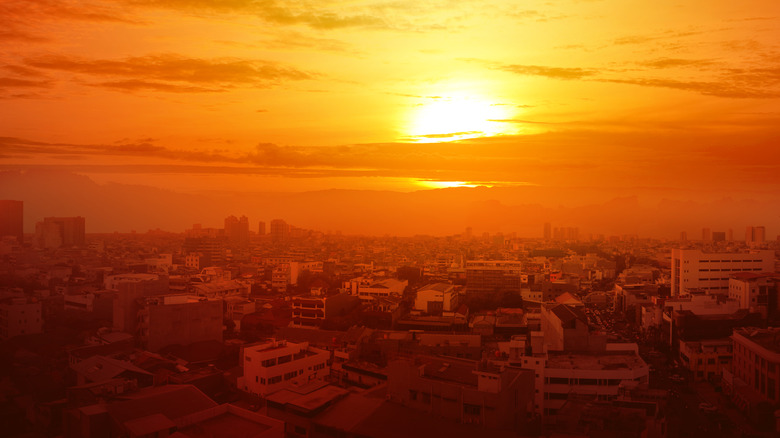
If you live in a major metro area, you might have heard the term "heat island" coming up on summer weather forecasts, but if you're a rural dweller, you might have missed it. That's because a heat island describes a weather phenomenon that is unique to urban areas. A heat island occurs when a city experiences substantially higher temperatures than its immediate rural surroundings. According to the MIT Climate Portal, cities experience an average daytime temperature 1 to 7 degrees Fahrenheit higher than the nearest rural areas. This is a stark difference considering that the sun shines equally upon both urban and rural regions, and with the majority of the growing human population rapidly condensing into cities, it could spell disaster for our species in the all-too-near future.
Heat islands occur because cities replace natural vegetation with vast stretches of concrete. Trees and other plants not only provide shade, but also release water vapor into the air, keeping their surroundings cool. Concrete, on the other hand, absorbs and re-emits heat, having the exact opposite effect. Metals also absorb heat readily, as anyone who's ever touched their car on a really hot day knows too well. These materials make up the majority of most cityscapes, and on top of that, tall and densely-packed buildings create a canyon effect that stifles air flow. This essentially turns each city into a massive oven, baking its residents. It's a recipe for disaster, and in many cases, the damage is already severe.
The impacts of urban heat islands

Heat islands pose a very serious health risk, as they raise the risk of heat stroke and even heart attack. Heat-related complications, including death, are on the rise as the problem of heat islands collides with the broader upward trend in cardiovascular disease. These same heat-related issues are more likely to affect people in the tropics, which is where many of the world's largest cities, including Jakarta, Dhaka, and Delhi are found. The combination of tropical heat and incredibly dense urban landmass can be deadly. The Guardian reports that, in the summer of 2025, a nine-day heat wave killed 192 homeless people in Delhi, a population especially vulnerable in heat islands due to exposure.
Heat islands also trigger a cascade effect of climate issues. It's no surprise that increased urbanization aligns with increased global warming. Every new year seems hotter than the last, and as residents of heat islands use air conditioning and fans more, they put greater strain on the power grid. This prompts utility companies to increase fossil fuel use to meet energy demands. Heat also affects the water temperature in cities and their immediate surroundings. The difference in water temperature can be even more extreme than the difference in air temperature, with the EPA reporting that urban streams can be as much as 18 degrees Fahrenheit hotter than countryside streams. This can negatively impact the lives and reproductive cycles of aquatic life, sometimes even proving fatal.
Can anything be done to prevent heat islands?
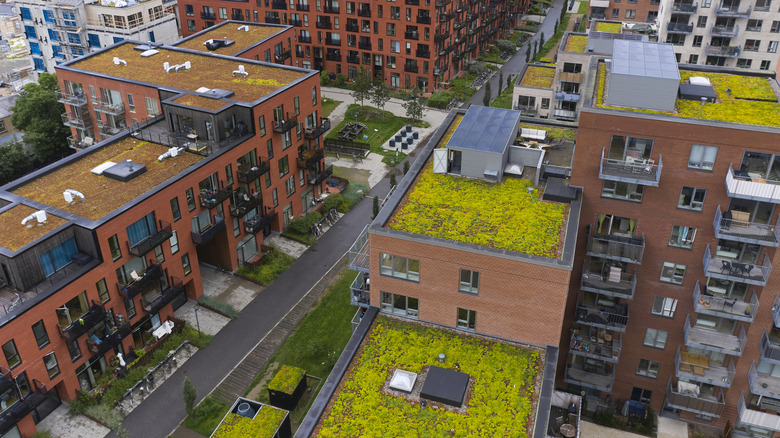
With the long history of climate change showing no end, and the human population both growing and urbanizing at alarmingly high rates, heat islands are something many of us will unfortunately have to live with. However, there are some ways in which cities could be redesigned to reduce this dangerous effect. One of the most straightforward and simple-to-enact changes would be to make roofs out of green vegetation or reflective material. As it stands, most roofing materials, like asphalt shingles and concrete tiles, absorb heat easily, playing a massive role in the urban heat island effect. Replacing these with green roofs or reflective tiles can lower urban temperatures.
Singapore provides a potentially hopeful story in the face of rising temperatures. Being located in the tropics, where heat and humidity are already high, and being a densely-urbanized city-state, Singapore is warming at a rate around double the global average. However, Singapore's Housing Development Board has started a Green Towns Programme, one of the aims of which is curbing the heat island effect. The city has seen innovative projects, like the use of reflective paints on buildings, lower temperatures by up to 3 degrees Fahrenheit to keep temperatures cool. Some neighborhoods are also being retrofitted with district-wide cooling systems to replace individual systems and save on both energy costs and emissions.