

Samsung's New Phones Are Finally Embracing Silicon-Carbon Batteries, But It Will Cost You
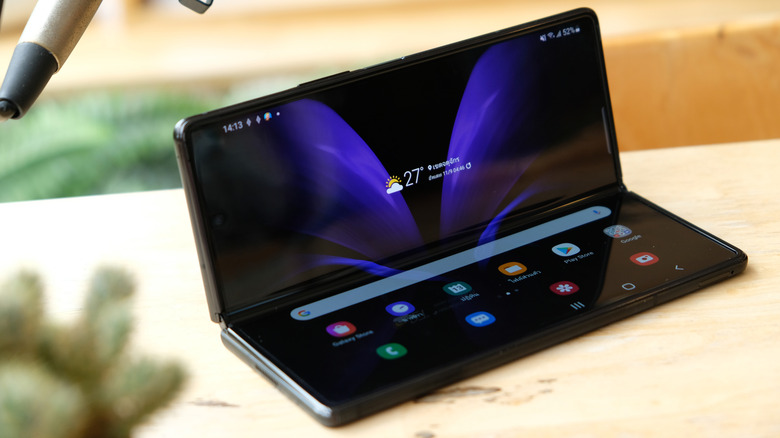
Today Samsung unveiled its newest lineup of foldable smartphones, the Galaxy Z Fold 8 Ultra, Z Fold 8, and Z Flip 8. While the reveal of these new phones is no doubt exciting, there's one feature of the official debut that is likely to excite some users more than others. While Samsung avoided silicon-carbon batteries in the Galaxy S26 lineup, it seems the company is ready to fully embrace them now with the release of the Galaxy Z Fold 8 and Z Flip 8 lineup. Samsung's newest foldables are far from the first Android phones that use silicon-carbon batteries. However, this development is likely to be interesting for consumers, especially as competing smartphone manufacturers like Google and Apple aren't using silicon-carbon batteries yet.
While silicon-carbon can hold more energy, the silicon expands significantly more than the graphite that is used in traditional smartphone batteries. Considering Samsung has had its fair share of problems with batteries in the past — lest we forget the Note 7 debacle — it makes sense that the company would take its time before introducing such a new type of battery to one of its major flagship lineups. According to reports, the company has found a way to not only deliver silicon-carbon batteries to its Galaxy Z Fold 8, Z Fold 8 Ultra, and Z Flip 8, but it has also found a way to do so without compromising the quality of battery life that Samsung users have become accustomed to in the more recent Galaxy devices, such as the Galaxy S26 Ultra.
Silicon-carbon that's still reliable
It makes sense that Samsung might push silicon-carbon batteries to its foldables first. After all, these devices need to be relatively thin while still incorporating all of the features that users expect from them — including long battery life, fast charging, and high-performing software. Considering everything we know about the Z Fold 8 Ultra and the rest of the lineup so far, these phones look to pack quite the punch performance-wise. So, being able to provide a high-quality and high-capacity battery is vital to helping keep those top-tier components powered and chugging along.
Based on responses to media questions from Android Authority and others regarding the new battery setup, Samsung claims that it dedicated a lot of resources and energy to "optimize the percentage of silicon" used in the batteries within the Galaxy Z Fold 8 and Z Flip 8 lineup. Additionally, the company claims that it engineered this system from "the material level" to ensure it could deliver not only high capacity, but also the stability and long-term reliability that Samsung users expect, while still working in a slimmer form factor. The jump to silicon-carbon has also brought a leap in capacity for the Z Fold lineup, as the Galaxy Z Fold 7 featured a 4,400 mAh battery, while the Galaxy Z Fold 8 Ultra will sport a 5,000 mAh battery, putting it more on par with traditional slab phones like the Galaxy S26.
A costly upgrade
The only real downside to Samsung finally embracing silicon-carbon is that you'll need to upgrade your smartphone if you want to take advantage of it. And that becomes increasingly harder to justify now that prices have continued to rise amid ongoing RAM shortages.
You might say these increases have hit the Galaxy Z Fold lineup as well, but that wouldn't be an apples-to-apples comparison this year, as Samsung moved from one book-style foldable (Z Fold 7) to two (Z Fold 8 and Z Fold 8 Ultra). Nonetheless, the Z Fold 8 starts at $1,899.99, and the Z Fold 8 Ultra will start at $2,099.99 when it launches — effectively bookending last year's $1,999.99 starting price for the Z Fold 7. So it's a $100 difference, give or take, but that's just for the smallest storage variants (256 GB). If you want more storage, then you'll need to pay even more, with the 1 TB Galaxy Z Fold 8 Ultra topping out at $2,699.99.
Elsewhere, the Galaxy Z Flip 8 starts at $1,199.99 for the 256 GB variant. This represents a $100 price hike over last year's 256 GB Galaxy Z Flip 7 ($1,099.99).
It's also worth noting that the introduction of the Ultra moniker to the Z Fold 8 Ultra isn't a big evolution from the Z Fold 7. However, because Samsung has introduced its new wider foldable as the Z Fold 8, the Ultra has been added as the highest-tier version if you want the same style of design as the company's previous foldables. None of these price hikes are extravagant by any means. However, it's worth knowing what you're getting into if you're tempted to buy one of Samsung's newest foldables to try a silicon-carbon battery for yourself.