

The EU Just Approved This First-Of-Its-Kind Ocular Implant That Can Restore Vision
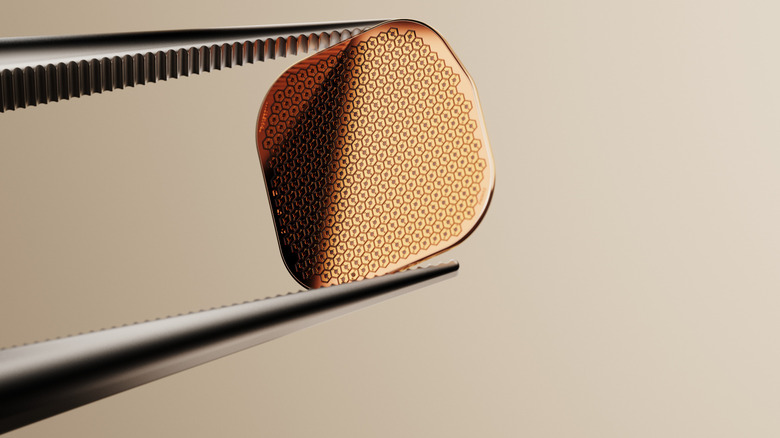
In 2025, an electronic eye implant surfaced that promised to restore vision for some patients suffering from age-related macular degeneration. Named the photovoltaic retina implant microarray, or PRIMA for short, it combines a subretinal voltaic chip implant and augmented reality glasses — they work in tandem — to restore sight for those who have otherwise lost it. At the time, it was undergoing regular studies, but it has since passed clinical trials, and is now launching commercially. It has been proven to help patients with geographic atrophy caused by age-related macular degeneration.
It is now officially the first-of-its-kind ocular implant to be approved, and the first to receive a "CE" marking for form vision restoration under the European Union Medical Device Regulation. The CE mark means that a product or device has received approval and meets European health, safety, and environmental protection standards. In this case, PRIMA will now be authorized for commercial availability and sale in European countries. Form vision restoration involves reading letters, numbers, and words, meaning practical vision is restored for those using the technology. From here, the first commercial implant will be available in Germany; meanwhile, PRIMA will see country-specific reimbursement applications and clinical site activations across Europe.
Science Corporation, the company responsible for PRIMA, is purportedly working with the Food and Drug Administration in the United States to bring the implant to market there. It has already received breakthrough device designation and humanitarian use device designation from the FDA.
How does the PRIMA implant work?
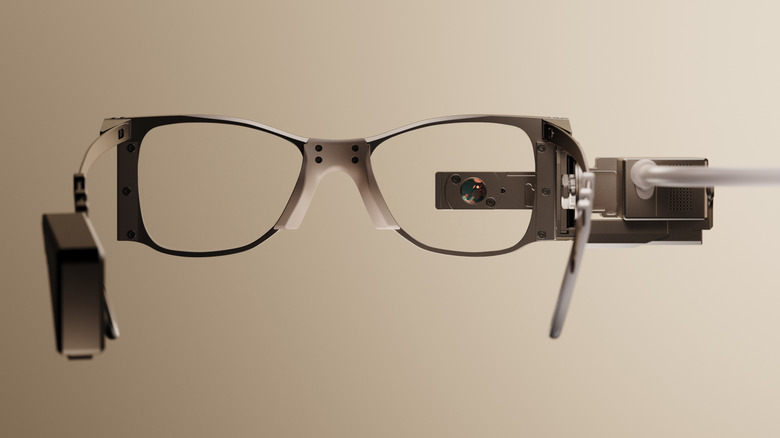
The PRIMA implant and the augmented reality glasses restore what's called functional central vision. That's the straight-ahead or forward sight available to anyone with 20/20 vision that allows you to see things like fine details, which ultimately helps you read. The PRIMA system is meant to address geographic atrophy specifically, which currently affects 8 million people around the world. It's a form of progressive damage caused by dry age-related macular degeneration, where cells in an extremely light-sensitive area of the eye — a smaller region of the retina called the macula — slowly die off and do not regenerate.
Doctors implant the PRIMA chip beneath the retina in a patient's eye, and it works with the augmented reality glasses (pictured above) to restore vision through a built-in camera. That camera captures imagery of what the patient is looking at, processes it, and sends it to the chip via near-infrared light. Because the human eye cannot detect infrared, that signal won't interfere with normal vision in the patient. The chip or PRIMA implant then takes that light and converts it into electrical pulses to stimulate bipolar cells in the retina, and the signal is then effectively interpreted, passing a clear image to the patient.
It works differently than something like a robotic eye which promises to improve sight, but amazingly, it is a sort of self-powered implant system that never needs to be charged. The implant actually generates electricity directly from light, not unlike solar panels, which means patients don't need a power source tethered to it.