

New Image Shows What 14 Years Of Driving Has Done To NASA's Mars Rover
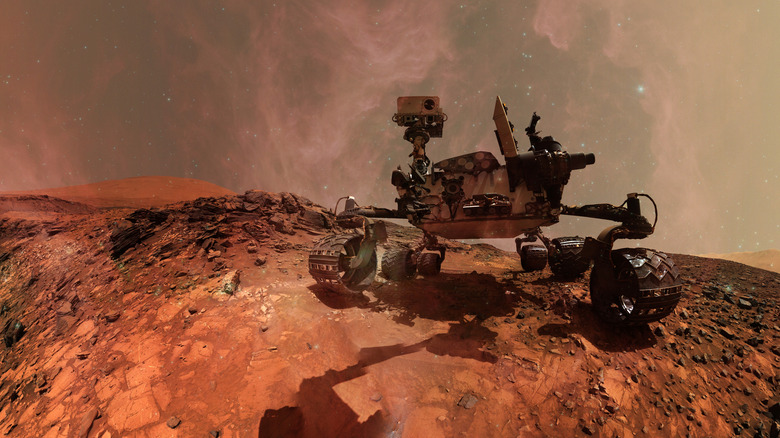
NASA's Curiosity rover has been rolling across the surface of Mars since 2012, and in that time it's covered more than 20 miles of some of the roughest terrain in the solar system. Now, a fresh batch of images has given us a much better idea of just how much that mileage has cost the rover's aluminum wheels. The pictures aren't pretty, either. You can easily see jagged holes in the wheels, as well as signs of torn metal, and several of the treads are cracked and just waiting to break off all over the surface of Curiosity's wheels. Some of the holes are so large, in fact, that it looks like the rover could easily get stuck on a rock or something else and be unable to move.
Of course, none of this means Curiosity or NASA is quite ready to give up the fight. The rover continues to provide important scientific data about the Martian surface as NASA engineers work to find ways to extend the rover's lifespan for as long as they can, gathering more scientific data with every passing day. NASA has known about the wheels' deterioration for some time now, and after the death of InSight, the overall cruelty of Mars' environment has remained thoroughly unquestioned, despite all of the pretty vistas it might provide us at times.
Why Curiosity's wheels are in such rough shape
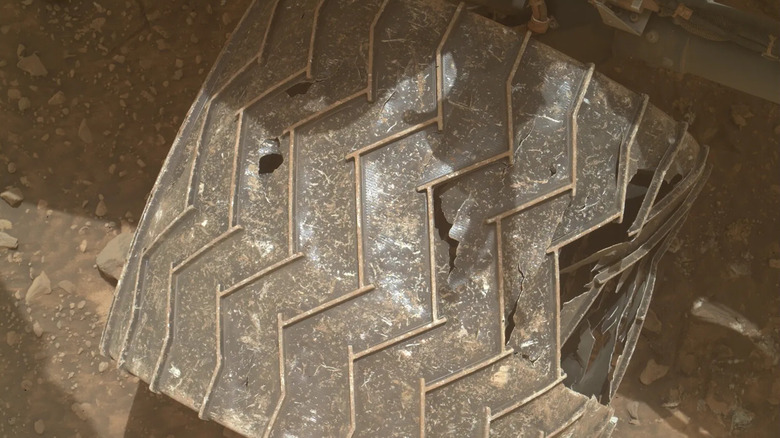
To fully understand why Curiosity's wheels are turning out the way they are, we have to look at how they were made. The rover's six wheels are each about 20 inches across, and they were created out of solid aluminum. Keeping the components in the rover light but also durable was important, especially when you consider how expensive space travel is. While made of a fairly sturdy metal, the wheels themselves are exceptionally thin, with the skin of the wheel only being about half the thickness of a U.S. dime. However, the grousers themselves — which are little zigzag patterns that help give the wheel traction while bearing the weight of the rover — extend slightly further.
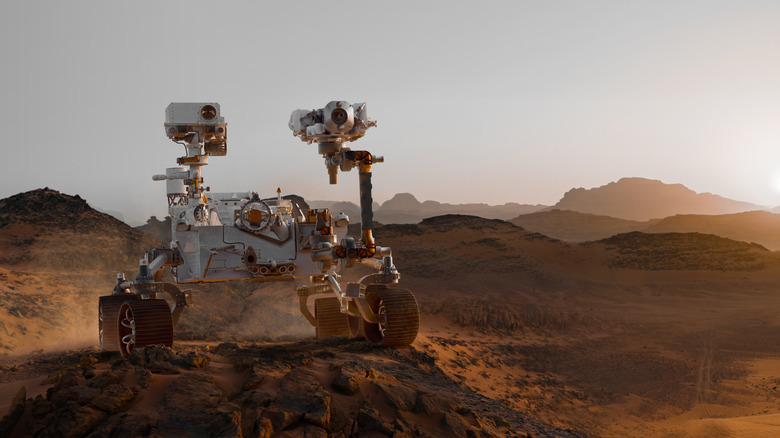
Unfortunately, the terrain that the rover has been traversing over the past several years is embedded with rocks. That means any time the rover runs over a particularly sharp rock, it has the potential to sustain damage as the wheels carry Curiosity forward on its mission. NASA did learn from this damage when designing Perseverance's wheels, at least, but the Martian surface still remains a hostile place for machines thanks to its harsh dust storms and rocky terrain.
The damage has been piling up for years now
Of course, the wear that we are seeing here didn't just show up overnight. Damage to Curiosity's wheels has been visible since 2013, and two of the grousers on the left-middle wheel of the rover broke in 2017. But even back then, Curiosity was providing more science data for astronomers to dig into than anyone could have asked for.
By 2021, engineers had counted four broken grousers across two wheels, plus a growing list of cracks at risk of turning into full breaks. To help extend the rover's lifespan, NASA began rerouting the rover around some of the sharpest terrain and developing traction control software to help the rover avoid getting stuck and causing more wear. Now, the team checks the wheels regularly with the rover's Mars Hand Lens Imager, and as of a 2024 mission update, officials said the most beat-up wheels were still holding up well despite taking some of the worst abuse Mars has to offer. And with the mission extended indefinitely, NASA's plan has always likely been to run the rover until it won't run anymore.
But what about now? Well, some of the latest images taken by the Curiosity rover show that the holes have become larger, and that some parts of the skin have even broken off or collapsed outright. But the rover continues to push forward, climbing up its latest rocky destination, Mount Sharp, in the center of Gale Crater. Even if Curiosity were to stop responding tomorrow, the rover has already accomplished several great things, including finding evidence of ancient water on the Martian surface. Meanwhile, its successor, Perseverance, continues to capture some of the clearest images of Mars we've seen yet.