

Scientists Can Now 3D Print Perfect-Fitting Contact Lenses In 20 Minutes
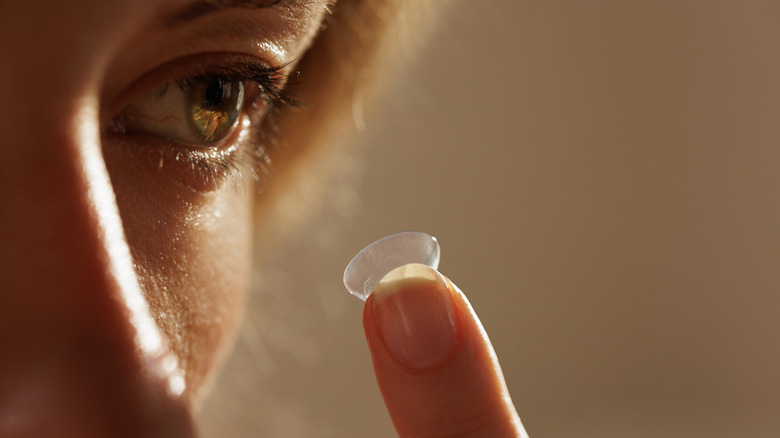
Getting fitted for contact lenses usually isn't a one-and-done appointment. Depending on how your eyes are shaped, the process can take multiple visits, trial lenses to see how your eyes handle them, and a lot of waiting around for a pair that is actually fit for your eyes. For years, optometrists have relied on the same basic manufacturing setup for contacts, forcing contact wearers to make the most of a limited catalog of shapes and sizes rather than the contact being built specifically for someone's eye. But, a new 3D printing breakthrough could change that.
A team at the University of Waterloo has developed a new system that can reportedly 3D print patient-specific contact lenses in as little as 20 minutes. This could open the door to letting the optometrist create specially designed contact lenses, all while breaking the process down into a single appointment. Of course, it is worth noting that this isn't something you're going to be pulling off at home on your 3D printer, as the system relies on a custom silicone material as well as a printing process built specifically for it.
The whole system is currently working its way through clinical testing. However, if it pans out, it could make appointments to get contact lenses much easier overall. Because it could allow the optometrist to print contacts specifically designed around a person's eye shape, it might even make contacts a more viable option for those who don't fall under the currently approved shapes and designs, while also changing how people view 3D printers entirely.
Your eye doctor could 3D print your next pair of contacts
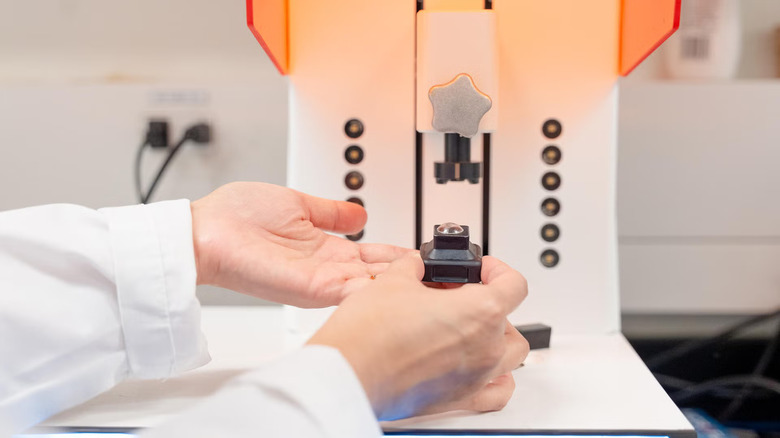
Most contact lenses on the market are manufactured in a limited range of sizes and shapes rather than custom-built for each patient. This works fine for most, but people with irregularly shaped corneas might not be able to work with the current options, as they aren't designed to be compatible with every eye shape. Because of this, getting the fit right could take multiple appointments, as doctors want to test how different shaped contacts work with a person's eye.
The research team built their platform around three primary factors. First, they created custom software for lens design. Next, they created a new type of silicone material designed to work with 3D printers. Finally, the team created a special 3D-printing process that's tuned specifically to the new material. According to Dr. Shirley Tang, the professor leading the work, the team's goal was to create contact lenses with patient-specific designs that allow for a more precise fit while still matching the clarity and performance of current contact lenses.
The researchers used silicone because it's the industry's go-to material for contacts. This is because the it's considered both safe and biocompatible, while it also lets a lot of oxygen through to the eye. However, because the standard silicone formula didn't play well with 3D printers, the team created its own. They also adjusted their process for how 3D printing builds objects layer by layer, adding in a non-contact coating process that helps smooth out any potential imperfections that might form on the surface of the contact lens. The university claims the lenses have passed biocompatibility testing, and the project recently won a Gold Medal at the Shanghai International Exhibition of Inventions.
How contacts are usually made
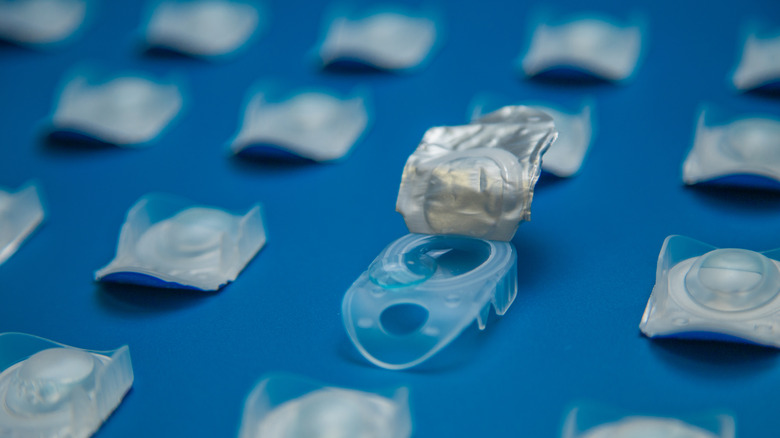
To fully appreciate what the team is trying to change, it helps to know how the contacts already sitting in your eyes were probably made. Today's processes are considerably more refined than the method by which the first glass contacts were made in the late 1800s and even how the first plastic contacts were made in the 1930s, but it still takes quite a lot of work to pull off and limits what eye shapes are supported.
Contact lenses today are produced in one of two ways. The first is through a process known as lathe cutting. This is where small hard disks of lens material are mounted on a spinning shaft that rotates to help shape the lenses with computerized cutting tools. They are then run through an assortment of polishing and quality tests before being packaged and shipped out. The second, more common method sees contact lenses produced through a process known as injection molding. During this manufacturing process, liquid lens material is heated and injected into precise, pressurized molds. Then those finished lenses are polished, hydrated, and tested the same way as the lenses made with lathe cutting.
Either method, though, still spits out lenses in a fixed set of sizes and curvatures rather than a shape built specifically around your eye. This is the gap that the new system is aiming to close. If successful, this research would undoubtedly add contact lenses to the list of things you probably didn't know could be 3D printed. Now we're just waiting for 3D-printed night-vision contact lenses.