

Samsung Galaxy Z Fold 8 Ultra Review: Better Than The Base, But Not As Exciting
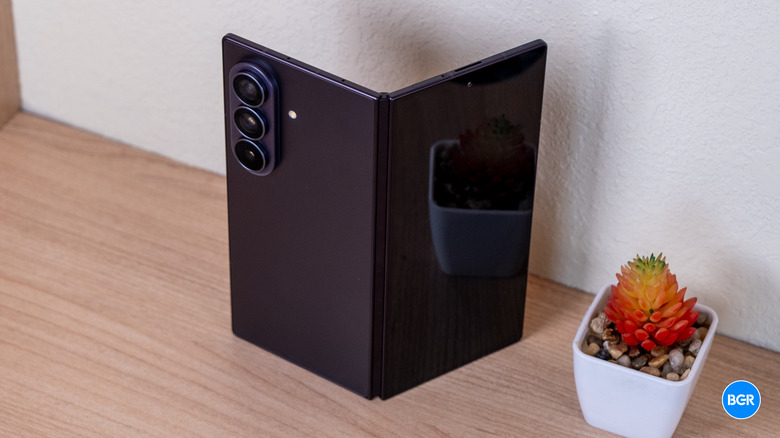
Samsung is finally giving the Z Fold lineup the Ultra treatment. Well, kind of. At its most recent Unpacked event, Samsung launched not one but two book-style foldable phones — in the form of the Galaxy Z Fold 8, and yes, the Galaxy Z Fold 8 Ultra.
Of course, you might assume that the Galaxy Z Fold 8 Ultra is the one that brings something new to the table. On the contrary, however, it's the standard Galaxy Z Fold 8 that has the all-new form factor and is the one that's getting most people excited about foldables again. That doesn't mean that the Samsung Galaxy Z Fold 8 Ultra is a subpar phone, of course. In fact, as you can probably tell by the price and the name, it's technically the better phone.
Despite the non-obvious changes, the Galaxy Z Fold 8 Ultra does have a higher price tag, retailing for $2,099. That makes it one of the most expensive smartphones you can buy right now and one that costs more than most laptops. But how much better is it? And should Samsung have given it the same form factor revision that it gave the standard Samsung Galaxy Z Fold 8? I've been using the Galaxy Z Fold 8 Ultra for a while now to find out.
Design
As mentioned, the base Samsung Galaxy Z Fold 8 has gotten a pretty major design update compared to previous generation Samsung foldable phones. It's shorter and wider, and that impacts both the cover screen and the inside display. The Galaxy Z Fold 8 Ultra, on the other hand, is essentially indistinguishable from the Galaxy Z Fold 7, at least at first glance. Sure, there are some design changes, but they're minor and iterative.
That, of course, isn't necessarily a problem. Plenty of people love the design of the Z Fold 7, especially given its much thinner build compared to previous Z Fold devices. The Galaxy Z Fold 8 Ultra goes even further with that concept. The device is slightly thinner than the Z Fold 7. And while the differences are minor, anything that trends towards thinner in the world of foldable phones is a step in the right direction.
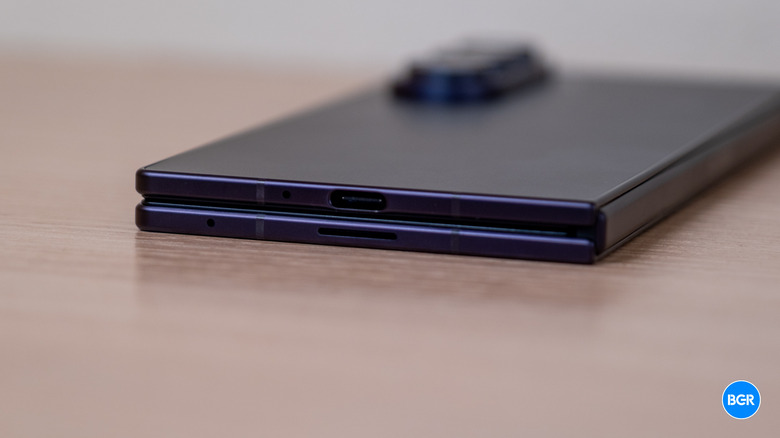
The build quality is pretty good, too. There's Gorilla Glass Ceramic 3 on the cover display, Victus 2 on the rear, and a so-called Advanced Armor aluminum frame holding it all together. The star of the show, though, is the new hinge. This phone opens with a smoother, less stiff action than the Fold 7's hinge. Supposedly, that makes it easier to open with one hand, but I still found it pretty much impossible to open without using both hands. That's something I've just gotten used to, though. I don't find it to be a huge issue in most day-to-day use.
The phone is also more durable than those from a few years ago — though not compared to the Galaxy Z Fold 7. It has an IP48 rating, which means it's pretty well-protected against water, but it's also only protected against particles larger than 1mm. If you drop it in the pool, it should survive just fine, but you won't want to bring it to the beach.
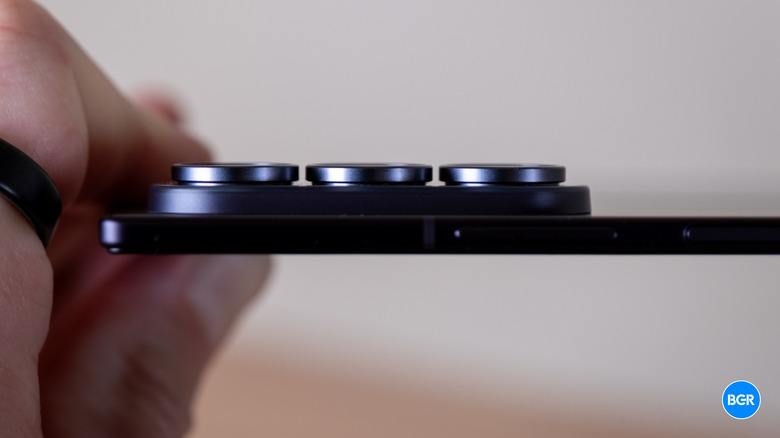
For the most part, the actual look of the phone is pretty similar to the Z Fold 7. It has the tall and thin form factor with volume and power buttons on the right side and a triple camera module on the back. That camera module is pretty pronounced and more than doubles the thickness of the phone when unfolded. It means that the phone doesn't even get close to sitting flush on a desk and will rock fairly heavily if you try to use it while it's laying down.
Compared to the Z Fold 7, then, you're getting a thinner phone with a noticeably more refined hinge and a better IP rating — but not a phone that looks or feels dramatically different. Compared to the standard Z Fold 8, the differences are much more pronounced. Which shape you prefer is genuinely a matter of taste.
Display
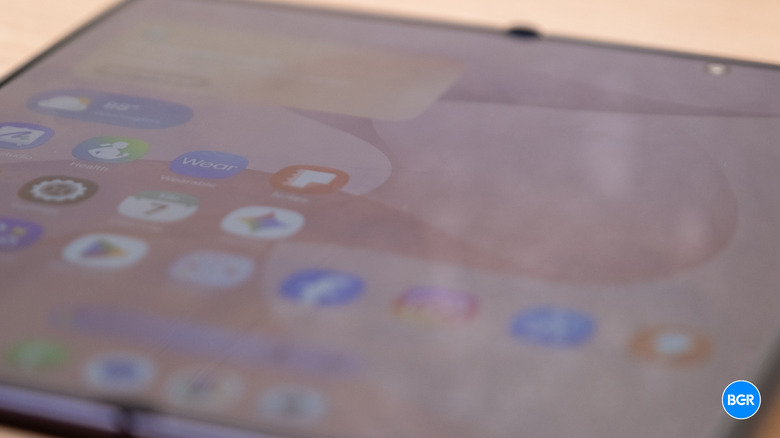
The displays on the Z Fold 8 Ultra are among the best I've seen on any foldable. The main inner screen is an 8.0-inch Dynamic LTPO AMOLED 2X panel with a 2256 × 2504 resolution and a nearly square 9.99:9 aspect ratio. The cover display is a 6.5-inch panel coming in at 1080 × 2520, matching that same pixel density. Both support variable 1–120Hz refresh rates and HDR10+, and both deliver the deep blacks and excellent color accuracy. Samsung claims 3,000 nits of peak brightness, and indeed, the screen is quite bright — I was easily able to see content outdoors, partially thanks to the anti-glare coating on the display.
Perhaps more important is the work Samsung has done to reduce the crease. It's dramatically reduced this generation, to the point of being virtually unnoticeable during standard head-on use. You can still find it under glancing light or with the screen off, but I simply stopped thinking about it as time went on — though, to be fair, I already stopped thinking about it when using other foldables, too. Combined with the reduced reflectivity, the inner display feels much closer to a proper tablet screen than any Samsung foldable before it. Again, I suspect most people will never think about the crease on this device.
The aspect ratios are the same as the Galaxy Z Fold 7, so if you like that form factor, you'll be happy with the Z Fold 8 Ultra. It is, of course, a notably different look than the new Galaxy Z Fold 8, which has a much wider and shorter passport-style design. That really comes down to personal preference, in terms of which you might choose. The taller, narrower screen can feel a little more cramped at times, but it also might feel more natural for those accustomed to traditional slab phones.
Performance
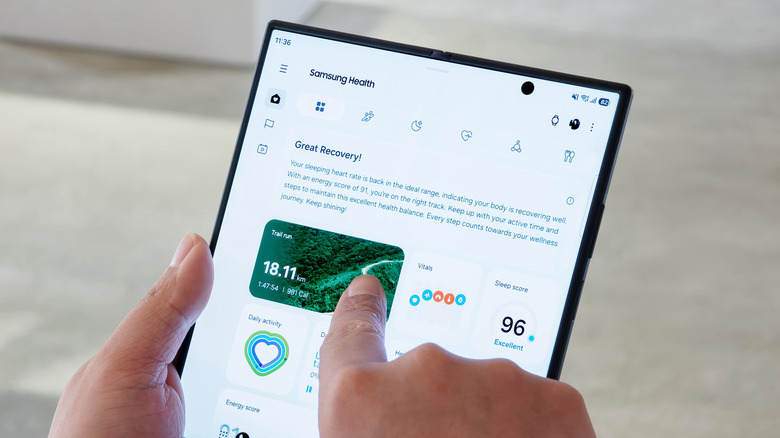
The Z Fold 8 Ultra runs on the 3nm Snapdragon 8 Elite Gen 5 for Galaxy processor, paired with either 12GB or 16GB of RAM, depending on the model you get. It's the same chipset you'll find in the standard Galaxy Z Fold 8, so there's no major performance gap between the two Folds — the Ultra tax includes other perks.
In day-to-day use, this phone is very fast. It'll easily be able to handle everything that you can throw at it in 2026, including heavy multi-window productivity, mobile gaming, and more. That's particularly handy given the fact that, with this form factor, you'll likely want to run apps in split-screen view and even have more than two apps open at a time, so you'll want to be able to multitask effectively.
The phone performed very well in benchmarks. In Geekbench 6, it managed 3,666 in a single core test and 10,878 in the multi-core test. That's a solid jump over the Z Fold 7, though it's not really all that dramatic when it comes to daily usage. Every year, performance improves a little bit, and this year is no exception. Basically, you should expect to be able to play even the most demanding mobile games without much issue.
The caveat is that the Z Fold 7 was already fast, and when it comes to the apps you use every day, you may not feel the difference. The extra headroom matters more for future software, AI features, and the heaviest multitasking than for scrolling through your email. But for a phone Samsung wants you to keep for seven years, that headroom is worth something.
Battery and charging
The 5,000 mAh silicon-carbon battery is the largest Samsung has ever put in a foldable, and it makes a difference. In fact, I had no issues getting the phone to last all day, with mixed usage between the cover and interior display. I think the vast majority of users will get to a full day of use with room to spare at the end, and lighter users should be able to stretch well into a second day, though I don't necessarily think that this is a two-day phone.
Charging is better, too, though it's not at the same level as some other devices. The Galaxy Z Fold 8 Ultra supports 45W wired charging over USB-PD 3.0, 20W wireless via Qi 2.2, and 4.5W reverse wireless for topping up devices like earbuds. This is better than the Z Fold 7 from last year, but it's not super quick, and there are plenty of phones, especially out of China, that are much faster. If you charge overnight or keep the phone on a wireless pad at your desk, you won't care. If you're the kind of person who tops up in ten-minute bursts, competitors do it better.
It's worth noting that, unfortunately, the device does not have the magnets for magnetic charging. It's very disappointing to still see this omitted from new phones in 2026. Apple has had MagSafe charging for years, and others, like Google, have finally started implementing it on the Android side. Hopefully 2027 is the year of Samsung magnetic charging.
Camera
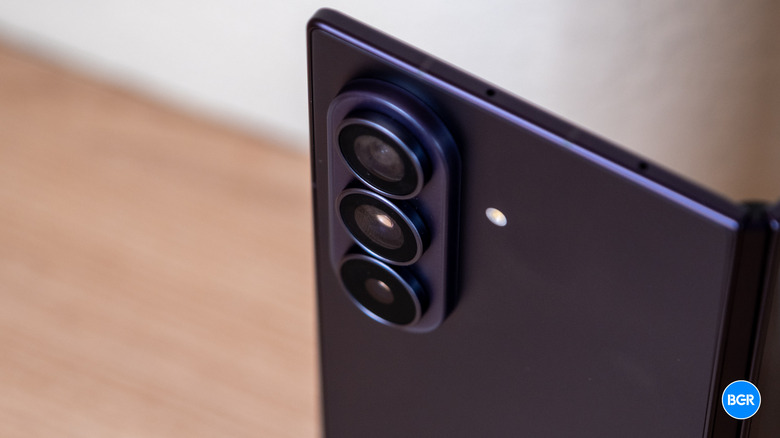
The camera system is one area where the phone has made real strides since last year, and it's also an upgrade over the standard Galaxy Z Fold 8. The rear array includes a 200MP main camera (f/1.7, 24mm, OIS), a new 50MP ultrawide with a 120-degree field of view, and a 10MP 3x telephoto (67mm, OIS). There are dual 10MP selfie cameras in hole-punches on both the cover and inner displays — Samsung has skipped the under-display camera this time, which is the right call for image quality.
The big upgrade over the Z Fold 7 is the ultrawide. Even setting aside the resolution, it's a pretty big improvement, delivering noticeably more detail and better dynamic range, particularly in daylight. The main and telephoto hardware, though, is carried over unchanged from last year, so if you were hoping for an all-new camera system to match the Ultra branding, temper your expectations.
In good light, the results are very impressive. The 200MP main sensor produces bright, vibrant, detailed images with the punchy-but-not-cartoonish color processing Samsung has settled into. The 3x telephoto is solid for portraits and moderate zoom, and digital zoom beyond that is usable up to a point, though edges soften quickly past 10x.
Low light is where the camera isn't quite as impressive as some others. The Ultra produces bright, sharp images with effective noise control, and the main sensor's size helps considerably. But it falls short of the Galaxy S26 Ultra in low-light detail — the S-series flagship simply pulls more out of dark scenes, more reliably. The gap in zoom quality is even wider. Without a 5x or 10x periscope, the Z Fold 8 Ultra just can't compete with the S26 Ultra for long-range photography. In fact, the telephoto camera on this device is about the same quality as the short-range telephoto on the Galaxy S26 Ultra, which of course coexists with a much better 5x telephoto camera on that device.
As with other foldable devices, the form factor can be helpful when taking photos of yourself. You can use the cover display as a viewfinder while taking selfies with the higher-quality rear cameras, meaning that you don't have to use the lower-quality 10-megapixel front-facing cameras if you don't want.
Against the standard Galaxy Z Fold 8, the Z Fold 8 Ultra has a clear advantage in the camera department. The standard model has a dual 50-megapixel setup, doing away with the telephoto camera altogether. On the Z Fold 8 Ultra, you get better cameras all around, plus that telephoto camera, even if the zoom quality isn't as good as on some other devices.
Software
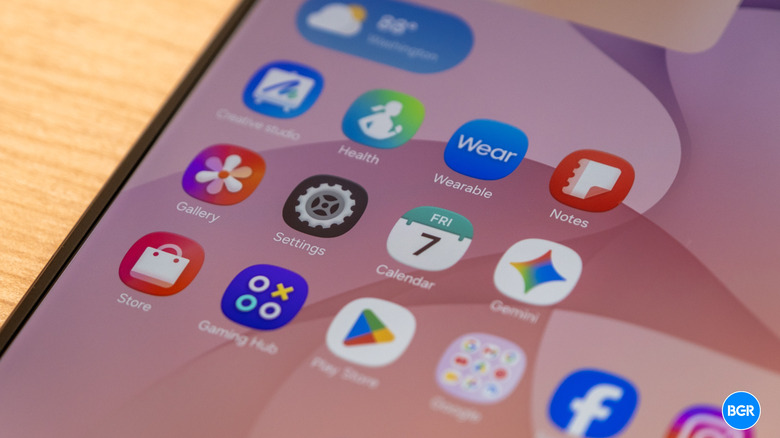
As you would expect, the Samsung Galaxy Z Fold 8 Ultra ships with Android 17 coupled with Samsung's One UI 9. Samsung says that the device is guaranteed to get seven years of major OS updates and security patches, which puts it at the top of the industry. Android manufacturers in general have gotten better at offering long-term updates, but Samsung and Google are ahead of the rest.
In general, One UI looks and feels like it does on other Samsung phones. That's to say that it works quite well, though it's not necessarily my favorite implementation for Android out there. It does have some solid foldable specific touches, though. Drag-and-drop between apps is smooth and reliable, app pairs let you relaunch your favorite multi-window combinations instantly, and the improved taskbar makes three-app setups easy to build and manage. Apps also transition gracefully between the cover and inner displays when you open or close the phone, without jarring reloads.
There are, unsurprisingly, a number of AI-related features, though you may or may not actually use them. You'll get features like touch-free voice control of apps, along with on-device image and text generation. These are all the same features that you can find on other Galaxy devices, so there's not much that stands out here.
Overall, the software on the Galaxy Z Fold 8 Ultra is well designed and easy to use. There is some redundancy between Samsung's first-party apps and Google's equivalents, though if you're coming from the Z Fold 7, you won't notice much in the way of differences. But again, if you're used to Samsung software and like it in general, you'll be perfectly happy here.
Conclusions
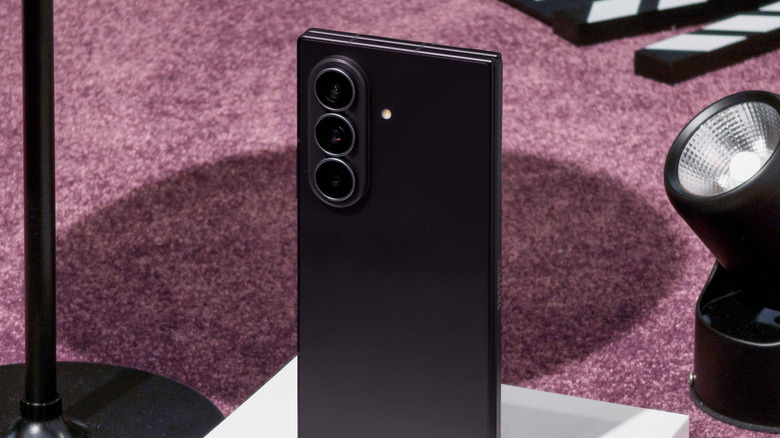
The Samsung Galaxy Z Fold 8 Ultra is Samsung's most capable foldable phone yet, but it's far from the most interesting foldable this year. The fact that it keeps the same form factor that Samsung has offered for a few years now, but has been released alongside the arguably more interesting Galaxy Z Fold 8, kind of puts it in a weird position.
Technically, it is a far better phone, thanks to upgrades like its better camera, bigger battery, and larger display. But if you like the form factor of the base model, you're stuck choosing between a phone with better hardware and a form factor you don't like as much, or a phone with worse hardware and a form factor you prefer.
There's also the price point. Starting at $2,099, this is a niche investment for enthusiasts and professionals, not a mainstream phone — and the year-over-year changes make it a hard sell for current Z Fold 7 owners. Unless you specifically need the bigger battery, the 50MP ultrawide, or the brighter and less reflective display, your Z Fold 7 is still most of this phone at none of the additional cost. Regardless, again, the Galaxy Z Fold 8 Ultra is indeed a great phone, and if you're looking for a foldable phone with all the latest bells and whistles, it's an excellent option.
The competition
There's increasing competition in the foldable space, but the Galaxy Z Fold 8 Ultra also competes with other Samsung phones. The Galaxy S26 Ultra offers better camera performance and a more durable, conventional screen at a significantly lower price, so if photography is your priority, that's the phone to buy. The standard Galaxy Z Fold 8 is roughly $200 cheaper and more compact, and its 4:3 inner screen is arguably better for media consumption, though you'll give up the 200-megapixel main camera and the telephoto lens entirely.
Outside of Samsung, there are other foldable devices with faster charging and different aspect ratios. That said, in North America and other areas where Chinese devices are difficult to acquire, the Galaxy Z Fold 8 is probably the best foldable phone you can get right now.
Should I buy the Samsung Galaxy Z Fold 8 Ultra?
Yes, if you're in the market for a quality foldable phone and willing to pay a hefty sum for it.