

Star Trek: 5 Kelvin Timeline Mistakes The Franchise Can Never Repeat Again
We may receive a commission on purchases made from links.
"Star Trek's" Kelvin Timeline is the alternative universe that the 2009 movie and its sequels are set in. A faster, flashier version of "The Original Series," it was met with positivity as it started out. However, as time wore on and people went back to "TOS" and "The Next Generation" era, it became obvious that the Kelvin Timeline might not be so hot. It's riddled with issues that have plagued the entirety of the Alex Kurtzman era of "Star Trek," and sometimes doesn't even feel like the series we once knew.
That's not to say that we can't do different things with "Star Trek," or any of Hollywood's enduring legacy franchises. "Deep Space Nine" was a much grittier show in comparison to the incumbent "Next Generation" and incoming "Voyager," set on a dingy space station, dealing with the chaos that brings, and also war. That said, the Kelvin Timeline doesn't work within the established tropes, but instead leaps forward into stupidity or tries to subvert expectations to a fault.
There's a reason people were pushing for J.J Abrams to take the "Star Wars" reins, but much like with "The Force Awakens," in hindsight, all he, Kurtzman, and Roberto Orci did was mash up stereotypes from the series, rather than create a good story. From trying to make Spock have a sex drive, to leaning too heavily on nostalgia, or even solving death itself, maybe it's a good thing that the Kelvin Timeline has been frozen.
Stop trying to make Spock an emotional wreck
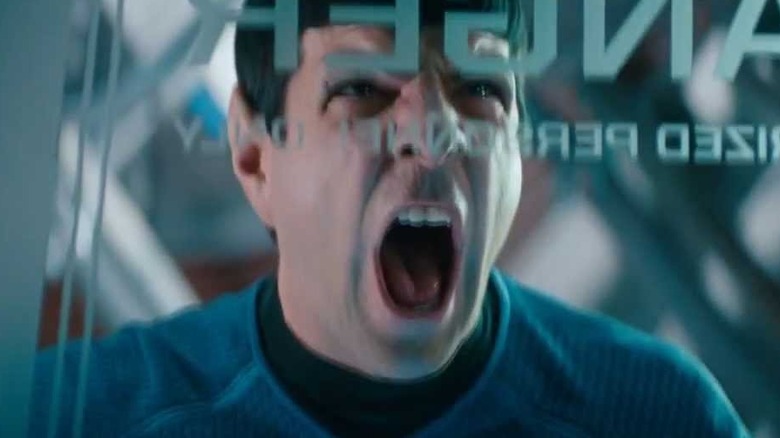
Spock as a character in "The Original Series" was an established Starfleet member and logical counterpart to the emotional Captain James T. Kirk. While the slower pace of the original series might not have been the "in thing" in 2009, it did deal with Spock's sexuality and life outside of Starfleet. He had a bride-to-be and succumbed to Pon Farr (a biological event where Vulcans get very hot under the collar), but it never led to Spock becoming an emotional wreck full-time. It eliminates the alien aspects of the crew, the point of "Star Trek," that all beings can work together in harmony, despite their massive biological or mental differences.
Not only does Spock have an established relationship with the Enterprise's communications officer (Vulcan was exploded in the Kelvin Timeline, so no unseen bride for Spock), but it becomes one of the central points to the character in the first two movies. Fair enough, we can't establish something and leave it unseen. It goes back to a major problem that anything post-'09 "Trek" has, in that it leaves the character mostly indistinguishable from the rest of the crew.
Spock also brutally beats down Khan at the end of "Into Darkness," a massive split from his original persona. Once again, it smushes Spock into a fine paste that does away with his established character for an action scene. What could've been a smart interaction between these two geniuses boils down to two apes with rocks. In any other movie you could extrapolate from that, but this is "Into Darkness," a direly thin movie.
Star Trek shouldn't be so violent
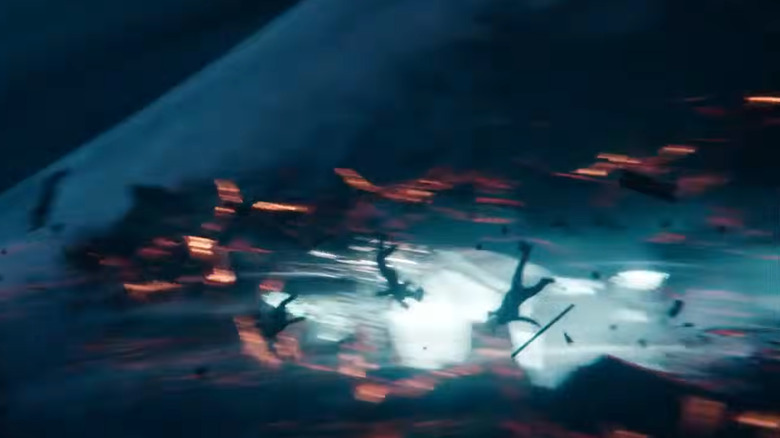
If you watch an episode of "Star Trek: Discovery" and think that the space fights are convoluted, visual spew, blame the Kelvin Timeline. With Kurtzman moving over from writing duties to showrunner duties, so came the updated visual language for "Star Trek." It's dour, violent, and too realistic in spots. Yes, it builds a threat, but visually these movies never stop moving for just a second, so it starts to all merge into one amorphous blob.
"Star Trek," before it was canned after "Enterprise" in 2005, prided itself on its characters' abilities to solve issues. Even the most intense action sequences from "The Original Series'" movies are easy to follow, with a dramatic weight to them. When everything is going at all times, including the movement of the camera swinging through the corridors as it follows someone, it becomes tiring. It's not sci-fi; it's an action flick with lingo.
One of "Star Trek's" best moments is in "The Next Generation," where Picard navigates alien bureaucracy and manages to trick imposing aliens into not exterminating a human colony by demanding an arbitrator who won't be awake for six months. Either give Starfleet three weeks to evacuate, or wait it out. No heavy violence or intense action, just "Star Trek."
Character traits cannot be the whole character
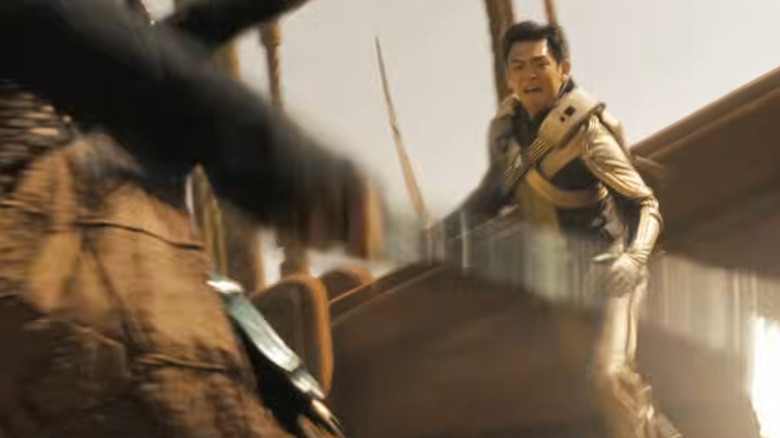
One major issue with the Kelvin Timeline is how it reduced some characters to just their traits. Did you know in one episode, Sulu goes mad and starts swinging around a fencing sword? Now he must be beamed down with a sword and do battle.
Chekov is really good at coordinating the ship, so now he must be this incredible savant. Kirk likes the ladies, so that's how we're introduced. Even Scotty is reduced down to a mostly grouchy Scottish weird engineer, rather than a respected, if boisterous, man. The problem with this is that these characters, even in the significantly more "Trek" threequel "Beyond," barely ever get above this level.
Obviously, even though it's an ensemble cast, the primary focus goes to Kirk and Spock, because a movie could never spend time exploring new aspects of legacy characters. Once valuable members of the crew, people you wanted to see more of, are left to languish in a quagmire of tropes and references.
Never touch Khan again
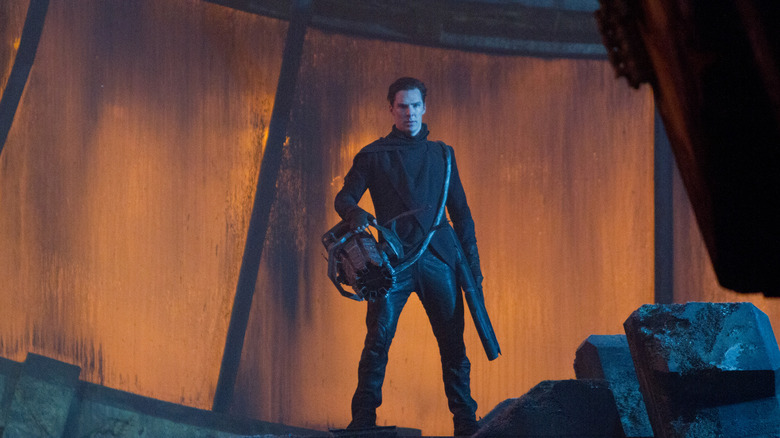
There's a lot of "Into Darkness" slander in this piece, we know. It's just a really bad movie when you start to break it down as a "Star Trek" story. One aspect that's a massive detriment is bringing back Khan Noonien Singh, the main villain of a "TOS" episode and "Wrath of Khan," the second "Star Trek" movie. Due to time-traveling shenanigans and diverging timelines, the story of the original episode and movie is merged into a hodgepodge. The result is a reveal only important to the audience and not the movie's actual plot or characters. In fact, Spock has to go ask older Spock who he is and why they should be afraid, not that a super-human terrorist on the loose is enough.
The reason Khan works in "Wrath of Khan" is the storied history between the two, Khan and Kirk. It's not built up over years of onscreen adventures, but it's revealed that Khan has been stewing over his exile on Ceti Alpha VI and now wants some revenge. This isn't a world-ending story; it's a personal, bitter revenge tale, where Kirk, despite saving the day, still loses, as Spock sacrifices himself to save the Enterprise. "Into Darkness" uses it as a battering stick (which J.J Abrams regrets) to get the audience involved by telling them that Khan is a huge threat, instead of building up to it.
A terrible aspect of Khan in "Into Darkness" is that it cast English actor Benedict Cumberbatch as Khan. It's sort of forgiven that Mexican actor Ricardo Montalbán was cast in the '60s for "TOS" and brought back in the '70s for "Wrath of Khan," but in 2013? This man from India is definitely not Cumberbatch.
Star Trek should never solve death ever again
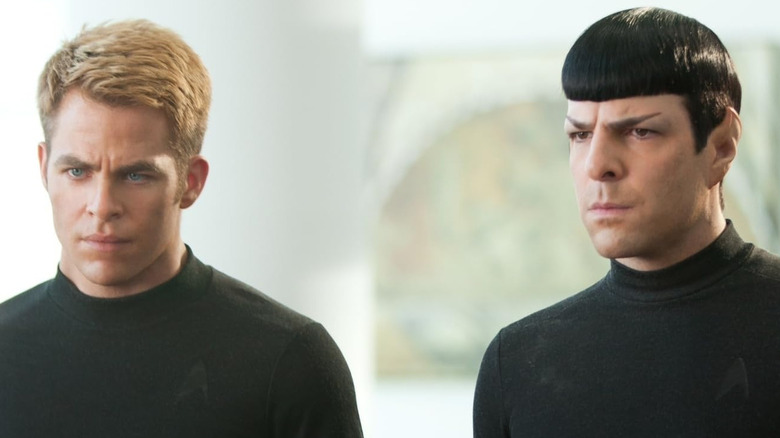
You know what you should never do in your continuing series? Solve death. In "Into Darkness," it's found that Khan's blood has restorative properties, which they use to undo the death of Kirk and effectively establish that death has been solved.
It was such a bad move that "Beyond" dropped it faster than it dropped Spock and Uhura. It isn't even mentioned in the movie, just quickly pushed under a rug somewhere. Solving death in "Star Trek" is probably one of the single daftest ideas ever brought about.
You're telling me that I should be invested in this crew's future five-year away mission at the end, when I know that if any of those red shirts were to be put in danger, they'd just immediately be brought back? That sure sounds exciting. Let's all praise the plot hole it left, because it no longer hurts the head.