

Sending A Text With '90s Tech Looked Totally Different Than Today
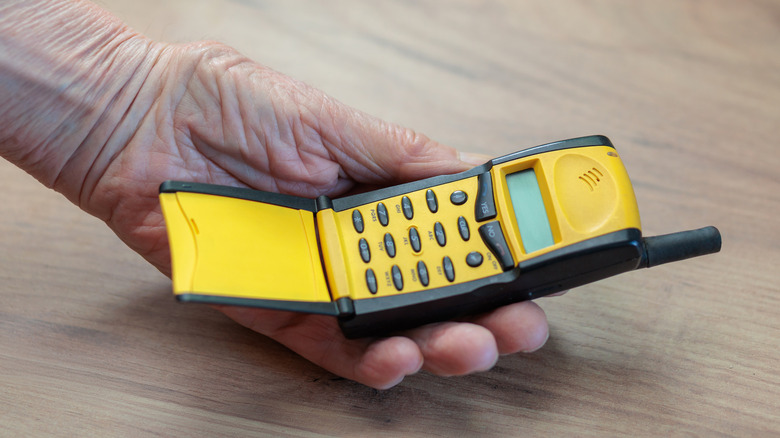
I'm of that generation who grew up when everyone had a pager in high school. My friends and I used these tiny devices, which are today typically reserved for doctors and other service professionals, like our lifelines to one another. You couldn't receive a phone call, though you could receive a notification to call someone. How could you respond? You had to find a payphone (remember those?) and a loose quarter to call them back, or wait until you got home or to a landline (remember those, too?). You could only send numbers with these earlier pager models, though my friends and I, like many others, got creative with commonly used codes and even our own unique ones.
While the ability to text words and letters was eventually added to the mix toward the end of the '90s once cell phones became popular among the masses, the first short messaging service (SMS) text was actually sent long before that on December 3, 1992. Engineer Neil Papworth used a personal computer and sent the words "Merry Christmas" to his colleague's phone over the Vodafone network. The first cell phone with SMS functionality built-in was the Nokia 2110, which came out in 1994 and was limited text to 160 characters. So, while texting as we know it wasn't commercially available until later in 1999, before then, it was all about the pager and the clever ways you could devise messages using numbers. This included lots of shorthand and even clever ways of using numbers to resemble actual words.
Texting in the '90s would blow your mind
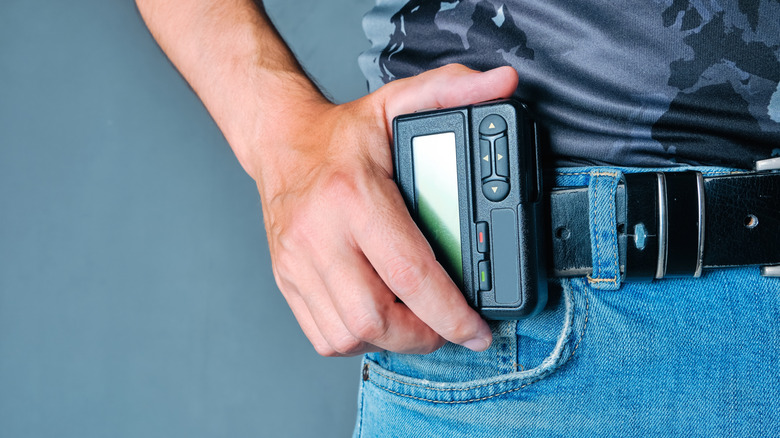
It wasn't just text messaging, but also cell phones themselves that didn't reach a global scale until later in the '90s. Finally, even lucky teenagers started getting their hands on 2G phones. Before that, pagers were all the rage. The tiny receiving-only devices clipped to your hip and could connect to a mobile network. When someone called your pager, they could leave a numeric or voice message. I recall my mom leaving voice messages all the time, simply saying "call me" and never quite wrapping her head around just entering her number to save me the two quarters (one to listen to the message and the other to call her back).
In the pager days, you could say "goodbye" by typing "6000-843," the closest numeric sequence to resemble those letters. "Hello" was universally "07734," which looked like the word when the seven-segment display of a pager was held upside down. To say, "I miss you," type "1 177155 400," with the "177" connecting to resemble an "M." You could get even more creative. My friends and I figured out how to write "shoppers," referencing a popular store, Shopper's Drug Mart, to indicate we had arrived at the mall and were waiting outside the shop. There were also common quick codes that worked a bit like charades, giving you the number of letters in each word — for instance, "143" for "I love you" or "424" for "call me back." My friends and I would page our phone number with a "-1" at the end to indicate that it wasn't urgent, whereas "-911" meant we needed an immediate callback.
The evolution of text messaging
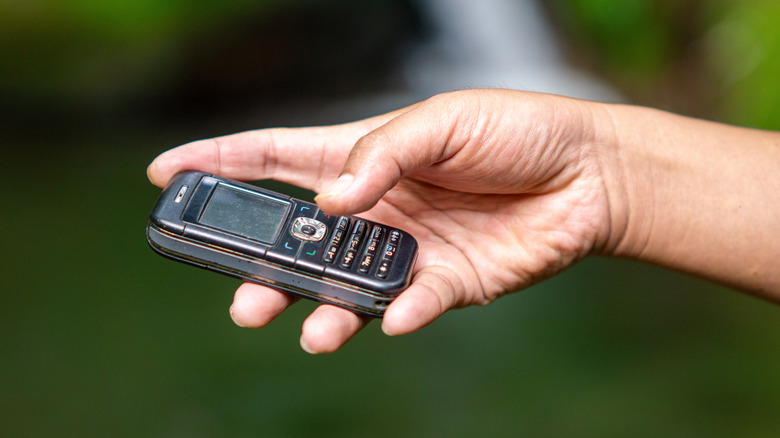
Once you could text between devices on different networks and cell phones were more accessible to the masses, it was a game-changer. Now, we could type text. But you were still constrained by a strict character limit and had to use a numeric keypad. Think pressing the "2" key three times to get to "C," the "4" twice to get to "H," and so on. Because of this, shorthand continued since it was quicker. There was an entire slang language born in the era. This saw the early days of "BRB" for "be right back," "TTYL" for "talk to you later," and "LMK" for "let me know."
Interestingly, similar shorthand is still used today by the younger generation even though smartphones have touchscreens, predictive text, voice input, and even AI to help you compose messages as long and as detailed as you like. In a way, we have reverted to the old ways of texting. It was necessary back then, but it's preferred by some today.
Despite being confined by character limits and frustrating numeric keypads, by the year 2000, billions of text messages were being sent daily around the world. It wasn't until the Apple iPhone launched in 2007 that SMS had the capability to include multimedia as well, like pictures. Today, data and text message usage far surpasses voice on mobile devices. With the rise of instant messaging, it's evident we have come a long way. But it's fun to look back at how it all began. TTFN.