

Study Shows That Launching Anti-Solar Spray Into Space Might Solve Heat Waves

Earth is warming to levels not seen in about 6,500 years. A long heat wave seared Western Europe in summer 2026, which recorded its hottest June ever. In July, the ocean saw its highest average sea-surface temperature on record outside the polar regions. Marine heat waves can cause species like Alaskan snow crabs to nearly vanish. Habitats like coral reefs, now at a tipping point, can bleach until they die. And warmer water can help spread toxic algae, which poisons marine animals and contaminates shellfish. A leading climate scientist says marine heat waves will grow hotter and last longer without intervention. But she has a potential solution: an anti-solar spray.
Dr. Lala Kounta at Michigan State University believes reflective aerosol sprayed into the Earth's upper atmosphere could offer critical protection from heat waves. It works kind of like a sunscreen for the atmosphere. Kounta and a team of scientists from several institutions analyzed the peer-reviewed ARISE-SAI climate intervention simulator to find out how aerosol cooling could temper heat waves across the world's oceans.
They found that limiting global warming to 2.5 degrees Fahrenheit would require injecting up to 11 million tons of SO2 per year, and would reduce heat-wave intensity by 25% across the oceans, and reduce their duration by 21%. Limiting warming to 2 degrees would require up to 22 million tons of SO2 per year but would reduce intensity and duration by 75% and 80%, respectively. Most of the aerosol would end up in the Southern Hemisphere, where its broader atmospheric effects are unclear. The model shows the biggest benefits in the tropical Atlantic, Indian Ocean, Arctic Ocean, and South Atlantic. The findings provide evidence that aerosol could be an important tool for fighting climate change.
How scientists would launch aerosol into space to fight heat waves
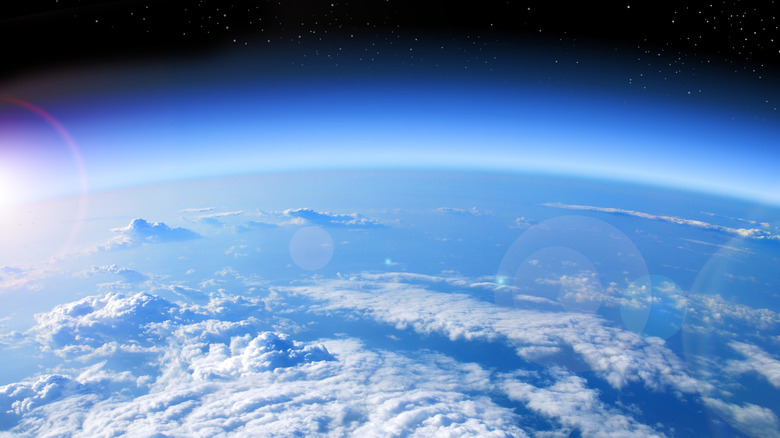
The idea of putting sunscreen in the atmosphere poses a few challenges. Stratospheric aerosol injection (SAI) has never been used to cool the planet. The underlying concept, however, has been proven. When volcanoes erupt, they emit sulfur dioxide into the atmosphere, which transforms into aerosols that reflect sunlight. Kounta's team points to the 1991 Mount Pinatubo eruption in the Philippines as an example, which injected 22 million tons of SO2 into the atmosphere. Aerosols from the active volcano lowered the average global temperature by more than 1 degree Fahrenheit for nearly two years.
To recreate the cooling effect, scientists would have to fly a specialized high-altitude aircraft into the stratosphere to release sulfur dioxide. It would react with water vapor and other atmospheric chemicals to form tiny aerosol droplets. The droplets would spread across the stratosphere and reflect some incoming sunlight. It's important that it be in the stratosphere, because at lower altitudes, rain would wipe out the aerosol droplets. ARISE-SAI simulations allow scientists to test injection points at different latitudes. Kounta's team analyzed multiple latitudes, then measured how those scenarios changed marine heat-wave intensity and duration across the global ocean.
Despite the optimistic findings, cooling the ocean with aerosols won't save it from climate change. Oceans would still absorb atmospheric carbon dioxide, which would continue changing seawater chemistry and increasing acidification even as temperatures fall. Emissions reductions and targeted carbon dioxide removal are necessary to combat climate change and protect the ocean. But SAI could play an important role in how humans save Earth from human-caused climate change. And it'll clearly be cheaper than shooting $200 trillion of diamond dust into space.