

5 Companies You Might Not Realize Are Owned By Nvidia
Nvidia, one of the main reasons we can't have nice things at the moment, what with all the AI data centers hoovering up components and driving up prices, owns a fair number of companies. Many of them have been completely absorbed into Nvidia and lost branding, including large acquisitions like Mellanox. Its CEO, Jensen Huang, has guided the company to a $4 trillion valuation, as the AI bubble keeps growing.
A majority of Nvidia's purchases aren't companies that you'd immediately recognize. That's unless you were reading the nitty-gritty tech dirtsheets and keeping tabs on which processor Apple was using at the iPod's launch. It's failed to acquire companies too, notably its intended merger with ARM, the company behind processor architecture that's found in phones, tablets, handheld devices, and the like. The $40 billion deal collapsed after the U.K.'s regulatory arm shut it down.
While Nvidia does still acquire companies, more interesting is how it's recently been heavily investing in companies, but not acquiring them. For instance, a $20 billion deal with Groq was misinterpreted by some as Nvidia buying them out, when it's — technically — a licensing deal. Most recently, it's done this with startup Poolside, which is licensing out its AI models to Nvidia, which some reports position as the company attempting to avoid merger scrutiny. That said, let's look at what they do own.
PhysX (Ageia)
Known since 2008 as one of Nvidia's bits of tech that came on graphics cards, PhysX is a real-time physics engine. Starting out as commercial software, it was developed to work alongside a large array of systems and software, eventually being incorporated into Epic Games' Unreal Engine 3. Ageia, a hardware company, developed a PPU, or Physics Processing Unit. PhysX's team, then known as NovodeX AG, was bought out by Ageia, and bought another physics engine company, Meqon, to bolt onto the now rebranded PhysX.
Nvidia comes along in 2008, buying out Ageia, which had produced the PPU, which sat in the PC as another expansion card, handling games or 3D modeling physics, if supported. Once acquired for an undisclosed sum, Nvidia dropped the dedicated hardware and incorporated it directly into its GeForce lineup.
PhysX is intended to smooth out development by situating itself as the software or video game's physics engine, rather than having to manually develop it from scratch. PhysX isn't directly used these days, but powers the default physics engine on the Unity game engine. Epic Games' Unreal Engine removed PhysX in favor of Chaos, its own physics engine, with the move to UE5. With the launch of the RTX 50-series, support for 32-bit PhysX games was dropped briefly, causing older games like "Borderlands 2," from 2012, to run terribly.
PortalPlayer
PortalPlayer existed as a company for about eight years before Nvidia came in and subsumed it for $357 million. The fabless chip maker was best known for providing the processors for the original Apple iPod, leading to 90% of the company's gross revenue becoming reliant on it. Things went south when Apple inevitably began swapping processors.
PortalPlayer had a hand in providing system-on-chips (SoCs) it designed and then fabricated elsewhere. For Apple, it provided chips for the iPod Generations 1, 2; Gen 3; Gen 4; Gen 5; Photo; Mini Gen 1; Mini Gen 2; and Nano Gen 1. It provided chips for the Microsoft Zune HD and is now fully absorbed into the company; its SoC work helped Nvidia get its Tegra line started. The Tegra GPU is best known for being the graphics chip at the heart of the Nintendo Switch and Switch 2.
Nvidia has most recently been diving further into the SoC vertical for PCs. It's launched DGX Spark and RTX Spark AI-first PCs, intended for heavy usage of LLMs and other AI tech. These combine a lot of Nvidia's proprietary Technologies, like CUDA, to squeeze as much performance as they can out of the chips.
Mellanox Technologies
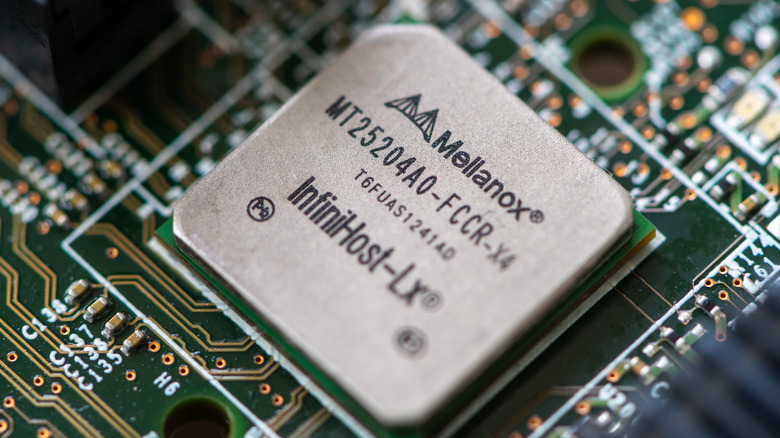
Israeli-based Mellanox Technologies was purchased by Nvidia for $6 billion in 2019. The company, founded in 1999, specialized in creating networking hardware, with its main customers being Dell and HP. These aren't like the regular switches and cables you'd find in other network stacks, but for super low-latency services.
The Mellanox brand has since been retired, but the division within Nvidia still provides its ConnectX, Spectrum Ethernet Platform, and its cable line. ConnectX ports can even be found on the DGX Spark, Nvidia's "cheaper" $4,699 AI supercomputer. The Mellanox purchase follows Nvidia's attempt to corner the AI hardware space, as it's completely dominated the GPU vertical. Why just provide the cards, when you can also do the entire data center at the same time?
The deal has been described as the "most significant merger the industry has ever seen" by founder Eyal Waldman, who left Nvidia after the purchase. His claims include that LLM makers, like OpenAI, rely on the Mellanox hardware more than people expect. With so much data to process, Waldman stated that "Without that connectivity, they wouldn't have been able to reach the data processing speeds required for artificial intelligence."
Cumulus Networks
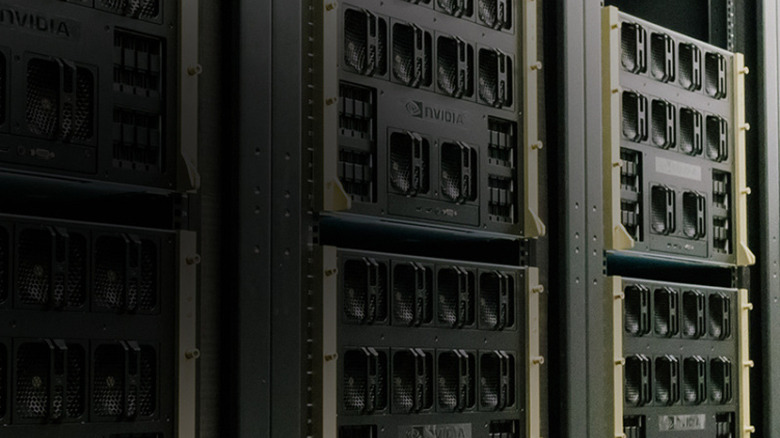
With the purchase of Mellanox in 2019, what better way to buy network management and Linux for network switches than Cumulus Networks? Cumulus had already gained notoriety within the networking space, as Cumulus Linux, its network operating system, was picked up by Dell, HP, Mellanox (pre-purchase), and Lenovo, which included it in their offerings.
Nvidia still offers Cumulus Linux today, but has scrapped the virtualization element of the offerings, diverting users to Nvidia AIR, its cloud service virtualization product. Cumulus gained popularity thanks to its openness, with the Linux distribution able to offer complete customization control to its owners.
The amount of cash Nvidia handed over wasn't disclosed, but this is another example of Nvidia bolstering its ranks as it seeks total AI dominance. Part of this crusade includes the never-ending build-out of data centers, regardless of the many safety concerns being raised.
Kumo AI
One of Nvidia's most recent acquisitions, Kumo AI, was snapped up by the GPU giant for $400 million. Kumo AI is Nvidia looking towards the financial sector and trying to implement AI models aimed at assisting with various tasks. Unlike many more recent deals by Team Green, Nvidia actually acquired Kumo rather than investing heavily or making deals to acquire and use assets, like with the $20 billion Groq deal.
At the core of the purchase is Kumo's AI tech, with the brand already being integrated into Nvidia's documentation and turned into a "platform." This platform provides KumoRFM, which is described as a "relational foundation model."
This specific type of AI model is typically trained to take on large quantities of structured data and then complete whatever financial task it's been assigned. This could be assisting with crafting a budget or generating predictions based on the data provided.