

Who Owns Insta360, The Unique Camera Maker?
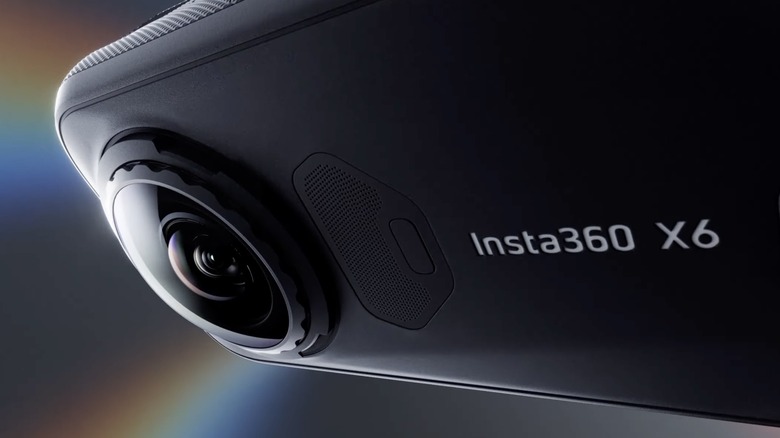
Insta360 has steadily gained prominence since arriving on the scene in 2015. Founded and still controlled by Liu Jingkang, who also goes by Jingkang Liu or JK Liu, the company is best known for products such as the X-series of 360-degree cameras, including the X3 and X5, the compact GO series, and its Ace Pro action cameras that put it in direct competition with the likes of DJI and GoPro.
Liu's journey into the camera business began when he was studying computer science at Nanjing University in China in the early 2010s. While there, he brought together a small team and launched a live-streaming platform for lectures from other universities across China. After graduating in 2014, Liu and his team switched from live streaming to 360-degree imaging, eventually giving rise to Insta360. As the company initially focused on 360-degree cameras for what was then an emerging virtual reality (VR) market, it moved toward consumer products and conventional action cameras, helping build it into a global brand. In June 2025, Insta360 transformed from a privately held startup into a publicly traded company, making its ownership structure a little more layered than it had been until that point.
To be clear, Insta360 is a brand owned by Arashi Vision, a Shenzhen-based company founded by Liu in 2015. With a stake of about 27%, Liu remains its ultimate controlling shareholder following its listing on Shanghai's STAR Market in 2025. The listing broadened Arashi Vision's ownership base, bringing in institutional investors and the general public. Other significant shareholders include early investors and investment funds. Notably, although Liu owns more than a quarter of Arashi Vision, its largest shareholder is Beijing Lanfeng Chuangshi Network Technology, which holds the controlling stake and is chaired by Liu.
Who is Insta360 up against?
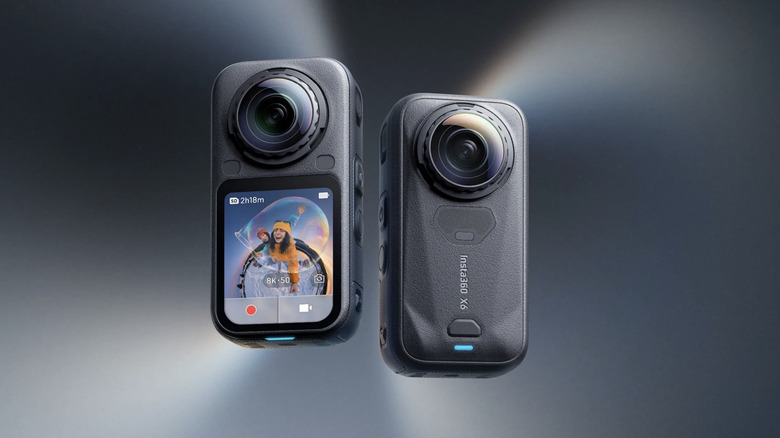
So, how is Insta360 doing under the leadership of the man who brought it to life? Pretty well, is the simple answer. The company has grown rapidly in recent years, with its cameras now challenging two of the biggest names in the market, namely DJI and GoPro. An impressive part of its story is that, while Insta360 remains particularly strong in the 360-degree camera sector where it first made its mark, it's also become a major player in the broader action-camera market. In fact, revenue surged nearly 75% in 2025 to more than 9.7 billion yuan (about $1.45 billion), according to the company's latest annual results.
Those numbers make Insta360's rise difficult to ignore. But being a fast-growing company isn't the same thing as being the market leader. So when it comes to Insta360 and its two main rivals — DJI and GoPro — who is actually performing the strongest? What is clear is that GoPro, the company that brought the action camera to the masses and once dominated the sector, is now struggling the most among the three, with its 2025 revenue falling 19% as camera sales declined 20%, and the company revealing in 2026 that it was exploring a possible sale or merger.
As GoPro appears to fade, DJI and Insta360 are fighting to dominate the action-camera market. Both have been relatively quick to build strong lineups across action cameras and related categories while pushing aggressively into new features and form factors. DJI's 2025 launch of the Osmo 360 put it in direct competition with Insta360, which has established itself in the 360-camera category with devices like the X4. The two are now jostling for position across a broader market for compact action cameras aimed at creators and adventurers.