

4 Big Changes Coming To Bluetooth By 2027

Bluetooth SIG is the organization behind the Bluetooth protocol, which is available in billions of devices we use everyday. In 2024, BGR spoke with the senior marketing director of the firm, Chuck Sabin, about the recently-announced Bluetooth 6 standard and features he expected to become mainstream in the upcoming years. Among the functionalities, Auracast was expected to get popular soon. In a new interview, now with Damon Barnes, the director of technical marketing at Bluetooth SIG, we talked about four big changes coming to Bluetooth by 2027, including higher data throughput, higher frequency bands, IP Link, and LE audio enhancements.
Since our last talk with Bluetooth SIG, the organization was able to make Auracast go from an experiment to a mainstream experience, while Channel Sounding and Digital Keys — two other hot topics at the moment — are technologies that have become more present in everyday usage.
For example, Channel Sounding is a technology that can measure the distance between devices accurately, like an item tracker. It's now being adopted by Apple and Google and also accessory makers of iPhone and Android. With this technology, more companies will be able to offer AirTag-like products with a precision that can get closer (but not as good) as the expensive ultrawide-band chips inside Apple's item. "Channel Sounding isn't going to have the millimeter precision that UWB does, but it can address at least 75 percent of ranging uses with its centimeter level accuracy. And the two features can work together to form optimized ranging solutions. Besides that, Bluetooth silicon solutions are cheaper," says Barnes. For Digital Keys, on the other hand, he tells me that Bluetooth keeps collaborating with vehicle organizations across the globe to make it the standard, including in China, its current big focus.
Higher data throughput
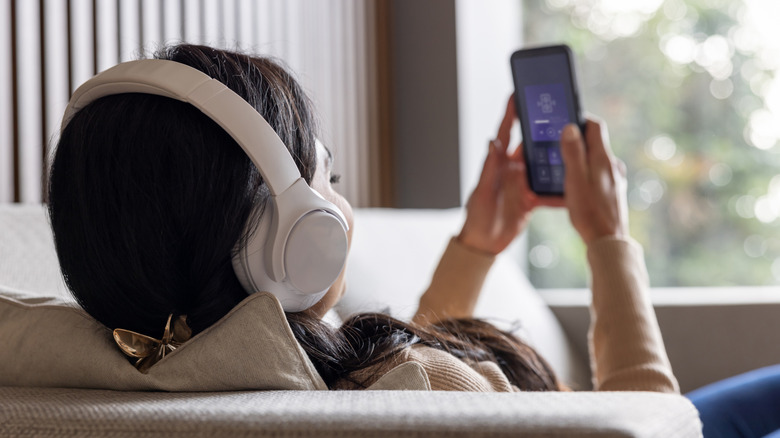
Expected for a November release, Bluetooth SIG expects to revolutionize the Bluetooth technology by offering higher data transferring from 2 Mbps to up to 7.5 Mbps. "This will bring almost four times speed improvements, which includes high-resolution and lossless audio through Bluetooth," explains Barnes. While the roadmap for this technology is exciting, as we approach the November launch, the reality is that exactly when these advancements will hit the market are completely different. After all, it depends on Bluetooth SIG announcing the new standard — such as a new Bluetooth 6.X version — plus companies like Apple, Microsoft, Samsung, and more updating their hardware, and finally accessory-makers updating their devices to take advantage of these new features.
Still, the technology is promising. According to implementation demonstrations, transferring a file over the air can go from the current 16 seconds to about four seconds. In addition to that, Bluetooth LE standards keep pushing to the 2 Mbps limit, which will soon look like something from the past. This higher bandwidth will offer a lot more possibilities, like richer sensor data from a wearable or more audio channels to be streamed simultaneously with more reliability, all without draining more power, and compromising performance. This will make the integration between these upcoming AI devices a lot more reliable, while also delivering richer audio experiences, which companies these days have been betting on for Dolby Atmos and other immersive codecs.
Higher frequency bands

The same way Wi-Fi has been going to higher frequency bands, Bluetooth wants to follow the same path. Expected for some time in 2027, the organization wants to lead the next 25 years of performance. As Barnes tells BGR, the current 2.4 GHz band is getting crowded (as there are over 5 billion Bluetooth products being shipped every year), so the organization wants Bluetooth to operate in 5 GHz and 6 GHz bands. "We'll enable 5 GHz frequencies by 2027, and we're going to have 6 GHz frequencies by 2028. This will allow Bluetooth to get faster speeds, less interference, and allow certain features to perform better with more bandwidth, like Channel Sounding, which will look a lot more similar to UWB."
In practice, Bluetooth will start moving the signal to a spectrum with less radio interference, it will unlock multi-megabit speeds, and it will offer ultra-low latency, which might make competitive gaming peripherals, AR/VR spatial tracking, and interactive audio as seamless as a physical connection.
In the long run, Bluetooth will also make the 2.4 GHz frequency less crowded; premium customers (or early buyers) will experience first-hand the benefits of a more stable connection, while after a few years, even the devices that don't update — as not every accessory needs to run on a 6 GHz frequency — will also feel more reliable, focused on dedicated Internet of Things devices.
IP Link
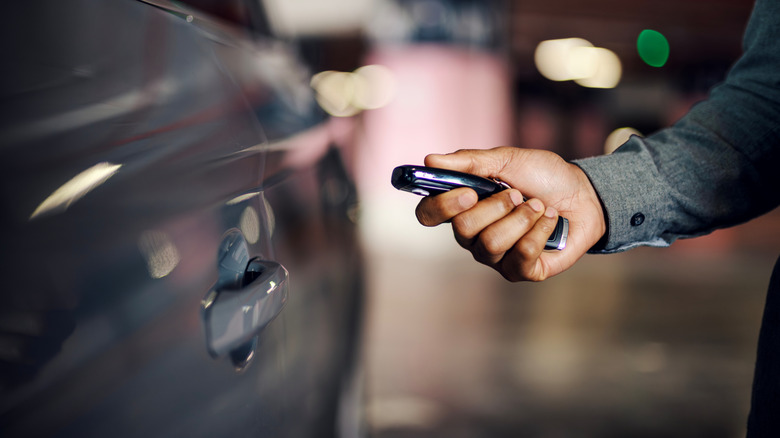
If the big changes above aren't nerdy enough, Barnes explained a technology that "not all products will need" but for the ones that get it will be life-changing. With IP Link, which is expected to debut later this year, Bluetooth will function like Wi-Fi. For example, if you want to unlock a Bluetooth smart door, you need to be close to it to use Channel Sounding, so it can identify that your phone is close to the door and unlock it, right? However, you can only lock/unlock and apply other changes when you're around the accessory. With IP Link, customers will be able to do all of that, but on the go. An example Barnes offered BGR, is if a family member is in front of the house, and you're not there, but you'll still be able to open the door. Another option, for example, is to share a digital key with them even on-the-go.
This will be possible because Bluetooth will connect these devices with internet servers for the first time with a 6LoWPAN for unicast and multicast traffic. According to the organization, the project will offer each accessory its own IP address, which internet servers will be able to route commands directly to over Wi-Fi routers, a smart display, or home hub.
With that, customers won't need a bridge dongle into wall outlets, or a generic IP router to pass traffic, giving customers local secure actions paired with remote operations. This will also make Bluetooth better aligned with modern smart home architectures like Matter and Thread.
LE audio enhancements

The fourth, and yet most customer-focused feature is improved Bluetooth LE. Expected for 2027, Bluetooth SIG aims to improve wireless calling and media by enhancing LE Audio and establishing standardized approaches for spatial audio on headphones and surround sound systems. This will also bring lossless and high-res audio streaming to wireless connectivity.
For Auracast, which lets a single device stream sound to several nearby Bluetooth receivers at once, these advancements will standardize the approach when using several Auracast transmitters to provide coverage in a larger environment, like a concert's venue, a big museum, or even a trade show like CES and IFA. In addition, Auracast wants to bring broadcasts with more audio streams than a single transmitter can handle. This would be very convenient for broadcasting multiple languages in an event, or a museum guided tour, or when several audio experiences are happening all at once. Finally, the company wants to take the smartphone out of the algorithm, so people could easily pair hearing aids, AirPods, and other earbuds directly to an Auracast broadcast, making the technology more accessible to people.
Asked about why Bluetooth SIG has been accelerating these developments, Barnes praised the new CEO Neville Meijers. Since getting the job in 2024, Barnes said he's been "really good at streamlining Bluetooth SIG work streams and getting specifications out. We have seen Bluetooth specification enhancements getting developed faster."