

How Does Radiation Stay Inside Your Microwave?
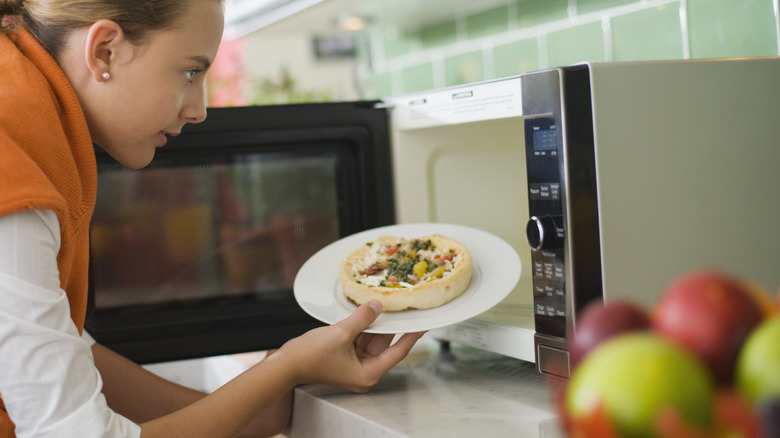
Microwave ovens have been in popular use since the 1970s, but some people have always been rather wary of the machines for one simple reason: radiation. While it's true that microwave ovens do indeed use radiation to warm up your leftovers or defrost your dinner, it's the non-ionizing type, and not the ionizing kind produced by X-rays and gamma rays that can raise cancer risk at high levels. In fact, many home electronics emit non-ionizing radiation. As long as the oven is in good working order, virtually all of the radiation that it generates stays inside the machine. So what keeps it effectively contained?
Well, when you turn a microwave oven on, a component called a magnetron generates microwaves inside the cooking chamber. That chamber is surrounded by metal, which reflects the microwaves and largely prevents them from leaving the machine. The waves are quickly absorbed by the food, turning their energy into heat. To prevent microwaves from escaping through the glass door, a fine metal mesh is in place. The holes in the mesh are small enough to block the microwaves while giving you a way to see your food cooking ... or your drink boiling over! The machines also have safety interlocks that immediately stop them from generating microwaves when the door is opened.
But the design doesn't mean that no microwave energy ever escapes. Small amounts of leakage can occur, which is why microwave ovens are designed to meet certain radiation-emission standards. In the U.S., for example, the FDA imposes a limit of 5 milliwatts per square centimeter at about 2 inches from the oven surface. It means that safety isn't down to the microwave energy simply dissipating, but rather has very much to do with shielding and the additional systems that keep exposure within safe levels.
The best safety advice when it comes to a microwave oven
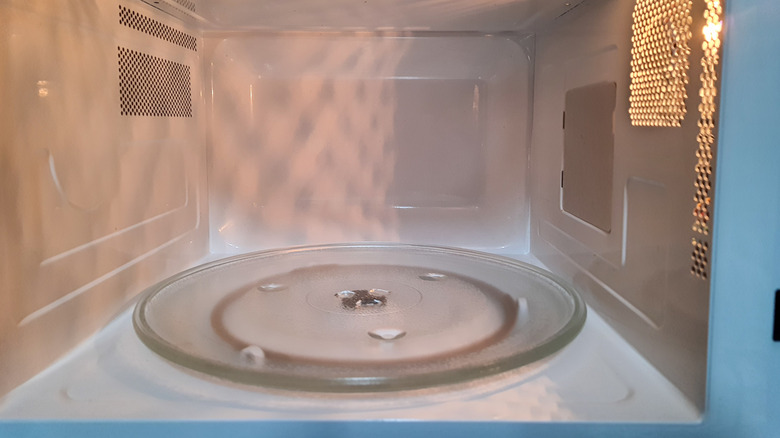
You certainly won't be alone if you've ever wondered about radiation leaking from your microwave oven. It's true that minimal amounts can indeed escape, but as long as your machine is in good working order, any leakage should be within regulatory limits, so there's little reason for concern. And as we mentioned earlier, microwave radiation is non-ionizing, so it doesn't have enough energy to directly damage DNA. It's true that at sufficiently high levels, microwaves can heat living tissue, but that's precisely why microwave ovens are designed to keep leakage to a minimum.
The most important safety advice regarding a microwave oven is to ensure that the machine is in good condition. The FDA advises that you contact the oven's maker and stop using it if there's any sign of damage to the door, including the hinge, seals, and latch. And if the machine continues to operate after the door has been opened, then stop using it immediately.
Some people, perhaps yourself included, also prefer to keep well away from a microwave when it's on. The truth is that microwave leakage levels fall off quickly with distance, with the FDA stating that, for example, a measurement of microwaves taken 20 inches away would be about 1/100th of the value measured at 2 inches, so you don't need to worry about your proximity to the machine while it's operating. Another concern people have is that microwaving your food somehow makes it unsafe to eat, but rest assured, cooking it this way merely heats it up rather than turning it into a radioactive substance. In fact, it's actually worth being a little more careful about what you heat your food in, particularly when it comes to microwaving plastic containers.
Can you still use an old microwave oven?
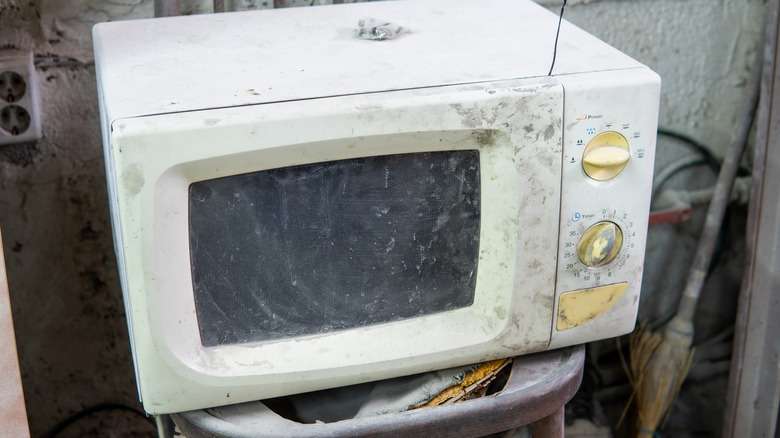
The safety of a microwave doesn't automatically deteriorate with age, and there's certainly no general rule to speak of that recommends you change your oven after, say, a decade or longer of use. In this sense, rather than focusing on age, it's better to think about maintaining the machine's overall condition by, for example, using it with care and avoiding repeated misuse like trying to microwave food in metal containers.
As we've seen, microwave ovens are built with shielding and safety interlocks that are designed to prevent hazardous exposure to microwaves. The FDA says ovens that comply with its safety standards and are used in line with the manufacturer's instructions shouldn't pose any kind of health risk. But prolonged use, say over several decades, can of course result in wear and tear. In that case, the main thing is to keep an eye on the door. Any signs of warping are a red flag, along with any signs of wear and tear on the hinge, seals, or latch. If you see anything like that, it's best to stop using it.
It means that while an old microwave oven might become a bit shabby-looking over the many years of use, most will continue to operate without causing you harm. If you're still concerned about an aging microwave oven, you can buy a microwave leakage detector to check whether it's emitting radiation beyond permitted safety standards. These inexpensive devices aren't the most reliable, though they can provide some additional peace of mind — but really, an oven with an intact door and other components should be good to use. So, carry on scrambling your eggs and popping your popcorn secure in the knowledge that your microwave really isn't out to get you.