

This Startup Is Using Drones To Change The Weather For Solar Farms
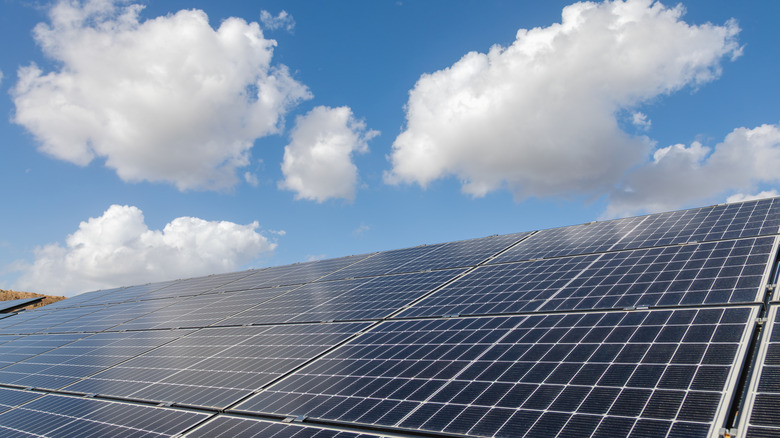
If you've just built a new solar farm, the last thing you want are thick clouds overhead. Some clouds can block 80% of the sunlight reaching solar panels, prompting growing interest in whether technology can do something about overcast days. Cambridge-trained engineers Mete Karslioglu and Eric Nilsson may have the answer. Leading a new company called Meteoric with backing from Y Combinator, they want to use drones to manipulate clouds so that more rays reach the solar panels.
As part of wider efforts to make solar power more reliable, Meteoric will send fleets of autonomous drones into clouds to alter their water droplets to reduce their reflectivity, enabling more sunlight to reach the panels. The company says the chemical-free approach could increase annual solar generation by up to 30%. Its prototype dissipated an artificial cloud by 13% in cloud-chamber tests, but all eyes will be on its open-air demonstration next year.
Meteoric hasn't yet explained how its technology works, but the founders' previous efforts may offer a clue. Karslioglu, for example, once worked on making clouds more reflective to reflect more sunlight back into space to cool the planet. Meteoric now wants to do the opposite by reducing cloud reflectivity so that more sunlight reaches the ground, just in specific locations. Nilsson has worked on systems for detecting and removing tiny water droplets, while the company is also looking for engineers with experience in drones and high-voltage systems. Considering all this, it could be that they're exploring some form of electrostatic cloud seeding, using high voltage to condense tiny droplets into big ones. But the startup ultimately wants to take on much larger weather systems, and for a completely different reason.
Meteoric's even bigger ambition
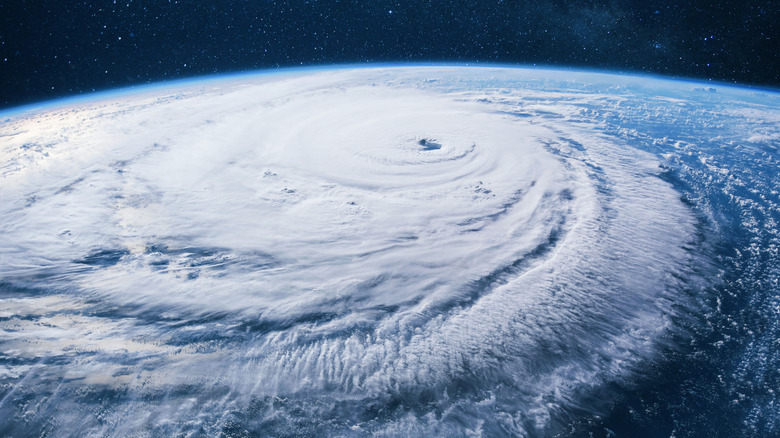
Karslioglu and Nilsson's ultimate goal is to use their technology to reduce the ferocity of major storms like hurricanes and typhoons. Hurricanes are getting stronger decade by decade, causing an increased risk to human life, as well as to important infrastructure and property. The pair say that if they can effectively demonstrate their drone technology by clearing overcast clouds, they want to expand their drone fleets to try to impact the intensity of storms, with real-world tests in 2028. But the leap from manipulating clouds that are hanging over a solar facility to changing the dynamics of a major storm is a huge one, and Meteoric has yet to explain how its technology works. Karslioglu and Nilsson sound confident about the potential of their technology to deliver, and those following Meteoric's development will certainly be intrigued to see it leave the lab and finally take to the skies.
But the two engineers have their work cut out for them as they follow in the footsteps of earlier attempts to mitigate the awesome power of a hurricane. Ambitious efforts by the U.S. government between 1962 and 1983 to weaken such storms had mixed results. Project Stormfury seeded hurricanes with silver iodide in the hope that it would generate thunderstorms around the eye of the storm, causing a new eye to form further out and reducing the strength of the storm's strongest winds. The tests looked promising, with wind strength appearing to fall by up to 30%. But later analysis found the changes could not be reliably linked to the seeding, and that hurricanes contained too little supercooled water for the technique to work as intended. The project was eventually abandoned.
Another plan to boost solar panel productivity
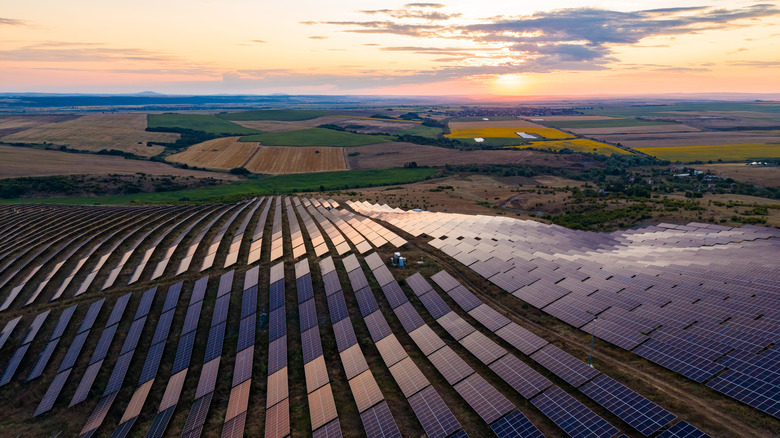
While Meteoric wants to send drones into clouds in a bid to get more of the sun's rays striking solar panels, a startup called Reflect Orbital wants to head all the way to space to help increase the efficiency of solar farms. The plan is to deploy satellites with mirrors capable of reflecting sunlight to specific areas on Earth. It means that solar farms, for example, would be able to receive additional sunlight when the sun is low on the horizon or even already set.
Founded by engineers Ben Nowack and Tristan Semmelhack, Reflect Orbital has already tested the basic concept using a smaller mirror suspended from a high-altitude balloon. It's aiming to launch the first demonstration satellite in late 2026 carrying four reflective panels that unfold to form a mirror 59 feet square. The plan is to show how the satellite can reliably direct reflected sunlight from orbit to a chosen location on Earth.
The startup says the same technology could eventually be used to provide light to remote areas and even disaster zones. Lighting up cities at night is also a possibility. But reflecting sunlight comes with challenges. Astronomers, for example, have raised concerns about the impact on their work of sunlight reflecting off satellites. One idea is to coat satellites in an ultra-dark paint to try to reduce the intensity of the sun's reflection. SpaceX experimented with dark paint for its Starlink internet satellites after astronomers said their reflections were obscuring views of deep space. While the paint used in the test helped to reduce the brightness by about half, the overall problem persists. Reflect Orbital says it takes such concerns seriously and wants to work with astronomers to ensure that it doesn't cause disruption to their work.