

Xiaomi Showed Off 380 Products At IFA 2026, But The One We Want To See Most Remains A Secret
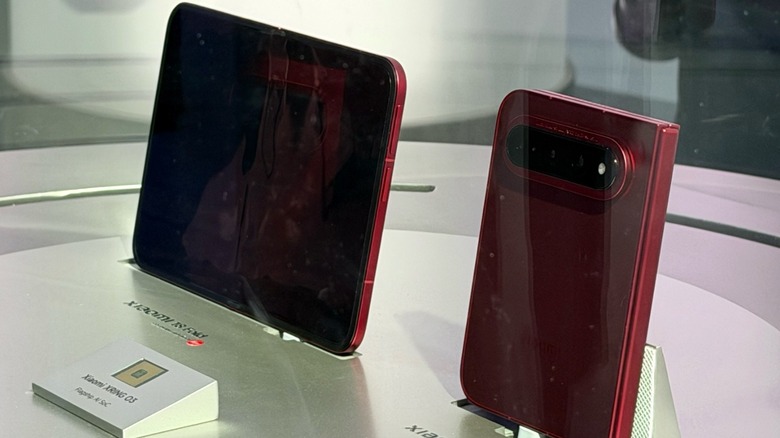
For the longest time, Samsung has dominated IFA with one of the biggest booths in the trade show. In 2026, the South Korean company took a step back, as Chinese firms are now dominating the event. Among them, Xiaomi took over Berlin with over 3,300 square meters of exhibition space, bringing around 380 products to show off, including TVs, robot vacuums, humanoid robots, vehicles, smart home devices, accessories, and more. However, the one device everyone wants to try remains something of a secret: Xiaomi's upcoming Galaxy Z Fold 8-like foldable.
Locked behind thick glass, we know the device is called Xiaomi 18 Fold, it features a proprietary XRING O3 chip, and it's very red. With an official unveiling happening next week, ahead of Apple's long-rumored foldable iPhone reveal, Xiaomi is the latest company to attempt this new form factor.
While the device looks rounder than Samsung's counterpart, it's unclear how similar or different it will feel in hand during everyday usage. For me, a passport-like foldable phone seems to be the worst of mini phones and tablets combined. Still, this has been a format generating lots of attention, as Samsung has been selling more devices than it can produce. That said, even with Xiaomi keeping its phone behind glass, the company also focused on several other products for everyday customers, as it's now investing heavily in the European market.
Human x Car x Home is Xiaomi's strategy

"This year's IFA marks a significant milestone in Xiaomi's global journey," said Xu Fei, CMO of Xiaomi, during the company's IFA press conference. "Over the years, we have expanded from smartphones into smart home and smart vehicles, while investing deeply in foundational technologies, including AI." During the trade show, Xiaomi invited BGR to get a first look at the deep integration between its hundreds of products. In one of the sections, "AI Tomorrow," Xiaomi introduced a new hypercar concept, which wants to revolutionize the segment by combining comfort with fast speeds and a futuristic design.
Even though the vehicle attracted plenty of attention, the real focus was the "AI Today" segment, showing the connection between current vehicles, smart living rooms, bedrooms, and more. For example, in a connected Xiaomi world, a customer would arrive home in their car. When leaving the car, the home's door would automatically be unlocked, the curtains would open, and lights would turn on. After finishing cooking and placing the dishes in the dishwasher, AI would know to start cleaning — including waking up a smart robot vacuum — without anyone saying a word.
Meanwhile, in the bedroom, as you'd lay down to read a book, the bed would automatically move to a more comfortable angle, the AC would turn on at your preferred temperature, and so on. According to Xiaomi, what's setting these experiences apart is the use of AI, which can predict what's next based on user behavior and a connected smart home app.
Understanding Xiaomi's AI models
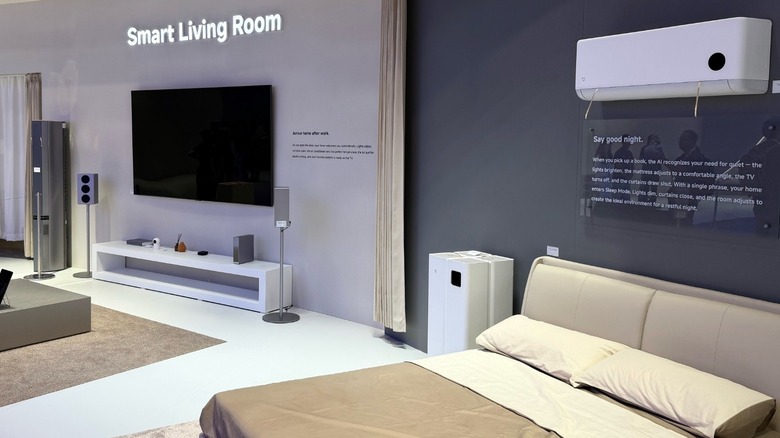
Large language models and AI platforms like MiMo-V2.5-Pro, Xiaomi Miloco, and Xiaomi Miclaw are going to allow the company to deliver this AI-driven future. They allow the company's products to understand, reason, and take action. Like other brands, Xiaomi is integrating its LLMs with HyperOS and custom silicon architecture with the high-end XRING 03 chip that will power Xiaomi's upcoming foldable phone. This combination allows data to be processed locally and efficiently across smartphones, vehicles, and other connected home appliances.
With that, the system can synthesize multi-device inputs, interpret contextual cues like time (if you go to bed at a certain hour), geolocation (whether you're arriving or leaving home), and weather to deliver proactive assistance. Some options include the car preparing the climate control and lighting before the person arrives at home or printing a photo that has just been taken on the phone.
More importantly, these models are also key for the company's humanoid platforms like CyberOne, which handles real-world assembly tasks. This ongoing development forms part of Xiaomi's projected 24 billion euro R&D investment between 2026 and 2030, as the company wants to continue to bridge what AI intends to do and what it can actually do.