

Scientists Found An Unexpected Pattern In Mars' Atmosphere That Mirrors Earth
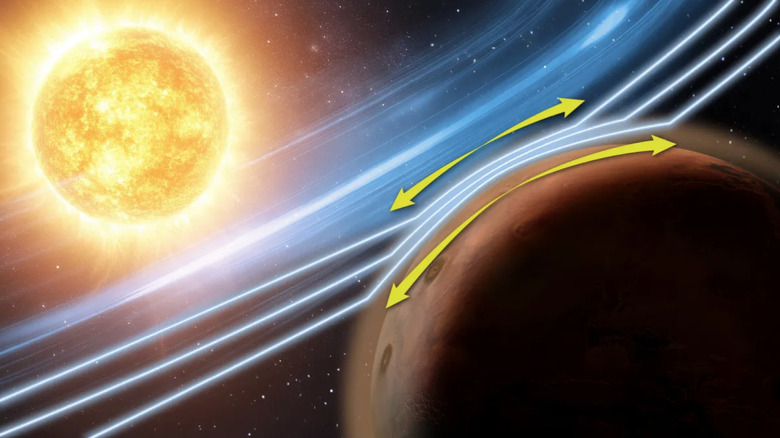
Scientists have found an unexpected pattern in Mars' atmosphere called the Zwan-Wolf effect, which generally only occurs on planets like Earth that have strong magnetic fields. These magnetic fields play a central role in protecting a planet's atmosphere by deflecting damaging solar winds. The same effect was found to occur in Mars' ionosphere (around 80 miles up, well within the Martian atmosphere) during NASA's Mars Atmosphere and Volatile Evolution (MAVEN) mission. The Zwan-Wolf effect was observed during a coronal mass ejection impact on Mars in December 2023, which enhanced it just enough to be observed. This was unexpected, as Mars is not known to have a strong magnetic field.
The MAVEN mission launched in November 2013, and after 11 years in Mars orbit, it ended after the spacecraft experienced a loss of signal a decade after its primary one-year mission was projected to end. The data from the MAVEN spacecraft was central to how this discovery was made, and showed that Mars does possess some measure of protection against space weather events like solar storms. The Martian atmosphere was probably stripped away by solar winds over billions of years, and while the Zwan-Wolf effect was noted in this study, the effect was likely never strong enough to sufficiently protect the Martian atmosphere.
Could Mars be terraformed?
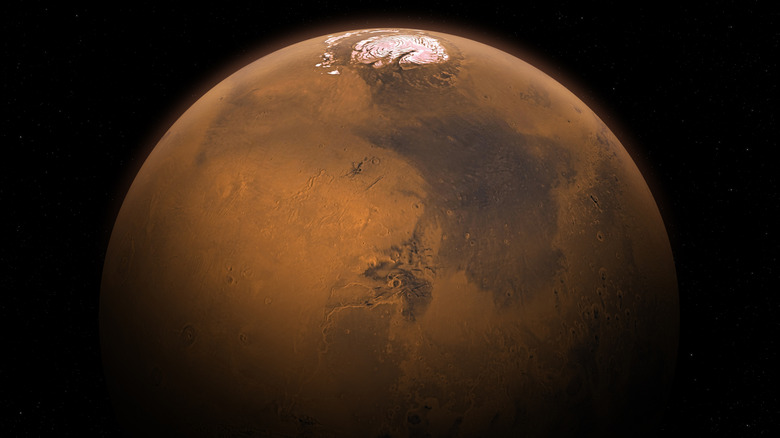
The fact that the Zwan-Wolf effect was observed in the Martian atmosphere doesn't necessarily mean that a habitable and sustainable atmosphere could be engineered on Mars. This concept is referred to as terraforming, and has been pursued by people like Elon Musk, who is planning a city on Mars. In theory, Mars could be temporarily terraformed by introducing CO2 into its atmosphere to trap heat and eventually increase air pressure. Mars' surface temperature often goes as low as –225 degrees Fahrenheit, and the atmosphere is not as dense as Earth's. Earth's atmospheric density is essential to its life.
The plan would then be to find a way of introducing enough oxygen to allow a person to breathe normally. Humanity would have to find a way of releasing large amounts of CO2 into the Martian atmosphere as a start, but the absence of a strong enough Zwan-Wolf effect means that even an engineered atmosphere would be stripped away over time.
In addition to this, significant solar events would still pose a danger to humans. Events like solar flares bring deadly radiation, and this is something NASA is already grappling with in its mission to get astronauts to the red planet. Mars is littered with rocks that contain toxic salts called perchlorates, which pose their own risks, and Mars only has a third of Earth's gravity. This means that humans would have to counter the effects of that weaker gravity to prevent bone and muscle loss. A 2024 science paper explored the idea of using nanoparticles to generate a strong greenhouse effect, arguing that it might not be that hard to terraform Mars after all, but this concept also has a lot of challenges to overcome.
Paraterraforming Mars
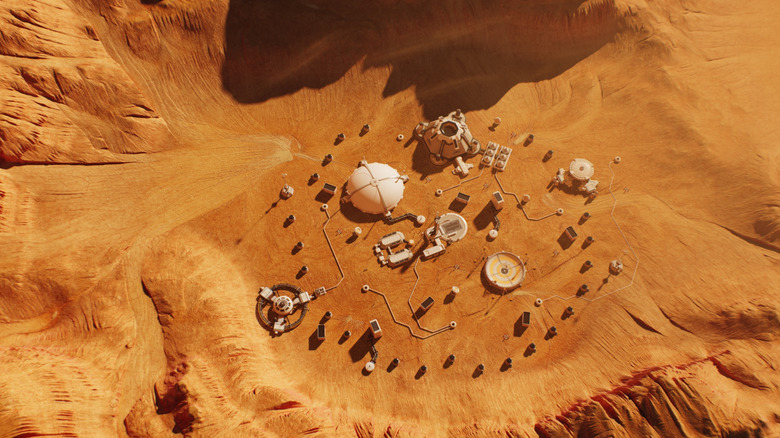
Since the challenges associated with terraforming are so hard to overcome, the concept of paraterraforming seems to offer a slightly more realistic means of inhabiting the red planet. This would involve creating interconnected, enclosed, pressurized habitats that could allow humans to colonize Mars. CO2 could be extracted from the Martian atmosphere to generate fuel and be used to support plant life. Since the Zwan-Wolf effect isn't strong enough to help protect the Martian atmosphere, and humans would be vulnerable to the radiation associated with solar storms, pressurized caverns could be built underground to offer protection. The Martian crust would absorb radiation before it could get to humans.
If the concept could be expanded safely, an Earth-like environment could be created that would include parks, farms, forests, and lakes. Another important hurdle is the human aspect of colonization. A 2023 study found that if the technical and environmental hurdles could be dealt with, it would only take 22 people to start a Mars colony. The study compared different personality types and how they would react to a ground-breaking and isolating colonization effort, proposing that people who are agreeable and sociable would be more likely to survive.