

Is The Dell 14S A Real Alternative To The MacBook Neo?
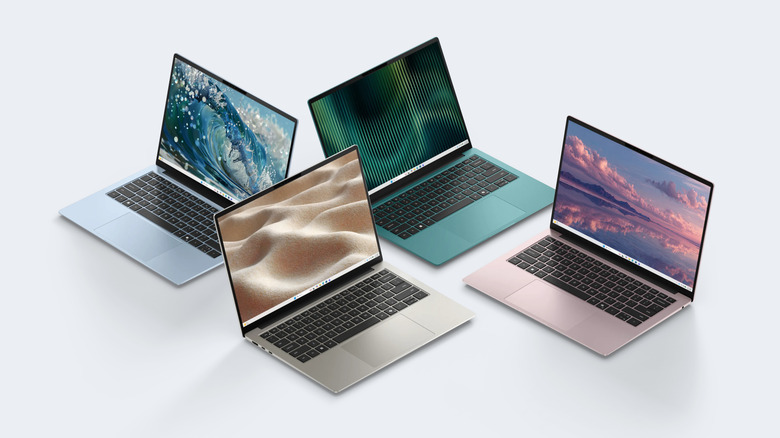
It all comes down to one vital, unknown variable: the price tag. As of now, we don't know what the Dell 14S will retail for, and that's the biggest missing piece of the puzzle. If it closely contends with the MacBook Neo's price, Dell's 14S absolutely is a worthy alternative to the Neo.
While Apple is known for premium build quality and uniquely sleek designs, its products are not typically synonymous with affordability. The release of the MacBook Neo successfully challenged that notion with a $599 starting price that was subsequently raised to $699, and many laptop manufacturers — Dell included — have been eyeing a piece of that affordably portable success with models like the new Dell 14S. Some experts are positioning this laptop, announced at IFA 2026, as the Windows alternative to Apple's Neo.
And that makes a lot of sense; they're both premium, portable notebooks with similar screen sizes and weight, and both options come in four different colorways. While we can't conclusively call the Dell 14S a real alternative to the MacBook Neo until we see the price tag, we can take a closer look at the specs that have been officially released.
Dell 14S vs. MacBook Neo: Design and display
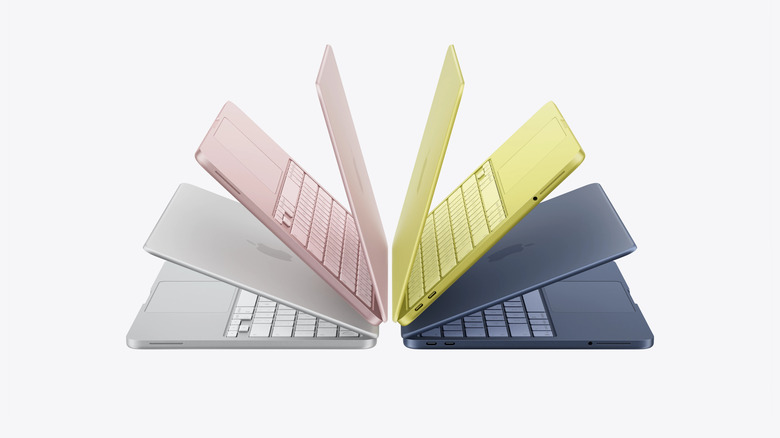
Both the Dell 14S and MacBook Neo emphasize lightweight portability as a main selling point. The Dell 14S weighs 2.53 pounds compared to the Neo's 2.7 pounds. Dell's contender has two 14-inch screen options: a 2.8K 120 Hz display or a 2K 60 Hz display — both are IPS panels with a max brightness of 300 and 450 nits, respectively. In comparison, the MacBook Neo's Liquid Retina (IPS) display comes in at 13 inches with a 2,408-by-1,506 native resolution, 60 Hz refresh rate, and 500 nits of max brightness.
As for the chassis, the MacBook Neo comes in four colorways: Silver, Blush, Citrus, and Indigo. The 14S comes in four as well: Linen, Dusty Rose, Washed Denim and Velvet Green. The Neo is crafted from 90% recycled aluminum, which we found goes a long way toward making this budget model "actually feel like a MacBook" in our MacBook Neo review. The 14S is made of lightweight aluminum as well. The 14S is ever so slightly thicker at 0.53 inches compared to the Neo's 0.50 inches. When it comes to expansion options, the Dell 14S is a narrow winner, featuring two USB-C (PD) ports, one HDMI port, and a 3.5 mm headphone jack. The relatively barebones Neo, on the other hand, comes with just one USB-C gen 3 port (with charging and DisplayPort functionality), one USB-C gen 2 port, and a headphone jack.
For interfacing, the MacBook Neo offers a 78- or 79-key Magic keyboard (ANSI or ISO) and Apple's renowned Multi-Touch trackpad. Dell's 14S also features a standard 79-key board (and similar layouts depending on region) and its Precision touchpad. Both laptops feature a 1080p webcam for pictures and video calls, and similarly, both feature dual-speaker sound systems.
Dell 14S vs. MacBook Neo: Performance and battery
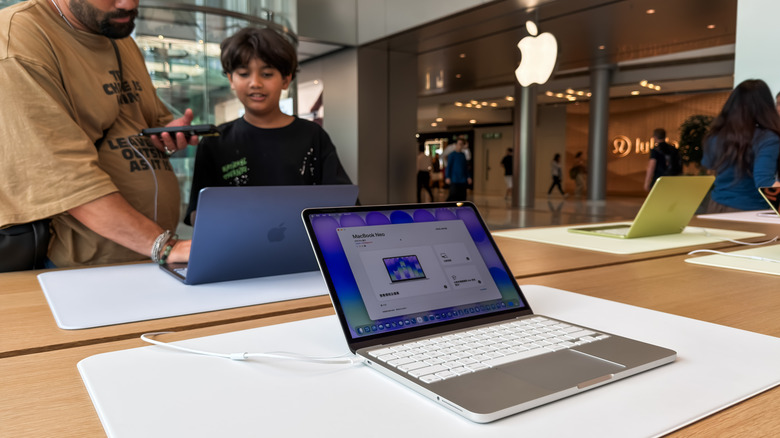
Pricing aside, performance and battery life have the most potential to differentiate these two models. Out of the gate, you'll notice the Dell 14S sports a 61.2 Wh battery, whereas the MacBook Neo has a 36.5 Wh battery. According to each manufacturer, that equates to up to 21 hours and 16 hours of continuous video streaming, respectively.
The MacBook Neo had to cut some corners to achieve the polished design and affordable price tag combo, and performance is where that comes into play. Rather than the M-series chips found in other MacBooks, the MacBook Neo features an A18 Pro chip, meaning its processor is less performant than the iPhone 18 Pro (which features an A20 Pro chip). In practice, the MacBook Neo will still easily handle everyday tasks like browsing the web, creating presentations and photo editing thanks to its combined 8 GB of unified memory (a little low these days, but enough to get the job done), 256 GB SSD, and polished operating system. In Cinebench 2026 benchmarks, the MacBook Neo earned a score of 1,439.
But if you want a bump in sustained performance, the Dell 14S delivers with an Intel Core 5 320 processor (upgradeable to Core 7 chips), Intel integrated graphics, 8 GB or 16 GB of RAM, and up to a 1 TB NVMe SSD. While benchmark scores for the new Dell 14S haven't been released yet, we can observe a similar build in the latest XPS 13, which also features an Intel Series 3 Core 5 320 processor, 16 GB of RAM, integrated graphics, and a 512 GB SSD. In Cinebench 2026, the XPS 13 achieved a top score of 1,701, so we can expect relatively similar performance with the 14S.