

Wi-Fi 8 Mesh Systems Are On The Way – Here's What's New

Wi-Fi 8 is shorthand for IEEE 802.11bn, the next wireless networking standard that dictates the technical specifications of Wi-Fi routers and receivers. It's the successor to Wi-Fi 7, which introduced blazing speeds of up to 46 Gbps. While Wi-Fi 8's standards are yet to be technically finalized, manufacturers are already hawking Wi-Fi 8 mesh routers. In September 2026, TP-Link announced its Deco 8 Ultra mesh Wi-Fi system, and Asus previewed its ZenWiFi BN12, and both are expected to hit retail shelves in the coming months.
These mesh systems take advantage of technical engineering not used in earlier wireless generations. That includes Unequal Modulation (UEQM), which modulates individual spatial streams based on signal strength rather than assigning every stream the same modulation level regardless of connection strength. Combined with revised Modulation and Coding Schemes (MCS) that accommodate data rates at more levels, these technologies ensure your smartphone or other wireless device experiences fewer sudden connection drops as you move to the farthest reaches of your mesh network.
Wi-Fi 8 also introduces improvements to handling multiple wireless devices. Coordinated Spatial Reuse (Co-SR) and Coordinated Beamforming (Co-BF) allow your mesh access points to actively coordinate in modulating and directing signals. In other words, individual wireless devices get more focused, proximity-conscious connections, relieving network congestion. Another technology, Non-Primary Channel Access (NPCA), meanwhile, ensures access points use channels that aren't already overcrowded, all resulting in better throughput.
Higher reliability instead of higher speeds
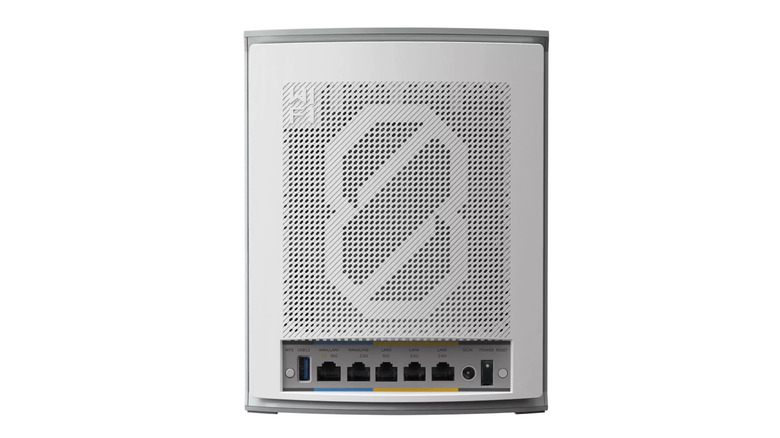
Most Wi-Fi generations have increased the maximum theoretical speed for devices supporting that generation's specs. For example, Wi-Fi 6 and Wi-Fi 6E speeds were capped at 9.6 Gbps, and Wi-Fi 7 left previous generations in the dust by taking its maximum speed all the way to 46 Gbps. Wi-Fi 8's maximum theoretical speed, though, remains the same at 46 Gbps. This isn't an oversight, and the key to understanding why is the phrase "theoretical speeds."
They're theoretical because they can be achieved only under perfect conditions. Virtually no one lives in a place or uses Wi-Fi in accordance with those laboratory-level requirements, so your actual connection speed is always going to be far lower. Wi-Fi 8 mesh networks tackle that problem by aiming for Ultra-High Reliability (UHR) with new technologies like UEQM and Co-SR.
You can have a home with signal-hampering pieces of furniture and walls, and you can have many wireless devices competing for bandwidth, and your mesh network will, in theory, get you speeds closer to that maximum rate. You may not live in a laboratory, but that's less of a problem thanks to Wi-Fi 8's new features.
Does Wi-Fi 8's features make a mesh upgrade worth it?
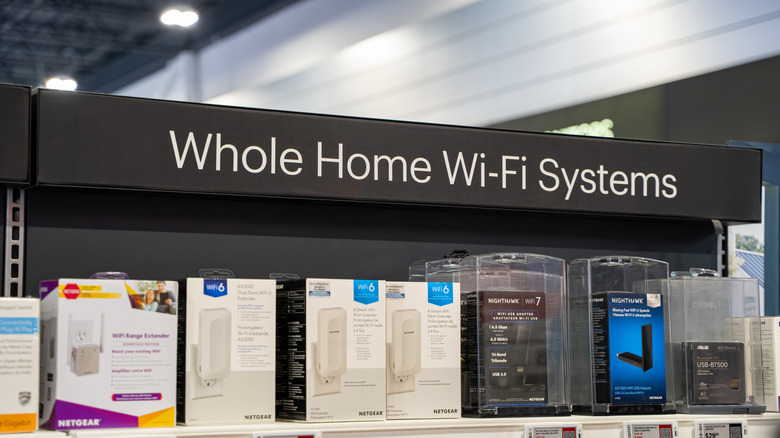
As Wi-Fi 8 mesh routers hit the US market over the next year, you may wonder if you should pick one up. The answer depends on your satisfaction with your current Wi-Fi mesh system. The UHR benefits of Wi-Fi 8 include better, more consistent connections between your mesh access points and your smartphones, smart cameras, VR headsets, and other wireless devices. So, are there annoying Wi-Fi dead zones in your current mesh system? Do you regularly notice connectivity drops as you move between rooms or levels of your home?
If the answer to either is yes, then you'll likely benefit from an upgrade. Be aware, though, that you won't actually see all of those benefits when you upgrade your mesh system, at least not anytime soon. That's because certain Wi-Fi 8 technologies aren't backward-compatible with wireless devices built for earlier generations. Some, though not all, require both the router and the wireless device to be Wi-Fi 8-equipped in order to operate.
That means that until you start using smartphones, laptops, or cameras built to Wi-Fi 8 specifications, you won't fully unlock the advanced capabilities of your mesh system. Those devices won't arrive until official certification of the standard happens in a couple of years, so an investment in a Wi-Fi 8 mesh system now would be a long-term one. A Wi-Fi 7 upgrade would grant you benefits sooner, for the same reason.