

New Treatment For Back And Neck Pain Can Replace Spinal Discs Without Surgery

Anyone who's experienced back pain knows just how excruciating it is. It can be difficult to fix, too, though desk-based workers could try these add-ons for starters. Back pain is a remarkably common issue, with a 2025 study of more than 183,000 U.S. adults finding that 49.7% of them had a clinical diagnosis of lower back pain. For some, the pain is linked to deterioration of the intervertebral discs, the cushion-like structures between the bones of the spine. As the discs wear down, they can lose water and supportive tissue, making them less able to withstand the stresses placed on the spine. Thankfully, some treatments can help to manage this kind of pain, though even more promisingly, researchers are also looking at ways to repair damaged discs.
One interesting approach uses injectable hydrogels. Recent research highlights the potential of combining hydrogels with cell-based therapies to help regenerate damaged spinal discs. These soft, water-rich materials can be delivered into a damaged disc through a needle. You might wince at the thought of an injection into your spine, but the minimally invasive process can be performed under local anesthesia and so is less disruptive than the alternative method of open surgery.
It means that rather than surgically removing the damaged disc and replacing it with an artificial one, doctors could potentially inject a material into it to restore or support its inner structure and create an environment for regeneration. The technology offers hope for those suffering chronic pain linked to disc degeneration, though it has to be noted that hydrogels are still being studied and are therefore not yet a routine replacement for spinal-disc surgery.
More research needed into hydrogels for spinal treatment
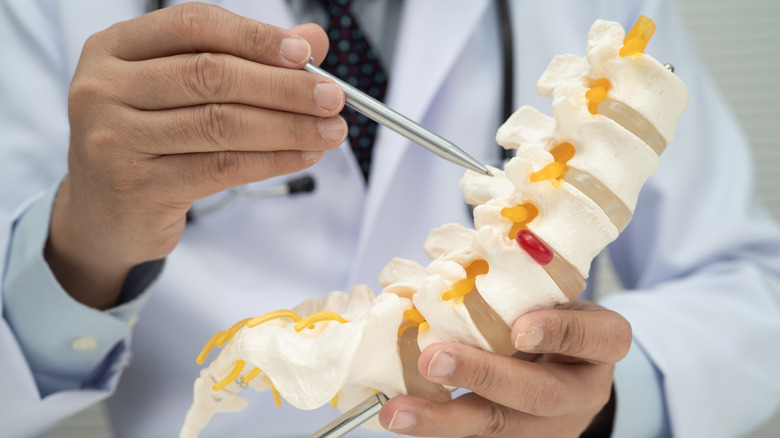
Ongoing research into hydrogel treatments for disc regeneration means that approval by the U.S. Food and Drug Administration (FDA) could still be a ways off. Various techniques are being tested in clinical trials, but availability depends on specific treatment and study. This also means there's not yet a reliable "success rate" that can be applied to these still experimental hydrogel injections. Researchers are also investigating various hydrogel materials and cell therapy methods for disc regeneration, and which patients are most likely to benefit.
Treatment involves injecting a needle into the disc. While it can be described as minimally invasive, a degree of discomfort may be involved. Also, as the spine is a highly sensitive part of the body, there are potential risks with the procedure, including back and leg pain, and problems with the injected hydrogel such as migration or herniation.
Medicine has made extraordinary strides in recent years, but there's still no single treatment that permanently fixes every cause of spinal pain. Conventional artificial disc replacement is available in the U.S. for certain patients, including those with damaged discs in the neck, but it requires invasive surgery to remove the damaged disc and implant a replacement. For example, the FDA-approved Simplify Cervical Artificial Disc is implanted through an incision in the front of the neck. For now, injectable hydrogels remain a work in progress, but they point to a future a involving less stressful way of treating damaged discs. For the sake of anyone suffering this awful pain, we can only hope that progress continues to be made toward a treatment that's both safe and effective.