

I Think Meta's $1,299 VR Glasses Just Solved The Form Factor For VR
Meta Connect 2026 wrapped up on September 23, and almost everything announced is something you wear on your face. One of what I imagine will be the most popular new products is the Ray-Ban Meta Audio, the company's first AI glasses with no camera on board. Meta says they weigh 1.5 ounces, start at $349, and will begin shipping on October 13. Meta also introduced a third-generation Ray-Ban model with a slimmer frame and a dedicated assistant button. It's available across a wider variety of styles across Ray-Ban, Oakley, and Meta Glasses. The company even showed off a keychain gadget called the Muse Charm for talking to Meta's AI agent without pulling out a phone.
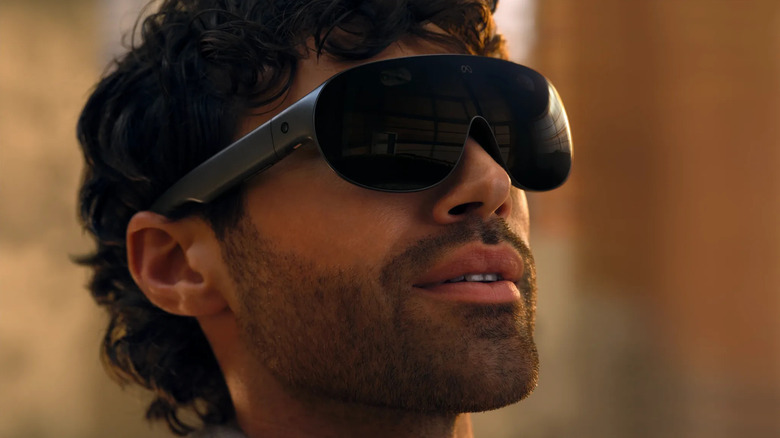
But there's one device I can't stop thinking about, which came later in the keynote: Meta's new VR glasses. They weigh about 3.5 ounces, cost $1,299.99, and will go on sale in spring 2027. I own an Apple Vision Pro and a Meta Quest 3, and I know just how awkward it can be to use them — so much so that I don't use them nearly as much as I'd like to. Often, I take the headsets off before I want to because my head has had enough. But it looks like Meta has built the first VR device that removes that problem entirely, and I think that matters more than anything else the company showed off at Meta Connect.
What are Meta's new VR glasses?
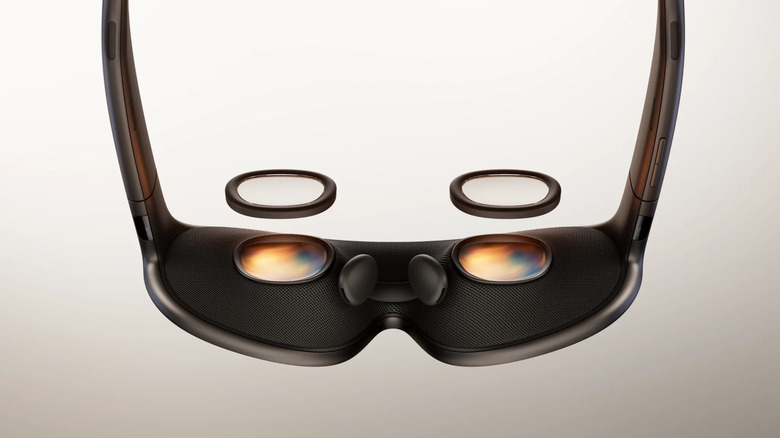
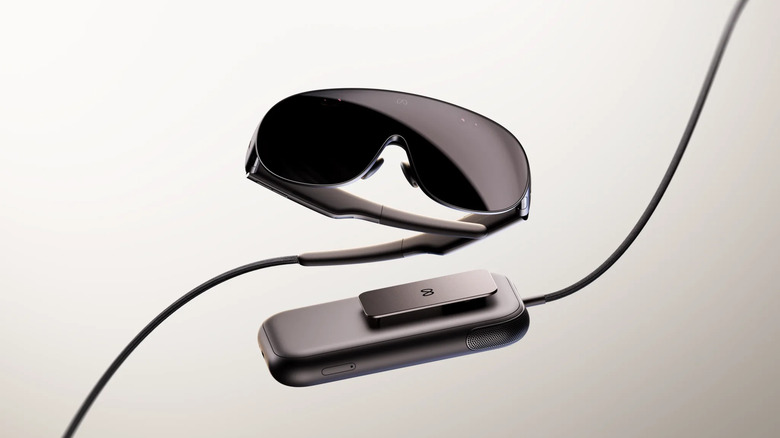
Meta has split the hardware into two components, à la Apple Vision Pro. The VR glasses combine the displays, lenses, cameras, and sensors in a magnesium alloy frame with no battery or compute chip. Those components — which generate excess heat and weight — live in a puck that clips onto your pocket and connects to the glasses via a thin optical cable. Meta says that as a result, these new VR glasses are five times lighter than the Quest 3. They sport a 5K micro-OLED display running at 37 pixels per degree. Pixels per degree describes how much detail lands in each segment you can see, and it is the reason text in older headsets appeared so soft it could give you a headache after an hour of reading.
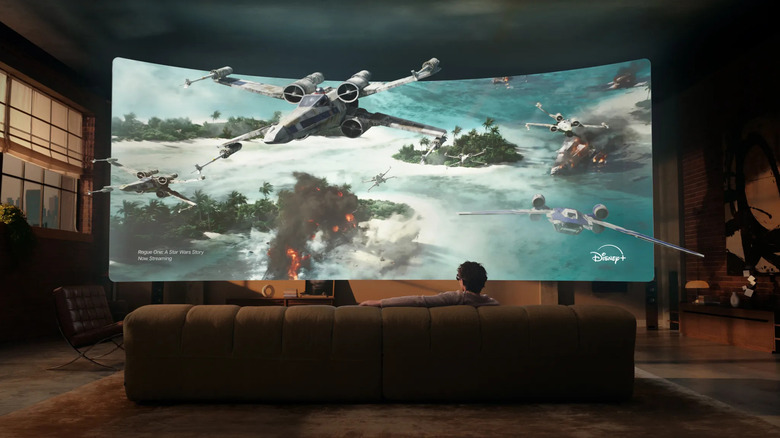
Dolby Vision is supported, and Dolby Atmos audio is built into the arms. The puck manages up to three hours of continuous high-resolution playback and charges at 45 W. Inside the puck sits a Snapdragon Reality Elite, the chip Qualcomm launched in June 2026 with 48 TOPS of on-device AI processing designed to make headsets run cooler. As with previous Quest headsets, you control on-screen content with your eyes and hands. Meta says there will be more than 75 games playable through gestures alone at launch, and the whole Quest catalog will carry over.
Where the Meta VR glasses are better than the headsets I already own
In my experience, weight is the biggest factor that decides whether a VR headset actually gets used or not. Apple's Vision Pro clocks in somewhere between 26 and 28 ounces with the Light Seal and Dual Knit Band attached, plus you have to carry the 12.5-ounce battery in your pocket. The Quest 3 is lighter than that, but it is still heavy to wear, even though our Meta Quest 3 review called it "the best VR headset out there."
To be frank, I've disappointingly never finished a film in the Apple Vision Pro. Not once. The pressure on my forehead always arrives around an hour and a half into watching, so I end up taking it off. Oftentimes, deciding whether it's even worth putting on in the first place stops me from reaching for it most evenings. It's the same reason the Apple Vision Pro failed to find a mainstream audience despite the headset being technically impressive.
Weighing just 3.5 ounces, Meta's new VR glasses are in the territory of bulky sunglasses, which I think changes what the device is for. You could put the glasses on for 20 minutes on the couch, or leave them on during a long flight without much inconvenience, which means anyone who buys them might actually pick them up regularly. A heavy headset you have to plan your evening around is a much harder sell to most consumers, but it's one that enthusiasts can still reach for. I've long said VR will struggle to reach a critical mass of users if it's too inconvenient for the masses to adopt, but Meta's new VR glasses might just change that.
Why Meta's VR glasses are still not perfect
The most obvious compromise that comes with Meta's new VR glasses is immersion. Meta advertises a field of view of 70 degrees horizontal by 66 vertical, which compares poorly against roughly 110 by 96 on the Quest 3. In practice, that means you'd be looking through a smaller window, with the edges of the virtual picture visible in a way they aren't when you use a sealed headset. The open sides make that more obvious, since the room around you remains in your periphery unless you attach the optional light blockers, which begin to add bulk back.
Controllers also cost extra, so anyone wanting to play games that need them will have to pay slightly more than the retail price. Since the computing moves to your pocket, you have to carry around the extra weight on the end of a cable that is still connected to your face — though the built-in clip is a nice touch missing from the Apple Vision Pro's battery puck. Road to VR puts Meta's puck at around 10.5 ounces, which is about the same as Apple's. It's rated for three hours of playback, which means you'd have to charge it to watch more than one movie on a flight.
None of that bothers me too much. The people who want to disappear into a game have the Quest 3 and the Vision Pro, and those headsets are not going anywhere. What VR has lacked is a version of itself that a normal person will wear in a normal room.