

5 Reasons Why The Apple Vision Pro Failed
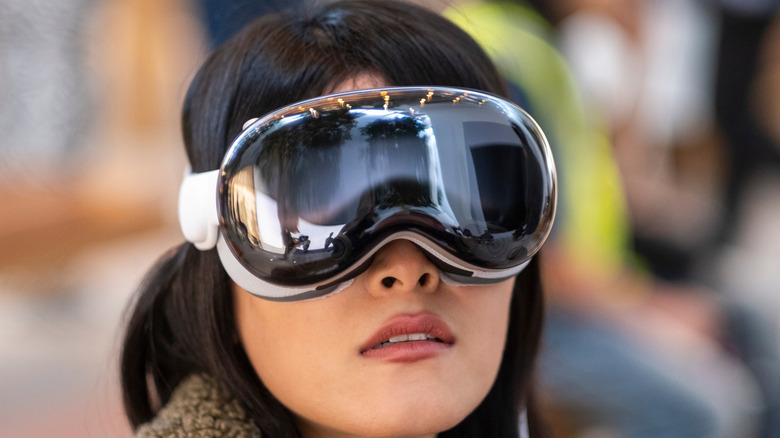
A report from MacRumors suggests Apple is done with the Apple Vision Pro, as it doesn't plan to update the mixed reality headset with a new generation anytime soon and the team dedicated to the project has purportedly been redistributed within the company. Unlike the AirPods or Apple Watch, both of which debuted within the past decade and helped reshape the company's product lineup, the Apple Vision Pro struggled to catch on. Among other reasons, its high price tag, limited availability, and lack of native apps may have helped doom this futuristic, yet troubled product.
While the headset carved out a niche for itself in specialist sectors — for instance, doctors used the Apple Vision Pro to assist in surgery — the product struggled to find mass appeal, as a report suggests Apple sold only 600,000 Vision Pro units since release. Even though it felt like there was a lot of momentum at first, several issues with this device prevented it from becoming a successful product, despite the Apple Vision Pro's high-end materials and well-crafted UI.
With Apple reportedly working on true augmented reality smart glasses, the company may be looking to pivot from its previous approach to XR. However, there hasn't been an official announcement regarding the Apple Vision Pro being discontinued, nor has Apple confirmed that it doesn't have plans to update this product in the near future.
An exorbitant price tag
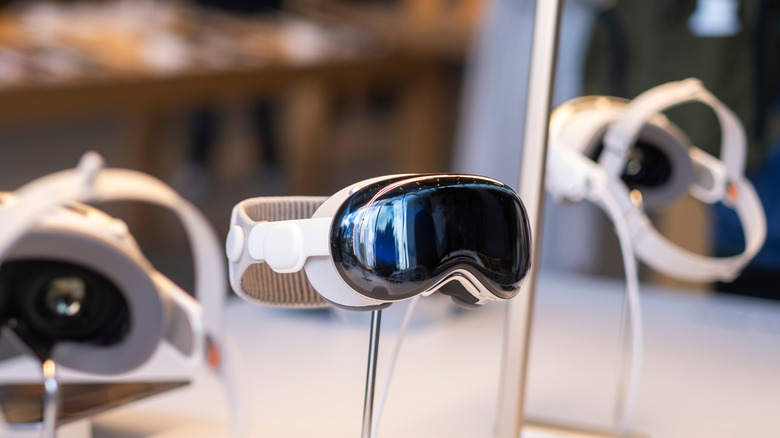
The first problem with the Apple Vision Pro was clear from day one: its cost. The $3,499 price tag made it hard for regular customers to justify the expense when they didn't know how much usage they would get out of the device or if developers would support the platform. Apple itself seemed to be aware of these limitations, as CEO Tim Cook addressed the price shortly after launch. "At $3,500, it's not a mass-market product. Right now, it's an early-adopter product. People who want to have tomorrow's technology today — that's who it's for. Fortunately, there's enough people who are in that camp that it's exciting."
However, while people are seemingly willing to spend more money on products they already know, like the iPhone, the iPad, and the Mac, such an expensive investment into "tomorrow's technology" failed to resonate with the masses, as indicated by poor sales reports over the past few years. Still, a high price tag wasn't the only issue with this product — its slow rollout also didn't work in favor of the mixed reality headset.
A lack of worldwide availability
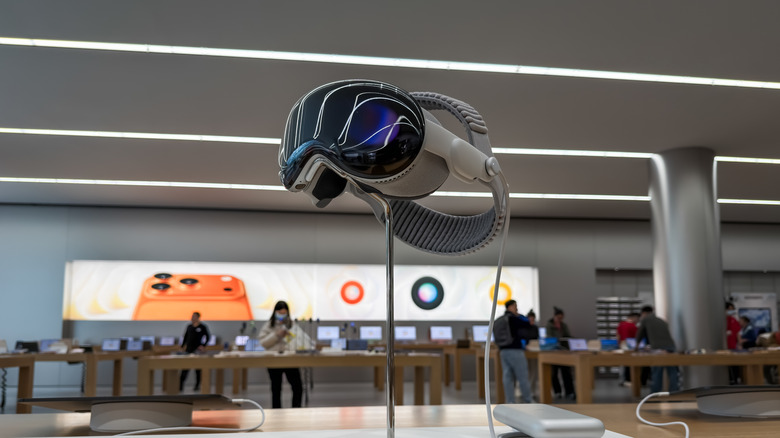
Imagine you're actually willing to spend at least $3,499 on the Apple Vision Pro, but you live in a country where the headset isn't officially available. Unlike the HomePod, which is another product that didn't resonate with most customers and has a limited availability worldwide, you can't import an Apple Vision Pro and use it with the Apple Account you created in your country.
Suppose you're from Brazil. If you bought an Apple Vision Pro overseas, you'd have to use an Apple Account from the U.S., France, or another supported country to access your apps and subscriptions, and even then, you'd have to pay for them in the currency of that country. Supported languages are also not as broad as the ones available on your iPhone, so just using this device in your second language might not be as comfortable as in your mother tongue.
To top that off, if anything went wrong with your very expensive mixed reality headset, Apple couldn't help with the product in a region where it's not sold. So you might just end up with a very expensive mixed reality brick at home, further preventing some customers from experiencing spatial computing for the first time.
A lukewarm reception from app developers
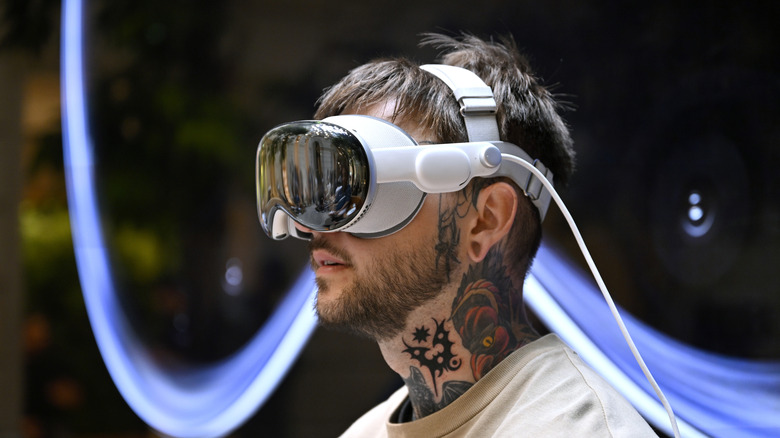
Price and availability weren't the only major factors working against the Apple Vision Pro. Third-party app developers weren't exactly lining up to embrace the mixed reality era, and Apple's first-party offerings were a bit lackluster. Similar to how it took Apple 14 years to bring the Calculator app to the iPad, the Vision Pro never got native versions of core Apple ecosystem apps like Pages, Numbers, or even the Find My app.
Even today, users won't find some of their favorite third-party apps on the platform, like Spotify or Netflix. YouTube wasn't available for a while, but the app finally launched in February 2026. That said, if you want to watch a Netflix TV show or movie on the Vision Pro, which is touted for its cinema-like experience, you'll need to open it in Safari. Similarly, if you want to listen to your favorite tunes on Spotify, you'll need to rely on a browser.
While Apple Music, Apple TV, HBO Max, and Disney+ users can get a native, immersive experience, it's undeniable that the absence of apps like Netflix and Spotify showed a lack of faith in the platform from developers, likely because there weren't enough customers requesting support. Unfortunately, this creates a vicious cycle where customers don't buy the product because there aren't many apps available, and developers don't port their apps to the platform since people aren't there.
Battery life and comfort troubles
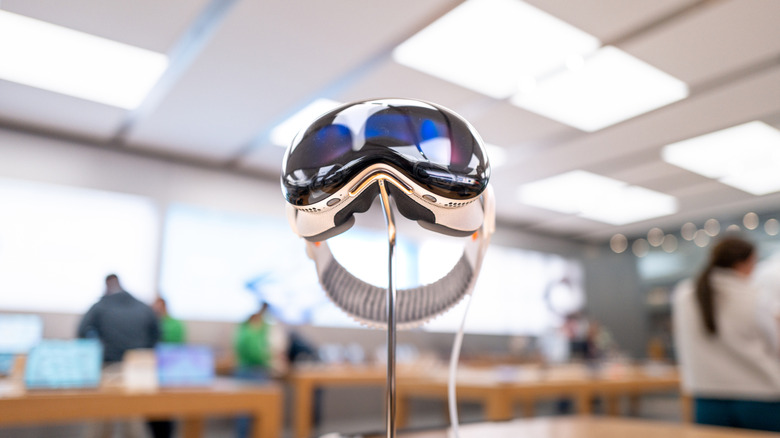
Another big issue with the Apple Vision Pro — one that might explain why it failed to please some customers — is that it's uncomfortable to wear for long periods. Similarly, its battery life is minimal, only offering around two or three hours of usage, and that's with the unit tethered to a power bank-like accessory in your pocket the whole time.
Even though Apple addressed some of the discomfort problems by releasing a Dual Knit Band for the revised Apple Vision Pro with the M5 chip, original buyers needed to purchase this accessory separately. In several Reddit threads, users have shared that they had to rely on third-party accessories to make Vision Pro more usable for extended periods of time.
Another issue that contributes to discomfort is that choosing the proper seals for an Apple Vision Pro can be tricky. Unlike an Apple Watch band, you actually need to buy the mixed reality headset at an Apple Store so you can try the different seals and get a sense of how they feel on your head. One Redditor captured the clunkiness of this situation in a comment: "I bought a Vision Pro to take advantage of Apple's extended return period over the holidays and really try it out in my own space, but it's super uncomfortable. I'm wearing a Large Dual Knit band with a 33N Light Seal. I started with a 21W, but the store swapped it out after I tried the 33N and preferred it. I actually tried a Medium band, which felt a bit better in the store."
Siri wasn't quite there yet
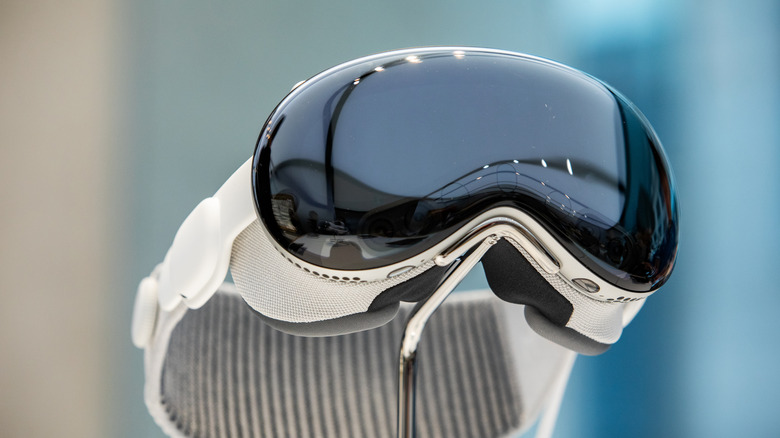
Finally, Siri might deserve a fair share of blame for the Apple Vision Pro's failure. After all, this mixed reality headset offers innovative ways to interact with software by pinching the air and looking at objects. When I had limited experiences with this headset, it was really interesting to see this new way to interact with familiar apps in a completely different environment.
Still, the innovative UI could have been better supplemented by a capable voice assistant, but Siri is still not there yet. With the personal assistant often struggling with even the more basic queries, people just forget to use it. While Apple is expected to introduce an all-new Siri powered by a Google Gemini model at WWDC 2026, the upgraded assistant won't be widely available for some time, as an official launch isn't expected until the release of iOS 27.
With reports suggesting that Apple might have given up on Vision Pro, the company could be less motivated to introduce a proper Siri to the mixed reality headset, instead focusing on delivering a satisfactory experience on the iPhone first. That said, we'll only know for sure what Apple will do with Siri when it unveils its official plans and the timeline to make it work at least a bit like it promised a couple of WWDCs ago.