

How Do Space Mirrors Actually Work?
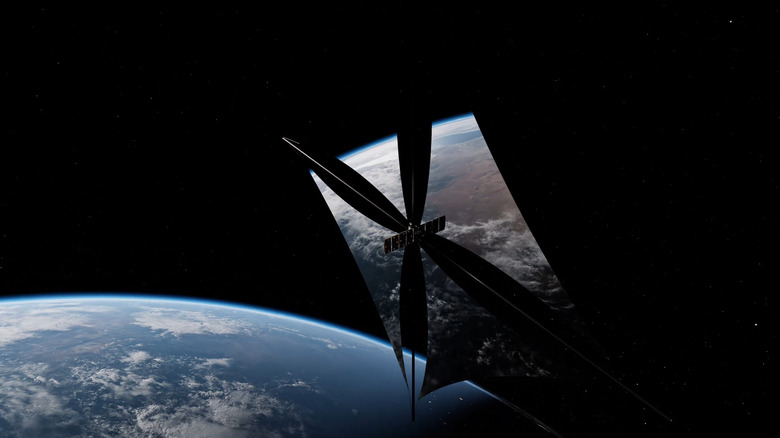
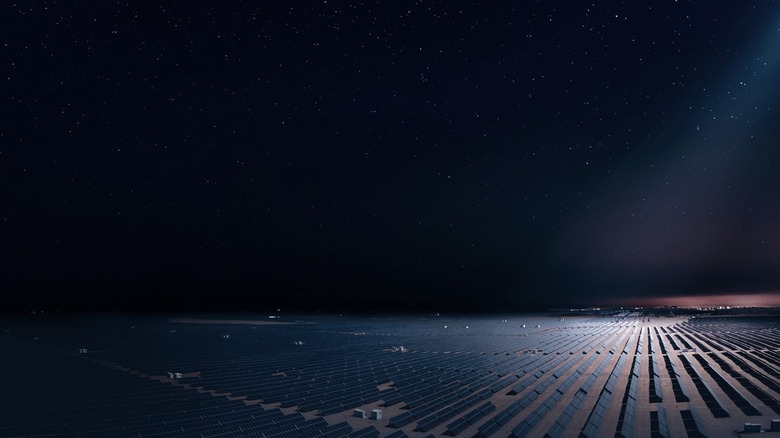
A startup called Reflect Orbital hopes to use space mirrors to give its clients access to sunlight at any hour of the night. The company was granted a license by the U.S. Federal Communications Commission (FCC) to launch a demonstration satellite to orbit on board a SpaceX rideshare mission. The concept works by extending a 60-foot Mylar panel on the satellite, which can reflect the sun's light onto a pre-determined swath of land or sea after it has slipped beneath the veil of night. The use cases of Reflect Orbital's satellites include increased solar farm yield (its target market), crop yield, and night-time illumination of urban areas and disaster-zones. While the concept sounds innovative, it has some serious flaws.
The satellites' orbits would ensure they pass over the same location at the same time every day, but that orbit also makes it impossible for a single satellite to offer continuous coverage. One Reflect Orbital satellite would provide only around 3.5 minutes of continuous sunlight during each orbit before passing out of range. This is why a 50,000-strong constellation is needed to make the idea viable. One of the company's goals is to provide sunlight that is up to 20% as bright as the midday sun. Two astronomy professors writing for The Conversation crunched the numbers and found that it would require 3,000 satellites to hit that 20% milestone, which calls the company's commercial viability into question.
Potential for devastating environmental impact
Reflect Orbital's planned space-mirror constellation also has the potential to cause severe environmental issues. The concept is already generating criticism from space observers, who have been dealing with SpaceX's Starlink satellite constellations (which damage the ozone when they burn up in the atmosphere) impacting their ability to observe the cosmos.
Amazon has asked the FCC to deny SpaceX's bid to create orbital data centers, citing light pollution as one of those concerns. Several concepts have been explored to mitigate light pollution caused by satellites, with one concept even proposing to coat satellites in ultra-black paint to stop them from reflecting sunlight. The American Astronomical Society (AAS) has warned the FCC that a space mirror constellation would not only add to light pollution, but could cause ocular injuries to observers looking through telescopes. If Reflect Orbital's proof of concept works as designed, it could appear even brighter than the full moon in its areas of influence.
The AAS went further by stating that if the concept were to reach the company's ultimate goal of a 50,000-strong constellation, it could cause untold damage to animals, whose daily rhythms have been proven to be negatively impacted by artificial light. Long term impact could be seen on animals in terms of birth rate, hibernation patterns, and access to food. Satellite beams could also pass over large areas of land when adjusting to new targets on the ground, and this can significantly alter the night sky and how humans experience it.