

2027 Is Going To Be A Great Year For Foldable Phones — Here's Why

Foldable smartphones have been around ever since Samsung entered the market with the original Galaxy Fold. Since then, Samsung and other device manufacturers like Motorola and Google have released an endless stream of foldable devices in varying form factors. Despite no shortage of options in the foldable market, there's no denying that foldable smartphones remain something of a niche product. To this point, a 2026 study from Counterpoint Research found that foldables represent a paltry 2% of all smartphone sales.
Foldable smartphones, however, may soon become more mainstream thanks to Apple's entry into the market. Similar to how the original iPhone popularized the modern-day smartphone, Apple's forthcoming iPhone Duo could do the same for foldables. With intuitive software and impressive hardware, Apple's iPhone Duo seems to have addressed some of the longstanding concerns that prevented foldables from really taking off in a meaningful way. The most obvious example is what Apple did to make the crease on the iPhone Duo barely noticeable. Thanks to an advanced hinge mechanism coupled with a matte display, the crease on the iPhone Duo isn't an eyesore in the way it's historically been on other foldables.
Equally as important is that the software on the iPhone Duo is custom-designed for the form factor. This has been a glaring shortcoming in Android foldables, where some manufacturers have been content to shoehorn an OS designed for smartphones and tablets into a form factor that demands more. Altogether, there's a strong chance that the iPhone Duo will popularize foldables beyond a core group of tech enthusiasts and early adopters. Not only could the iPhone Duo help popularize the concept of a foldable smartphone, it will also force competitors to step up their game and improve the user experience on their own devices.
Samsung's Galaxy Fold 8 proves that consumers want a foldable that's done right

As exciting as the iPhone Duo is, it's important to note that the foldable smartphone market wasn't exactly languishing before Apple magically stepped in with its own offering. On the contrary, Samsung has been slowly but surely improving its foldable smartphone line over the last seven years. Its most recent offering, the Galaxy Z Fold 8, was well-received by reviewers and has been selling extraordinarily well. In September 2026, Samsung issued a press release boasting that first-month sales of the Fold 8 and Fold 8 Ultra had seen a 50% increase in the European market when compared to the previous generation.
Not only that, but Samsung adds that many Galaxy Z Fold 8 buyers are coming over from other smartphone brands. Put differently, Samsung with the Fold 8 has demonstrated that foldable smartphones have the potential to be a lot more than just a niche product. Helping matters is that the Fold 8 line addresses many of the shortcomings that may have previously steered prospective buyers away.
For starters, the Z Fold 8 is lighter, has better battery life, a better camera system, and a more ergonomic form factor than previous iterations. Whereas previous foldable smartphones were more appealing in theory than in practice, the well-reviewed Samsung Galaxy Z Fold 8 is a compelling smartphone that just happens to be foldable. The success Samsung is seeing with the Galaxy Z Fold 8 line suggests that the slow adoption of foldables isn't because consumers don't want them. On the contrary, it can be seen as an indicator that consumers have simply been waiting for a foldable with the same polish as a regular smartphone.
Apple has a history of kickstarting product categories
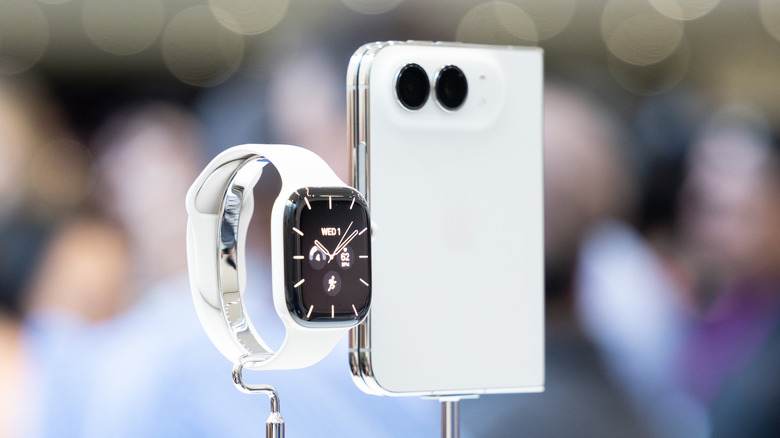
It's no secret that Apple isn't always the first to enter a product category, but when it does enter one, it brings lots of marketing fanfare. We saw this play out with MP3 players more than two decades ago. In the early 2000s, the market was saturated with various MP3 players — but when Apple released the iPod, there was a massive influx of advertising dollars that helped push MP3 players into the mainstream. This cycle repeated itself with the iPhone and later with the iPad. We're now poised to see a similar dynamic play out with foldables.
The fact that Apple is entering the foldable smartphone market is, in and of itself, a strong endorsement of the form factor. The iPhone Duo will help familiarize millions with the foldable smartphone experience. Indeed, analysts anticipate that Apple will sell upward of 6 million iPhone Duo units this year. If this pans out, it would represent a strong start in a market segment projected to see 100 million total shipments in 2026.
Apple, however, won't be the only one to benefit from the iPhone Duo's success. Now that Apple has copied the form factor popularized by Android foldables, companies like Samsung will start copying some of Apple's innovations on the iPhone Duo. The end result is a cycle of innovation that benefits all manufacturers and, more importantly, consumers. If Apple's iPhone Duo proves to be a hit, competitors will have no choice but to devote more resources toward their own foldables. The old adage that a "rising tide lifts all boats" undoubtedly applied to the iPhone and the smartphone market at large, and it now stands to reason that we may see the same thing happen with foldable smartphones.