

SpaceX Achieved A New NASA Record - Here's What It Is
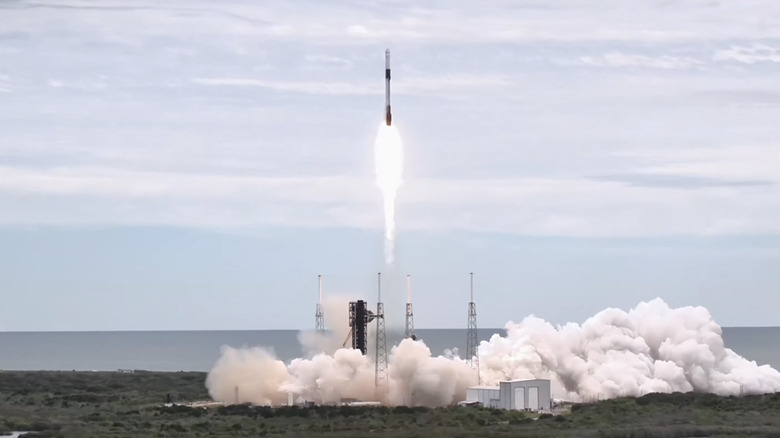
SpaceX's Crew-13 arrived safely at the International Space Station (ISS) on October 1, 2026, setting a new record for the fastest journey time to the orbital outpost by a U.S. spacecraft. After departing Cape Canaveral in Florida aboard a SpaceX Falcon 9 rocket and Crew Dragon capsule earlier in the day, NASA astronauts Jessica Watkins and Luke Delaney, CSA (Canadian Space Agency) astronaut Joshua Kutryk, and Roscosmos cosmonaut Sergey Teteryatnikov took just 7 hours and 55 minutes to dock with the ISS some 250 miles above Earth. That's about the time it takes to fly between New York and Paris. The speedy arrival smashed the previous record for a U.S.-launched astronaut mission to the ISS, set by Crew-11, which took 14 hours and 43 minutes in August 2025.
Crew-13's flight isn't actually the fastest crewed trip to the ISS among all spacecraft providers. At the time of writing, that record belongs to Russia's Soyuz MS-17 mission, whose crew arrived at the station just 3 hours and 3 minutes after lifting off aboard a Soyuz rocket from the Baikonur Cosmodrome in Kazakhstan in October 2020. The three-person crew comprised NASA astronaut Kate Rubins along with Russian cosmonauts Sergey Ryzhikov and Sergey Kud-Sverchkov.
Why journey times to the ISS can be dramatically different
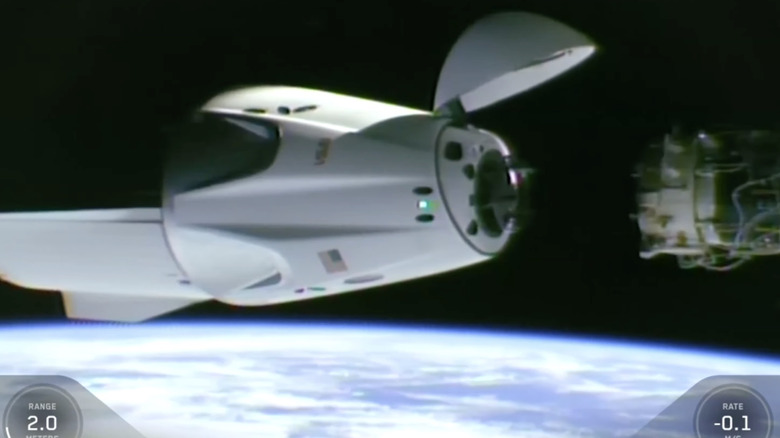
Reaching the ISS isn't simply a matter of flying directly toward it. The facility orbits Earth at about 17,400 mph, so an approaching spacecraft has to carefully match its speed and position as both travel around the planet. When the ISS is in a favorable position relative to the launch site, a spacecraft can take a more direct, rapid route to reach it. When the alignment is less ideal, the spacecraft may need to spend additional time in orbit, performing a series of maneuvers to gradually close the gap with the ISS and align with its trajectory.
The spacecraft's maneuvers bring it closer to the station's own path until the two vehicles are traveling together at the same altitude and speed. So although a spacecraft can appear almost motionless beside the ISS just prior to docking, both are actually traveling at about 17,500 mph. The final approach is conducted at very low relative speeds, allowing the spacecraft to line up precisely with one of the station's docking ports. As you can see, a journey to the ISS involves a series of carefully timed orbital adjustments rather than a continuous flight directly toward the ISS.
You might be wondering why NASA and SpaceX don't always launch crews when a short journey time is guaranteed. But the launch window is constrained by more than just the space station's position, as mission planners also have to consider things like the weather, launchpad and ground-system readiness, and spacecraft readiness. Waiting for a more favorable orbital alignment isn't always practical, as it could mean a lengthy delay until the next suitable launch opportunity.
Other NASA milestones achieved by SpaceX
Ever since SpaceX's first contracted operational mission for NASA in 2012, the pair has achieved a number of milestones working together. For example, SpaceX's Crew Dragon became the first commercially built and operated American spacecraft to carry NASA astronauts to orbit when it flew the Demo-2 mission in 2020, carrying Bob Behnken and Doug Hurley to the ISS. SpaceX also became the first company to reuse a Crew Dragon for a NASA astronaut mission, sending Crew-2 to the ISS in 2021 after its first mission for Demo-2 the year before. The company also achieved the first reuse of a Falcon 9 booster for a NASA crewed launch to the ISS, using a previously flown booster for the Crew-2 mission. SpaceX's ability to reuse parts of its spaceflight system is central to the company's success, allowing it to reduce the cost of operating its flight system while increasing its launch rate.
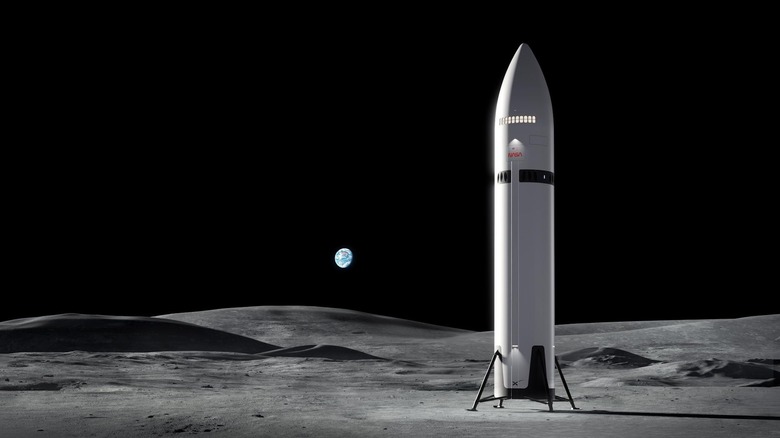
Looking ahead, SpaceX is aiming to set yet another major milestone with the American space agency by becoming the first private company to land NASA astronauts on the lunar surface. The feat will take place on the Artemis IV mission, currently targeting early 2028, using SpaceX's Starship Human Landing System (HLS). The Starship — the most powerful rocket ever built — will carry the HLS lander to lunar orbit, though the vehicle is still in development and has many technical challenges still to overcome, so the launch date could slip. But considering the progress SpaceX has made to date, it's easy to imagine it setting plenty of other new records in partnership with NASA in the coming years.