

SpaceX's Starship Needs To Be Fully Operational By 2028 — Here's Why

NASA is preparing to land humans on the moon for the first time since the final Apollo mission in 1972. As part of the space agency's Artemis program, the first crewed lunar landing in more than half a century is currently scheduled for the Artemis IV mission in early 2028, though a lot of pieces have to fall into place for it to achieve that target date. NASA selected SpaceX to provide the lunar lander for Artemis IV, but the rocket that will send it there — SpaceX's Starship — is still undergoing testing. If the Starship rocket and the upper-stage lander aren't ready for the targeted 2028 launch date, SpaceX's involvement in the Artemis IV mission could be in jeopardy.
Under the current Artemis IV plan, NASA will send four astronauts to lunar orbit using its own Space Launch System (SLS) rocket and Orion spacecraft — the same vehicles used to send four NASA astronauts on a voyage around the moon in April 2026. Meanwhile, SpaceX will use the Starship rocket to send the upper-stage Starship Human Landing System (HLS) lander — a modified version of the current upper-stage Ship — to lunar orbit. The Orion will then dock with the Starship HLS, allowing two of the four astronauts to transfer to the lander for the descent to the lunar surface. The pair will spend about a week on the moon performing science work and other activities before returning to the Orion in lunar orbit for the journey back to Earth. So what does SpaceX have to do to get the Starship ready so that it can play its part in the highly anticipated Artemis IV mission?
The challenges ahead for Starship and Artemis IV
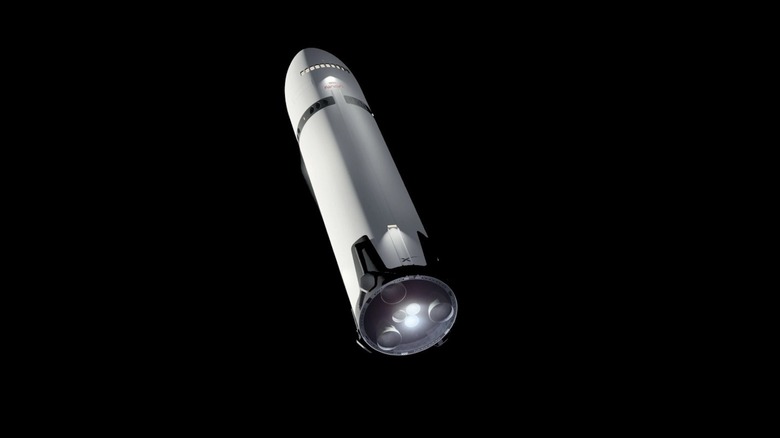
SpaceX is in a race against time to ready the Starship for the Artemis IV mission in 2028. The world's tallest and most powerful rocket took its maiden flight in 2023 and blew up just a few minutes after leaving the launchpad, though the abrupt ending says more about the company's iterative approach to testing than it does about the Starship itself. As of September 2026, the Starship has flown a total of 14 times, and while it's clearly come a long way since its explosive debut, SpaceX still has many challenges to overcome before the rocket can be given the green light for the long-awaited moon mission.
For example, although the Starship's upper-stage Ship reached orbit on its first attempt during the 14th test flight in September 2026, SpaceX now has to show that it's capable of reliable orbital flight before it can be modified to become the Starship HLS lander for the Artemis IV lunar touchdown. SpaceX also needs to demonstrate that Starships can transfer large quantities of cryogenic propellant between one another in orbit, a capability needed for refueling the Starship HLS lander so that it has enough propellant to reach the moon. Docking the lander with NASA's Orion spacecraft also has to be achieved, a procedure it plans to demonstrate for the first time during the Artemis III mission in Earth orbit, currently planned for 2027. Two other major challenges include showing that the lander is able to touch down safely on the moon as well as launch back into lunar orbit. If SpaceX fails to meet these and other objectives in time for 2028, several outcomes are possible.
Is there an alternative to SpaceX's lunar lander for Artemis IV?
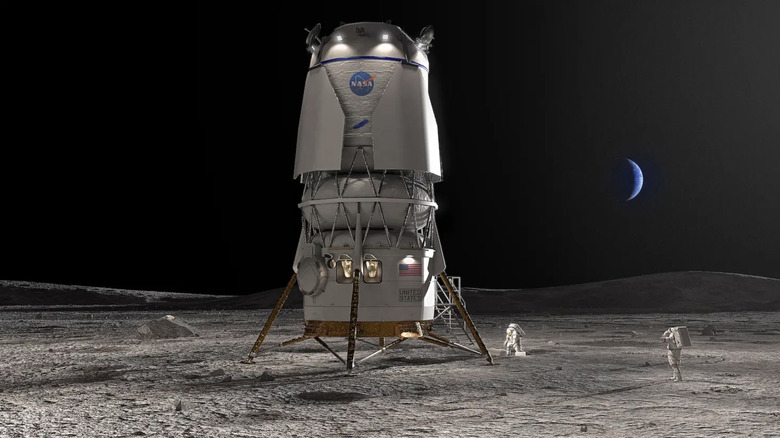
So what might happen if the Starship's progress slows to a crawl because of engineering challenges? NASA awarded SpaceX the Starship HLS lunar lander contract back in 2021, but at that point the mission was part of the upcoming Artemis III. In February 2026, NASA decided to revamp Artemis III into a crewed Earth-orbit demonstration involving the Ship and Orion, delaying the crewed lunar return until 2028 as part of Artemis IV.
The following month, NASA said that "lander readiness will determine which provider will safely carry [the crew] to the surface and back to Orion in lunar orbit." While SpaceX is still the contracted provider for the Artemis IV lander, NASA's wording indirectly suggests that if SpaceX's Starship fails to meet the requirements, the space agency could use Blue Origin's Blue Moon lander instead. As of September 2026, however, the Blue Moon lander is also still in development, while the New Glenn rocket that would launch the lander toward the moon has only flown three times to date. And in May 2026, as it prepared for its fourth launch, the New Glenn exploded on the launchpad during an engine test. It means that Blue Origin is in its own race against the clock as the Blue Moon is also set to take part in Artemis III's Earth-orbit test and could potentially serve as the Artemis IV lander.
Following the New Glenn's explosion, SpaceX chief Elon Musk posted on X, "Rockets are hard." Few people would argue with that comment, least of all the SpaceX engineers working tirelessly to get the Starship ready for 2028.