

Texas Roads Have Become The Testing Ground For Driverless Semi Trucks
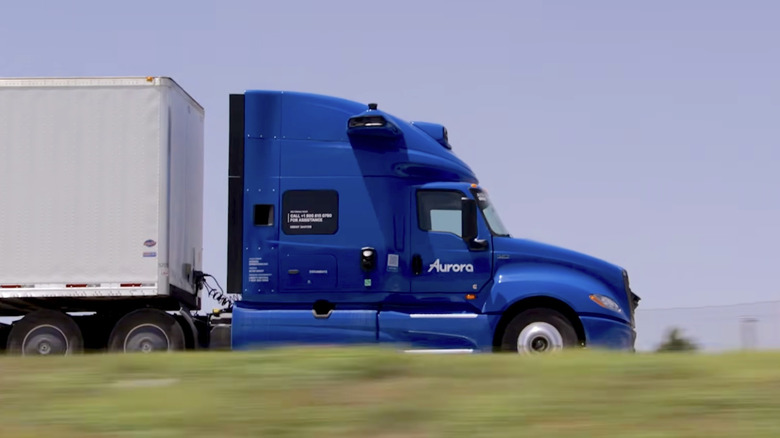
While autonomous ride sharing services from the likes of Waymo and Zoox tend to generate more headlines, a number of other tech firms have been working away for years to bring similar driverless tech to much larger vehicles. And a lot of the on-road action is taking place in Texas.
Autonomous semi-trucks from the likes of Aurora Innovation, Kodiak AI, Bot Auto, and Waabi are currently being tested and deployed on major Texas highways like I-45 and I-20. Aurora, for example, started regular driverless freight runs between Dallas and Houston in 2025 and has since expanded to longer routes, including the roughly 600-mile Fort Worth-El Paso corridor along I-20. By September 2026, Aurora said its trucks had driven more than half a million miles in autonomous mode since its commercial launch in April 2025, and it was aiming to have 200 driverless trucks in operation by the end of the year. It's worth noting that Aurora's trucks are being tested without an engineer or safety driver behind the wheel, a sight that's apparently causing a few double-takes from human drivers as they pass the driverless trucks on the highway.
Kodiak AI, meanwhile, has 35 customer-owned autonomous trucks operating as of June 2026, with more than 40,000 hours of paid driverless operation. Some of its trucks are already moving freight commercially without anyone behind the wheel for drives in the Permian Basin, a major oil-producing area. The company also began autonomously transporting freight between Dallas and Houston in April 2026, with a safety observer in the cab, and is now preparing to launch a fully unsupervised driverless service on the 219-mile I-45 corridor by the end of 2026. So why is Texas proving popular as a location for testing driverless semi-trucks, and what could it mean for the freight industry?
Why Texas, and how might autonomous trucks impact the freight industry?
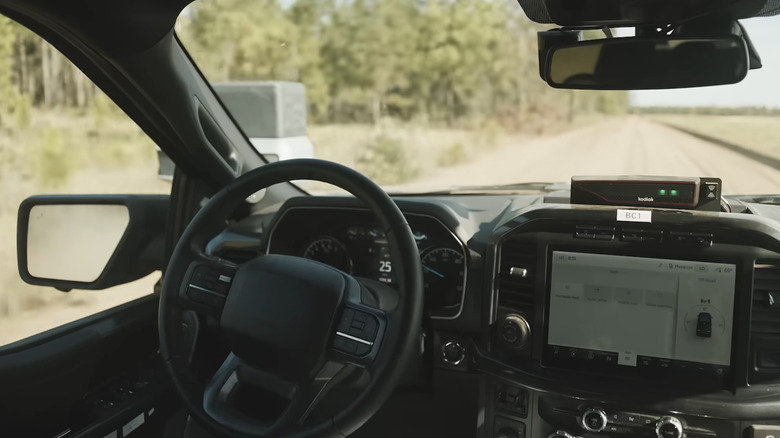
Texas is proving popular with firms developing autonomous tech for semi-trucks because of its long stretches of interstate highway and the large amount of freight that already moves through the state. The Dallas-Houston corridor, for example, is a particularly busy freight route, giving autonomous trucks operated by the likes of Bot Auto an excellent opportunity to build up real-world miles in demanding conditions.
Regulation is another factor. Texas has taken a more relaxed approach to autonomous vehicles than other states like California, although the rules were tightened somewhat in 2026 when operators of commercial autonomous vehicles were told they had to start getting authorization from the Texas Department of Motor Vehicles. But even with the new rules, the state looks set to remain popular with those already testing their autonomous trucks there.
Although the U.S. trucking industry currently employs around 3.5 million drivers, it still faces a shortage of workers to fulfill delivery jobs across the country. Removing the need for a human behind the wheel is likely to cut costs for operators of commercial freight trucks, as autonomous trucks don't need to stop for rest breaks and can potentially operate for periods of time far longer than what's legally possible for human drivers. They could also improve safety by eliminating safety risks linked to tiredness, a serious hazard when it comes to long-haul trucking. For companies moving goods across large distances, the potential savings in labor costs and greater use of each vehicle are likely to be significant and probably hard to resist. There is, however, a major downside that shouldn't be easily dismissed, as many drivers who currently rely on trucking to support themselves and their families could see their jobs replaced by autonomous technology.