

5 Everyday Electronics You Probably Didn't Realize Are Radioactive

Even today, some everyday electronics and equipment contain radioactive materials, usually to help them perform a specific function. For instance, to detect smoke or to keep indicators active without power even in the dark, a device may be built with a small amount of radioactive material integrated into certain components. Several electronics still use these materials — including safety devices, believe it or not — and there are even some gadgets you may have in your home that could set off a Geiger counter.
The radiation emitted by household electronics varies depending on the device and how it works, but just because something emits radiation doesn't necessarily mean it contains radioactive material. Cell phones and routers, for example, transmit signals through radio frequency (RF) waves — the word "radio" in this case tells you these waves are a form of radiation, not that they are radioactive. For the products on this list, the relevant characteristic is the presence of isotopes that release energy as they decay — in other words, radioactivity — which is a process often harnessed to produce light or assist certain components.
However, even with the presence of radioactive materials, the products listed pose a nominal risk to people's health during normal use. If they remain intact and are used according to the instructions, radiation exposure tends to be very low. Still, it is important to follow the manufacturer's instructions, especially when disposing of them, since these items may require specific procedures to mitigate exposure to radioactivity.
Ionization smoke detectors
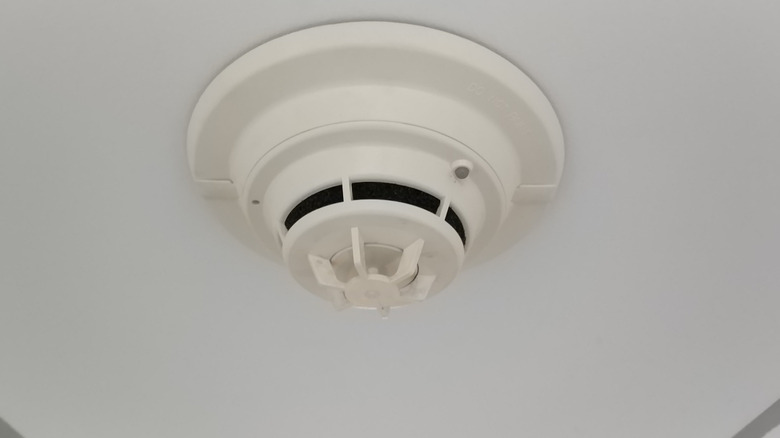
Some electronics you use in your own home contain radioactive materials, as is the case with ionization smoke detectors. Inside them, there is a small amount of americium-241, which is used to identify the presence of smoke and trigger the alarm if it is detected. In fact, this technology remains present even in newer models, such as the First Alert SMI100, which runs on a replaceable 9-volt battery.
In smoke detectors, americium-241 emits alpha particles that interact with air molecules inside a chamber, forming electrically charged particles known as ions. At the same time, two plates maintain a small electrical current through these ions, and when smoke enters the detector, the particles bind to them and reduce this current. The circuit can identify the change and then trigger an audible alert for anyone in the area.
Despite the presence of this material, the radioactivity of smoke detectors does not pose a health risk when the devices are used correctly, according to the EPA. The americium source is protected by materials that prevent the alpha particles from escaping, so if the device is intact, it is safe to use.
Tritium exit signs

To keep the word "EXIT" visible even in extreme situations, such as without batteries or connections to the electrical grid, many exit signs use radioactive material in their construction. Self-luminous models often use tritium, which is a radioactive isotope of hydrogen, to keep the letters visible in any situation. One example is the Isolite SLX-60, designed to mark exit routes even during a power outage.
The glow comes from sealed tubes of glass containing tritium that are coated on the inside with a luminescent material. The tritium undergoes radioactive decay and releases beta particles, and when these hit the coating, a glow is given off. This process is called radioluminescence and means that the sign can remain lit, even in the dark with no power source.
As with the other items, if the exit sign remains intact, the tritium stays confined and the beta particles do not pass through the sign's protection. However, damage can allow the gas to escape, so broken signs require specialized handling. At the same time, it is important to distinguish these models from signs with LEDs or photoluminescent materials, which use other techniques to produce light.
Quartz watches with tritium illumination

Some watches also use radioactive material, such as tritium, to keep the hands and markers visible to the user even in the dark. The material remains sealed inside small glass tubes with a luminescent coating that produces light when it receives the beta particles emitted by the gas. The illumination can work continuously without depending on the battery or prior exposure to light. However, even if you can see the hands, you still need the battery to power the electronic movement that keeps time.
Some current watches, such as Marathon's GPQ and TSAR models, combine electronic quartz movement with tritium illumination. However, the intensity of this glow usually decreases over time because the component used typically has a half-life of approximately 12 years. Nonetheless, the risks of exposure are extremely low during normal use of approved products. That is because the construction keeps the material confined, making these models safer than older radium watches, which used radioactive paint on their dials.
Microwave ovens with thorium in the magnetron

Although it is not present in every microwave oven, some models may contain radioactive thorium in the magnetron filament, which is the component used to generate the waves used for heating. In this type of construction, the material is incorporated into tungsten to improve electron emission from the heated cathode, something documented in patents and NRC reports.
Food is heated by electromagnetic waves produced from electrical energy, not by the radioactive decay of thorium. The containment of waves inside the microwave involves the metal structure of the chamber and the mesh in the door, and according to the FDA, these waves are non-ionizing, so your food does not become radioactive either. Therefore, the presence of thorium in the component is an entirely separate issue from the cooking process.
This composition, however, should not be attributed to every microwave oven sold today. A patent application published in 2025 describes tungsten filaments with thorium oxide among the existing materials for magnetrons, but also presents alternatives without this element.
Metal halide lamps and xenon headlights

Some high-intensity discharge lamps, known as HID lamps, use small amounts of radioactive material to help them operate. According to the International Atomic Energy Agency (IAEA), this can occur in automotive xenon headlights and high-power lamps used in stadiums. Depending on the model, they may contain thorium-232, krypton-85, or tritium. The Philips MasterColor Ceramic Metal Halide ED-17, for example, lists the presence of krypton-85 in the arc tube.
In this case, the krypton-85 does not emit the light itself. It is mixed with argon and gives off beta particles as it decays, which ionizes the gas and makes it easier to create the electrical discharge needed to light the lamp. The light given off is white due to the combination of mercury and metal halides in the plasma.
The amount of krypton-85 used in these products is very small, and the gas is chemically inert. According to documents submitted to the NRC, if a lamp breaks, the material tends to disperse into the air without leaving contamination. Besides HID lamps, Osram notably used krypton-85 in the starters of some Dulux compact fluorescent lamps.