

4 Nokia Phones We Wish Made A Comeback In 2027
We may receive a commission on purchases made from links.
In its heyday, Nokia released some ingenious designs that were well ahead of their time. Of course, this spread the company too thin, with too many handsets to support, so few truly received the attention they deserved from the company and its customers. As we now know, Nokia absolutely dominated on the hardware side, but it missed the boat with software; Symbian simply wasn't cut out for a world of truly smart smartphones. While Microsoft tried to revive the brand, Windows Phone wasn't up to the task either. Ever since HMD Global licensed the Nokia brand (in case you were wondering who owns Nokia these days), and Nokia shifted to a business-to-business model, it's dead as a consumer electronics brand, with Nokia's last two smartphones losing software support.
Still, many miss those early days when distinctive, bold designs reigned supreme, and many tech enthusiasts hold a special place in their hearts for particular Nokia models. From the renowned sliding phone, the N95-3 that was well ahead of its time, to the taco-like side-talking N-Gage that proved to be a complete failure with gamers, to the Nokia 3650 and its iconic rounded yet superbly uncomfortable keypad, to the laptop-like Nokia 9290 that offered dual displays with its folding design, there is no shortage of Nokia phones many of us wish would make a comeback with modern specs and design in tow. Alas, it's a pipe dream, but one we'll chase as we look back at a handful of Nokia's most iconic and groundbreaking designs.
Nokia 9290 Communicator
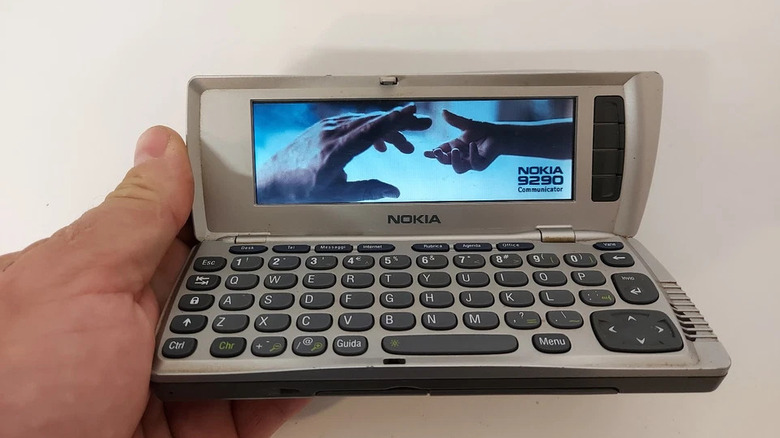
Back in 2002, smartphones didn't hold much of the market, since there were only a few models to choose from, and they weren't cheap compared to the feature phones that ruled the period. That is why Nokia's 9290 Communicator was so unique: it was basically a tiny laptop in phone form, with two screens and a folding design. In other words, it was well ahead of its time, one of the first models to run Nokia's Symbian OS, a premium operating system for a premium smartphone that retailed for a whopping $600 unlocked in the US.
At the time, only 62% of the US owned a cellphone (these days it's closer to 98%), so as you can imagine, very few people actually bought the Nokia 9290 Communicator, which was a simple modem swap for the very successful Nokia 9210 hardware sold in Europe, which helped propel Nokia in the region into a similar smart device space as Compaq and Palm. Yet that popularity didn't translate in the States with the 9290, where the phone remained expensive and niche, with no carrier subsidies. Still, the best-selling mobile phone of all time isn't an iPhone; it's a Nokia. The brand was a giant for a time.
Despite poor US sales, the 9290 Communicator still has fans across the US and Europe, which is why it's due for a revival: it nailed the form factor of a candybar phone that folds out into a full-fledged computing device, complete with tactile keys for typing. The device's engineering was purpose-driven, something many modern smartphones have drastically strayed from: function over form.
Nokia 3650
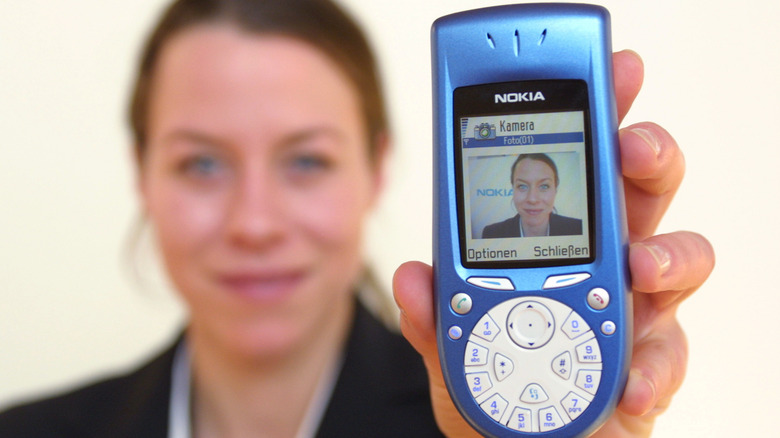
Back in the day, chasing trends in smartphone design often meant wacky, unusual, or just straight-up strange was A-okay, ergonomics be damned. The perfect illustration is the Nokia 3650 and its iconic round keypad, which called back to rotary phones. So this wasn't just some haphazard design to be trendy with the kids; there was a clear inspiration, and yet, the keypad proved in practice to be a nightmare to type on, which is why the 3650 was eventually redesigned into the 3620 (and the 3660 in Europe) with a typical 3x4 keypad layout.
Still, the fact that Nokia released a phone with a completely unergonomic, rounded keypad is something we simply don't see these days: a willingness to take risks, often because it results in fun, which is why the 3650 remains an iconic design looked upon fondly by fans to this day.
When nearly every smartphone is a boring glass rectangle you can hardly tell apart, looking back at bold designs like the Nokia 3650, with its rounded keypad and colorful polycarbonate body, makes it easy to feel nostalgic. Plus, with retro everything making a comeback, it's easy to imagine what a phone revival could look like. Heck, if the wheel of buttons were made into a physical, tactile clickwheel that makes it easy to scroll through feeds and dial numbers, it could really land with people who enjoy fidgeting with their gadgets. So why not recreate a device like the 3650 with a healthy dose of retro aesthetics, modernized for today's functionality?
Nokia N-Gage
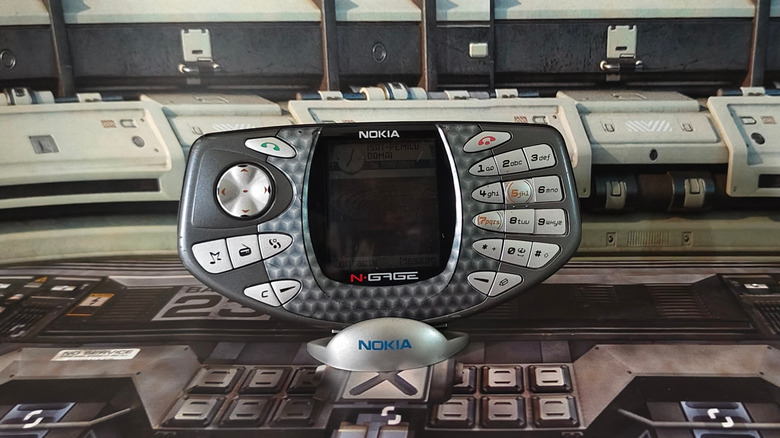
Even then, the Nokia N-Gage was a spectacle: a gaming device with a built-in GSM modem. Stores like GameStop even sold it unlocked, which you can imagine was a hard sell in 2003 at $300, especially when its game library was fairly tiny. Plus, if you wanted to use it as a phone, you needed a cellphone contract or prepaid plan from one of the few GSM carriers at the time, something that was basically out of reach for anyone under 18, a large chunk of gaming's primary market. In other words, the phone flopped, and it flopped so hard it spawned a meme: the sidetalking phone meme. Because the earpiece and microphone were bizarrely placed along the phone's slim top edge, users had to hold the device against their cheek like a plastic taco just to make a voice call.
But the cold, hard truth is the world wasn't ready for a true gaming phone, and even Sony couldn't find success eight years later with the Xperia Play. While major phone brands still don't manufacture gaming devices with physical face buttons, companies like Redmagic have cornered the gaming phone market, and there is certainly no shortage of Android handhelds. So things are much better for gamers in the mobile space, both in hardware and software. Still, the N-Gage, like many of Nokia's early designs, was well ahead of its time. Frankly, it is about time gamers finally got their wish, with an N-Gage revival that does things right, like securing enough publishers to build a viable gaming platform and properly placed speaker and microphone openings so sidetalking isn't needed.
Nokia N95-3
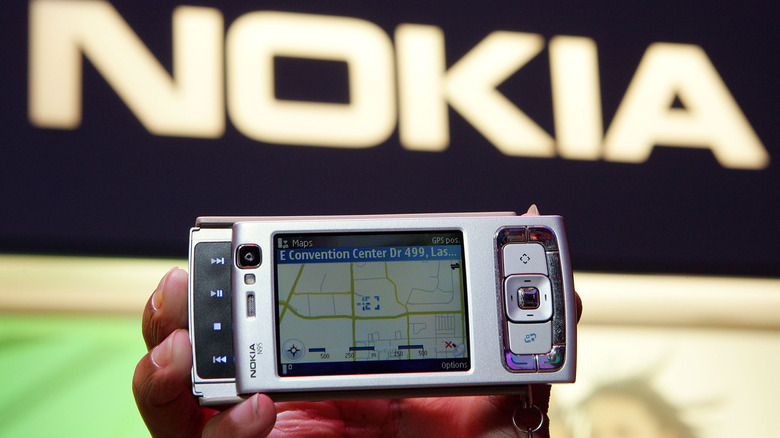
Like the Nokia 9290 Communicator, the European version of the Nokia N95-3 (known as the N95) succeeded at launch in 2007. But doubling the RAM and enlarging the battery for the N95-3 release sadly had no positive effect on US sales. This early, unique phone, which slid up and down to reveal separate hardware keys for control, was a true power-user design that struggled to find an audience in the US. That doesn't stop it from being iconic, and the N95 is often cited as one of Nokia's truly company-defining models.
Today, sliding phones have mostly disappeared from the mainstream, but imagine a sliding phone that offers quick shortcuts to media for things like audio and video editing, for the TikToker in all of us, and then slides the other way to reveal a full tactile keyboard. We could once again embrace physical buttons in the modern age with a familiar yet ingenious double-sliding design. Not only would this stand out in a world of glass slabs, but function over form could make a return, which is precisely where Nokia excelled, and with a pinch of dreaming, could do so again.
Ultimately, the Nokia N95-3 embodied an uncompromising ambition to do more, a spirit worth remembering as today's RAM and storage shortages put pressure on OEMs to raise prices, cut memory configurations, or both. A fresh reboot that offers a nostalgic, convenient sliding design without compromising specs or the camera could very well reign supreme.