

iOS 1 Was Revolutionary, But It Lacked These Critical Features
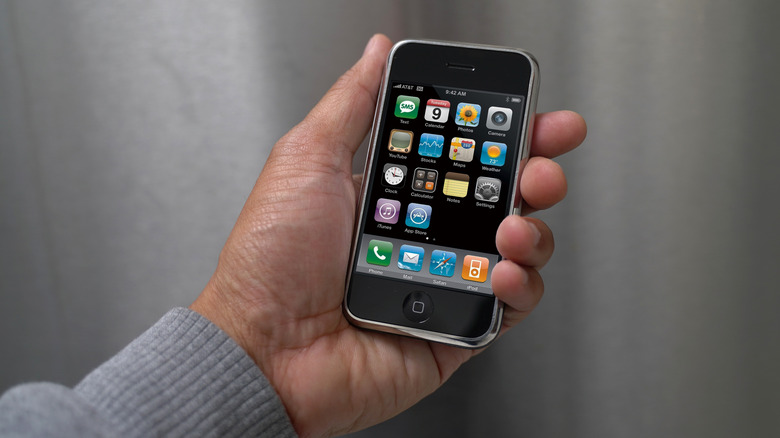
Almost 20 years ago, Apple introduced the original iPhone with iPhone OS 1, which would eventually be rebranded as iOS. This provided the foundation of what the iPhone was at that time, and what it became in the years to come. Among the most revolutionary features of the phone, the entire touch interface revolutionized the smartphone industry with pinch-to-zoom and double-tap capabilities It also offered support for a proper mobile browser. As Apple branded at the time, the iPhone is a "widescreen iPod." However, as big of a release as the original iPhone was, iPhone OS 1 also lacked critical features, including the App Store, copy and paste capabilities, photo messaging, and Home Screen wallpapers.
Several critical features that were introduced in later software and hardware releases were also missing from the handset. For example, the original iPhone didn't have 3G capabilities — and this is why the following iPhone was dubbed as the iPhone 3G. Additionally, AT&T was the exclusive carrier in the U.S. Plus, the original model didn't have built-in GPS, which means that Google Maps access was hindered with no turn-by-turn directions. We don't even need to mention the lack of Touch ID or Face ID, the Retina Display, wireless charging, water resistance, or even the Lightning (and later USB-C) connector.
Basic iPhone features we take for granted weren't available with iPhone OS 1
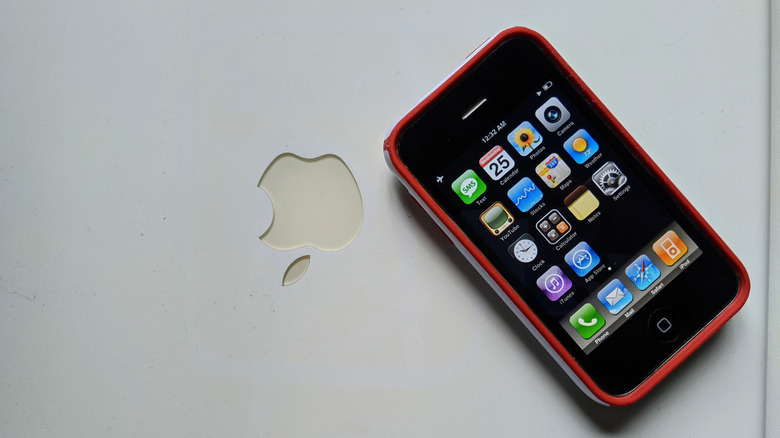
Today, it's hard to imagine an iPhone without hundreds of thousands of apps available for you to download, but that was exactly the case with the original iPhone. You had what was pre-installed, and that's it. When the App Store was finally introduced, the software available on it had received over 10 million downloads by the first weekend of its release. At that time, Apple said that there were over 800 native apps available, with more than 200 free options, and more than 90% priced at less than $10.
However, the App Store wasn't the only critical feature missing from the original iPhone. A feature that practically everyone uses today, copy and paste, wasn't available with iPhone OS 1. Users had to rely on just typing everything again and again — you couldn't even get a friend's text to send to another one until OS 3.0. Besides that, the original iPhone didn't have iMessage, which was only made available in iOS 5, and even Photo Messaging through the Multimedia Messaging Service (MMS) wasn't available. That function came later with iPhone OS 3.0 in 2009, but it was exclusive to the iPhone 3G and iPhone 3GS.
It's also interesting to think that wallpapers were only released with iOS 4, in 2010. Before that, iPhone users were left with a black wallpaper. Still, in that department, Apple took ages to catch up with the Android counterpart. However, almost 20 years later, Apple offers several customizations for iPhone users.
More features unavailable with iPhone OS 1
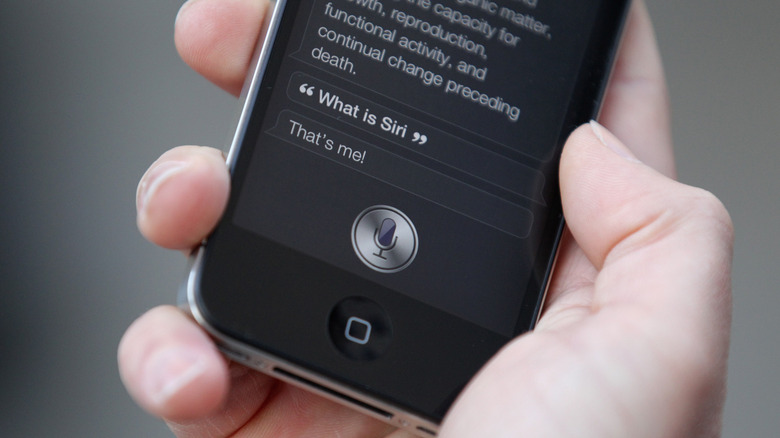
Although it's practically the center of iOS 27, Siri was nowhere near being released with the first software of the iPhone. Siri was originally a standalone app developed for the iPhone that Apple acquired to power its vision of a useful personal assistant. As such, it was only included with new devices starting with the 4S, which ran iOS 5. Other features that we now consider basic also weren't available, such as AirDrop, a functional Control Center, folders for apps, or even the ability to delete and hide stock apps.
Even iCloud, which is the most convenient way to backup your data, wasn't available. In iPhone OS 2, Apple added MobileMe support, which was the predecessor of iCloud. But for the longest time, users trying to keep their data safe relied on a wired connection between the iPhone and a computer interacting with it through iTunes. Even though iTunes is supported by legacy Macs, it's not an option for iPhone users anymore, as Apple ended support for it on macOS in favor of separate Music, Podcasts, and TV apps.
Still, the first iPhone OS 1 created the foundation of the iPhone. While some features took longer to arrive, future releases eventually helped shape what people expected from an iPhone, such as video recording, which came with the iPhone 3GS, a selfie camera introduced with the iPhone 4, bigger models with the iPhone 6 and iPhone 6 Plus, 5G support with the iPhone 12, and so on.