

5 Mesh Wi-Fi Systems With Plenty Of Ethernet Ports

We may receive a commission on purchases made from links.
Unlike traditional Wi-Fi setups, a Wi-Fi mesh system eliminates dead zones in your home, office, and other spaces while delivering seamless internet coverage. Wi-Fi mesh systems can solve problems like weak Wi-Fi on the second floor, unreliable internet in a bedroom, and even getting a proper signal when you're barbecuing in your garden. Fortunately, over the years, several companies have focused on creating Wi-Fi systems that can, once and for all, eliminate dead zones while ensuring you get the most out of your gigabit plan. Plus, while these mesh Wi-Fi systems improve wireless connectivity, multiple Ethernet ports on each model let you connect the nodes to one another via physical cables and hardwire high-bandwidth static devices like gaming consoles, desktop PCs, and more. Options include NetGear's Orbi 770 Series, Asus' ZenWiFi BT10, and TP-Link Deco BE85.
We selected these products because they offer the best Wi-Fi specifications of the moment — Wi-Fi 8 is just around the corner, but it will take some time before you can actually make use of it — while also delivering plenty of Ethernet ports, which can be great for those products that require a reliable internet connection, while leaving the wireless connection for all the other devices, like your smartphone, tablet, laptop, and other smart home accessories. These are five mesh Wi-Fi systems with plenty of Ethernet ports.
NetGear Orbi 770 Series
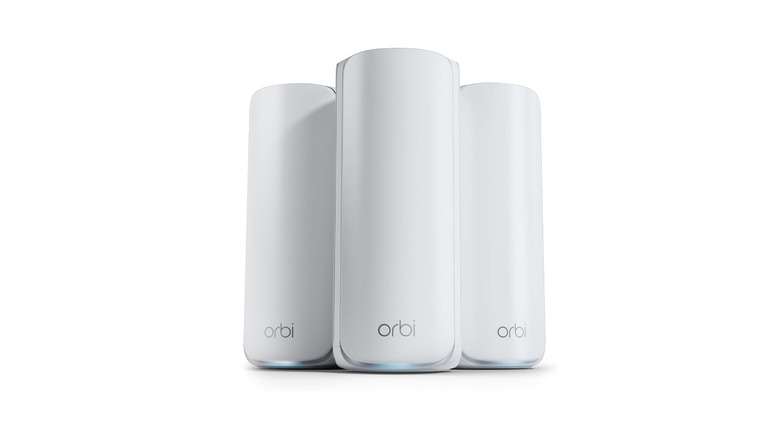
Starting with the NetGear Orbi 770 Series, this high-performance tri-band Wi-Fi 7 mesh system is built to handle heavy household bandwidth and provides several physical connectivity ports. Each primary router unit includes four Ethernet ports: one 2.5Gbps WAN port for high-speed internet and three 2.5Gbps LAN ports for local wired connections. The satellite nodes, on the other hand, feature two 2.5Gbps LAN ports, ensuring high-bandwidth devices like a PlayStation 5, a desktop PC, or a smart TV can maintain steady multi-gigabit speeds anywhere in the home.
Powered by Wi-Fi 7 across the 2.4GHz, 5GHz, and 6GHz bands, the RBE770 delivers total wireless throughput up to 11 Gbps and uses an enhanced protocol to optimize communication between the router and satellites. This mesh Wi-Fi system is positioned as a mid-to-high-tier solution, aimed at tech-savvy homeowners and families with multi-gigabit internet plans up to 2.5Gbps. Prices range from $249 to $629, depending on how many nodes you need, and it offers a sweet spot between a consumer-grade mesh system and ultra-premium flagships, covering up to 8,000 square feet.
Compared with the flagship Orbi 870, which we'll talk about later, this one is a more budget-friendly choice for those who don't need 10Gbps WAN capabilities, saving you hundreds of dollars.
Asus ZenWiFi BT10
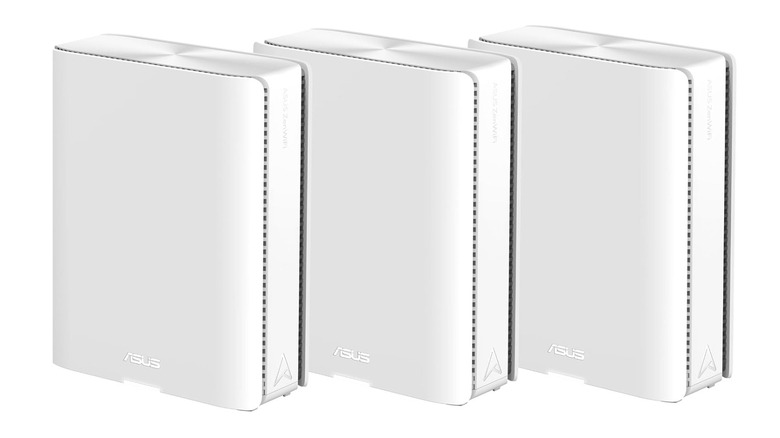
Asus' counterpart, the ZenWiFi BT10, is packed with a Wi-Fi 7 tri-band mesh system, which has been designed specifically for extreme network demands, power users, and enthusiast home labs. Each BT10 node offers four high-speed physical connections: two ultra-fast 10Gbps Ethernet ports (one for WAN/LAN and one dedicated LAN), two 2.5Gbps LAN ports, and a USB 3.0 port for network storage. This Wi-Fi mesh system operates on 2.4GHz, 5GHz, and 6GHz channels with full support for 320MHz bandwidth and Multi-Link Operation (MLO), and it can achieve aggregate wireless speeds of up to 18Gbps while leveraging eight internal antennas per unit.
This Wi-Fi mesh system can be a must-have addition for gamers, heavy media creators, and other smart home enthusiasts willing to invest in a top-tier infrastructure, as the BT10 model sits in a more premium segment. On Amazon and other sellers, customers can buy a single pack, a two-pack (covering up to 6,000 square feet), or a three-pack for huge homes. The system also offers Asus' Smart Home Master SSIDs and subscription-free AiProtection Pro security, which can eliminate possible software subscription costs.
Compared to cheaper options, like the Orbi 770, you can justify the higher price tag due to dual 10-Gigabit ports per node, which makes this the go-to option for users running 5GBps or 10Gbps fiber connections or local high-speed NAS setups. On Amazon, this product can start as low as $138 and go as high as almost $1,000, depending on your needs.
TP-Link Deco BE85
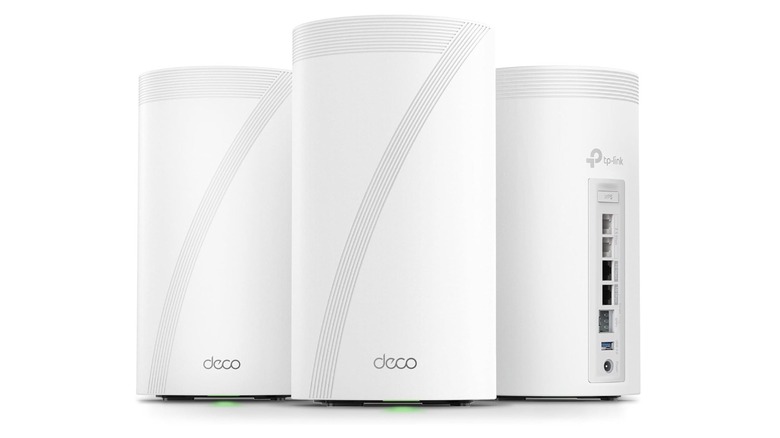
TP-Link also features a flagship tri-band Wi-Fi 7 mesh system built around massive throughput and uncompromised wired connectivity. After all, every Deco BE85 node has four high-speed multi-gigabit Ethernet ports: two 10Gbps WAN/LAN ports, two 2.5Gbps LAN ports, and a USB 3.0 port for local storage sharing. This product also features 4K-QAM, a 320MHz channel width, and MLO support, delivering aggregate wireless speeds up to 22Gbps across the 2.4GHz, 5GHz, and 6GHz bands.
The system is also designed for high-density smart homes and users running multi-gigabit fiber networks who want maximum port flexibility without paying enterprise prices. Like all the other options, customers can get the TP-Link Deco BE85 in single-pack units, two-packs (covering up to 6,400 square feet), and three-pack bundles (covering up to 9,600 square feet). The Deco BE85 also includes HomeShield software with parental controls and other network security features out of the box.
Compared with cheaper Wi-Fi 7 systems, the BE85 justifies its price, up to $1,199, thanks to dual 10Gbps ports (including SFP+ optical compatibility) on every node and higher wireless throughput. Still, it can be significantly more affordable than the NetGear Orbi 970 while matching or beating its physical port specs. Still, if your internet connection is 1Gbps or less and you don't transfer massive files locally, a cheaper 2.5Gbps mesh system like the Deco BE63 can do the job with nearly the same real-world browsing experience for a fraction of the cost.
NetGear Orbi 870 Series
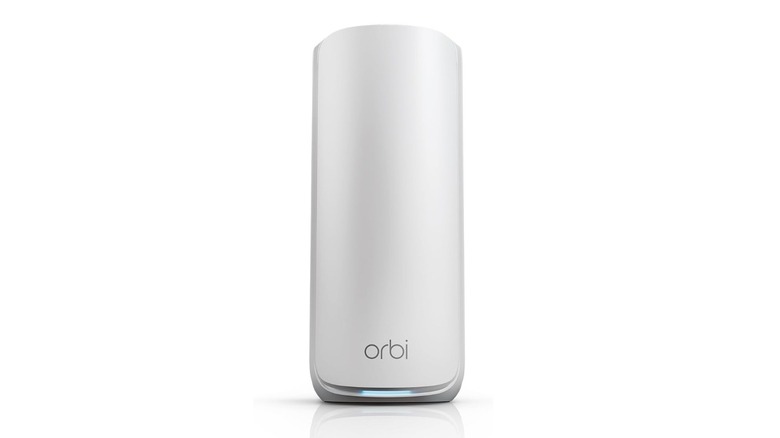
As we move up, the NetGear Orbi 870 series is another high-end, heavy-duty Wi-Fi 7 mesh system built for demanding connected environments. The main router node is equipped with five physical Ethernet ports (one ultra-fast 10Gbps WAN port and four 2.5Gbps LAN ports for local wired hardware). The satellite units match this connectivity by offering four 2.5Gbps LAN ports each. The Orbi 870 uses a high-capacity tri-band architecture, delivering up to 21 Gbps of total bandwidth, backed by the company's proprietary Enhanced Dedicated Backhaul tech to prevent signal degradation between nodes.
This product is built for remote professionals and multi-device households that require extreme stability and compatibility with 10 Gbps ISP service. Priced in the premium tier, usually ranging from $850 for a two-pack to $1,299 for a three-pack, Amazon and other retailers also offer single add-on satellites, two-packs, and three-packs that can cover up to 9,000 square feet.
Compared with the cheaper 770 model, the 870 series justifies its premium price tag by upgrading the main WAN link from 2.5Gbps to 10Gbps, expanding the LAN port count per node, and boosting total wireless capacity. With these changes, the Orbi 870 series is made for homes with internet tiers exceeding 2.5Gbps. Still, compared with the much more expensive top-of-the-line Orbi 970, the 870 offers most of the real-world performance and port density users need at a much more reasonable price.
Asus ZenWiFi BQ16 Pro
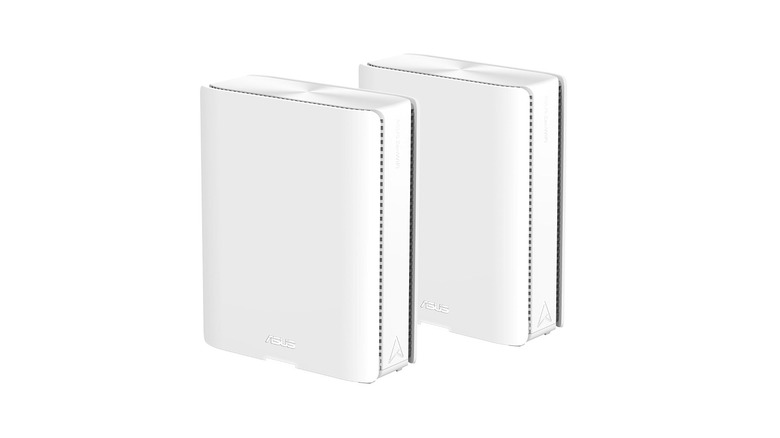
To complete the list of 5 Wi-Fi mesh systems with plenty of Ethernet ports, we have the Asus ZenWiFi BQ16 Pro, a top consumer mesh networking system built for maximum physical connectivity and wireless coverage. Each BQ16 Pro node has six Ethernet ports: two 10Gbps WAN/LAN auto-sensing ports, four 1Gbps LAN ports and a USB 3.0 multi-purpose port. Unlike other tri-band routers, the BQ16 Pro is a quad-band Wi-Fi 7 option with 2.4GHz, dual 5GHz bands, and 6GHz, capable of up to 30 Gbps of bandwidth while covering up to 8,000 square feet with just two nodes.
Designed for luxury homes, prosumers, content studios, and extreme tech enthusiasts, the BQ16 Pro also carries a high price tag, often between $900 and $1,690 for the two-pack, though prices vary by sale and pack size. After all, customers on Amazon and other resellers can find this product as single units, two-packs, or three-packs. The ZenWiFi BQ16 Pro also comes with Asus' AiMesh technology, subscription-free AiProtection Pro, and advanced Smart Home Master network isolation for smart devices and VPN tunnels.
Compared with lower-tier Asus models like the BT10, this model is justified for anyone who needs a quad-band architecture, especially an exclusive wireless backhaul without sacrificing client speeds, plus six physical Ethernet ports per node for unmatched wired expansion without extra network switches.
How did we choose these products
We selected the five mesh systems because they address a major flaw in conventional mesh designs: limited physical connectivity. Since most standard mesh satellites often provide one or two Ethernet ports, we decided to highlight in this article models that have a minimum of three ports, going all the way to six high-speed multi-gigabit ports per node, giving customers flexibility to ensure their smart TVs, game consoles, desktop PCs, and more have a reliable connection anywhere they're placed in the house without requiring network switches or customers buying extra hardware.
Amazon and retail reviewers consistently highlight this multi-port versatility, as these gadgets prove customers don't need to compromise between seamless whole-home Wi-Fi and dense wired performance, with options from mid-tier 2.5Gbps setups to ultra-flagship 10Gbps quad-band models. In addition, the selection offers modern Wi-Fi 7 mesh coverage, which should be the standard for a few more years, and, honestly, it's non-negotiable when buying a Wi-Fi mesh system in 2026.
Once you decide which system best matches your needs, change these five settings right after setup. Still, all of these products should be stress-free to set up, as they include their own apps that let you check which device is connected to each router, how much internet is being used, which band it's on, and more.