

ROG Xbox Ally X20 Review: Better Screen, Harder Sell
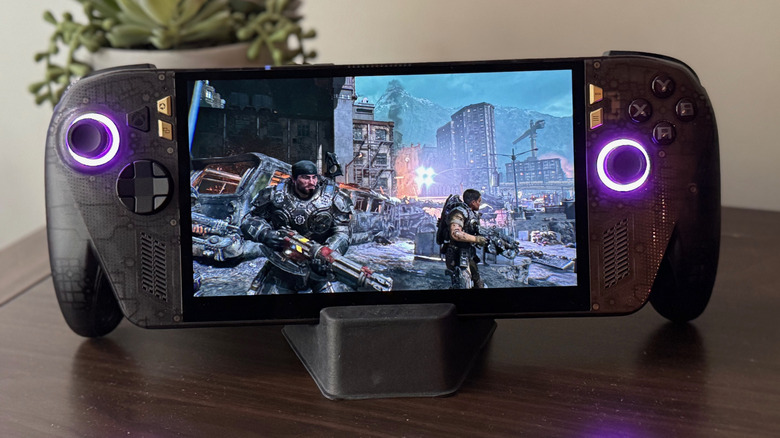
Handheld gaming PCs require a delicate balance of portability, performance, and price. The good ones, like the Steam Deck OLED, can hit two out of the three. The ROG Xbox Ally X20 doesn't change much from last year's Xbox Ally X, except for an OLED screen and a few smart design changes. Oh, and it's wildly more expensive at $1,300. Under its new transparent black exterior and fancy gold trim, the Ally X20 has the same AMD Ryzen CPU, 24GB of RAM, and 1TB of storage as last year's ROG Xbox Ally X. The stunning 7.4-inch OLED is the main draw, making it a close rival to the Steam Deck OLED.
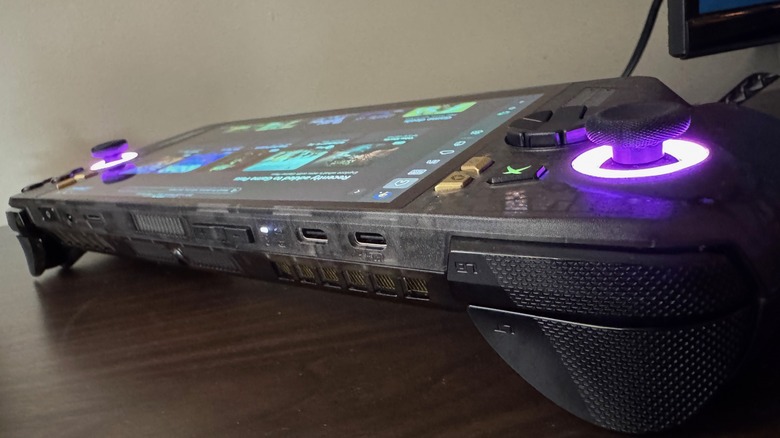
The Ally X20 has two USB-C ports, one of which supports USB4 and is Thunderbolt compatible, so it'll work with a compatible dock and external SSD. The other port supports up to USB 3.2 Gen 2, meaning both support charging and video output if you want to connect to a monitor. You also get a 3.5mm headphone jack and a microSD Express card reader (an upgrade over Ally X's UHS-II reader) for expanding storage. Older microSD cards still work, though you'll need an Express card to take advantage of the faster connection.
In last year's ROG Xbox Ally X review, we praised its performance, but found that Windows 11 and its hefty size complicated the experience. Many of those issues remain, even if the X20 improves comfort and grip. The question remains whether the OLED is worth the $300 price hike.
OLED is the way to go
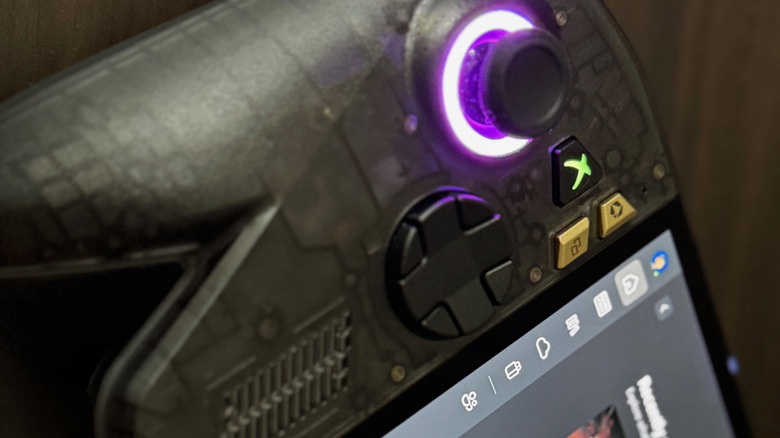
The biggest reason to consider the Ally X20 is its gorgeous 7.4-inch OLED screen, compared with the Ally and Ally X's 7-inch LCD. The resolution and refresh rate stay the same: 1920x1080 at 120Hz, with slightly more screen real estate. I've been playing a lot of "Gears of War: E-Day," a surprisingly good game that shows off what this OLED can do. Dark Locust tunnels and abandoned subway stations highlight the display's deep blacks, while twilight and daytime scenes show off its rich colors and HDR-enhanced brightness.
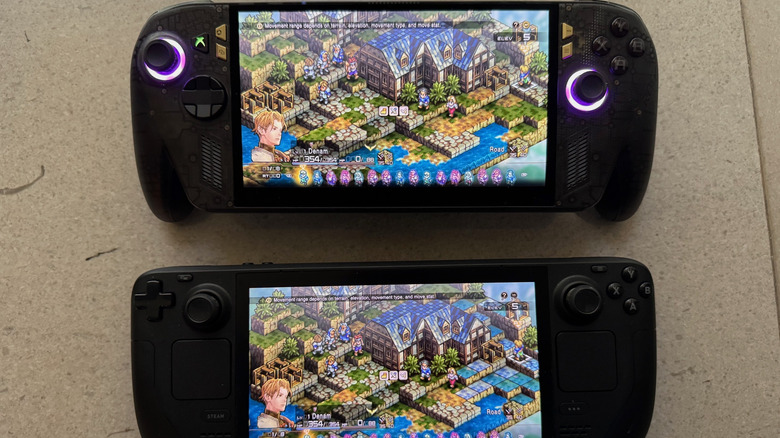
The display supports HDR peaks of up to 1,400 nits and FreeSync Premium Pro to keep gameplay smooth. With the same hardware as last year's model, the screen has to justify a big chunk of that $300 premium. For me, the difference is hard to ignore: Going from LCD to OLED makes familiar games look noticeably better. It doesn't come close: The bump in color and brightness OLED offers in comparison to LCD is like nothing else. Games like "Hades 2" are where you can come to appreciate how much the colors pop.
A better grip on a heavier handheld
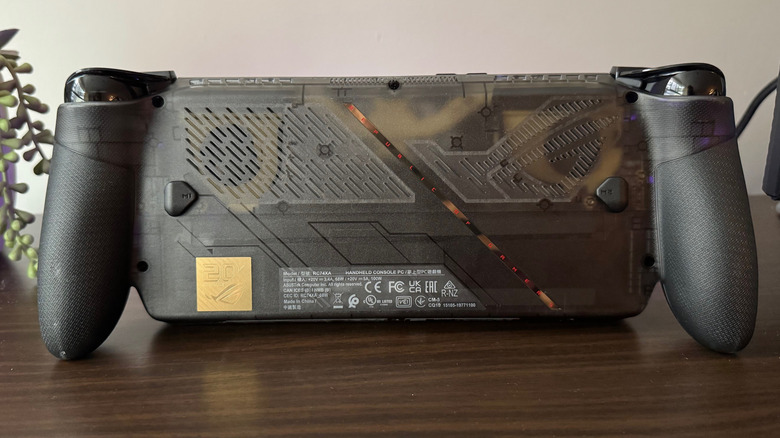
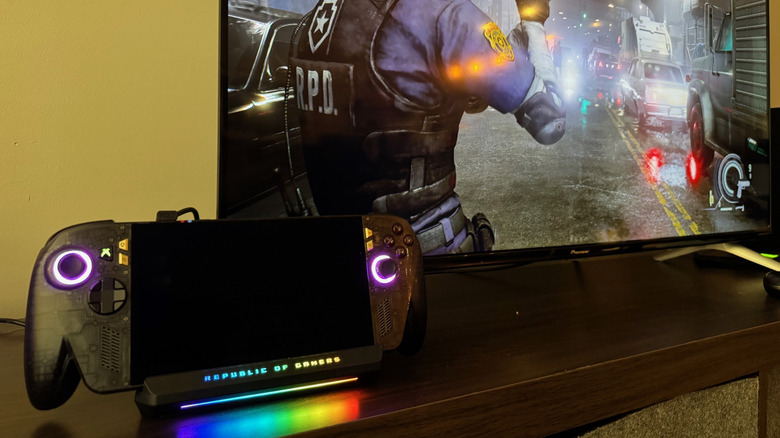
The Ally X20 celebrates ROG's (Asus Republic of Gamers) 20th anniversary with a translucent black shell and gold accents. I'm always a sucker for translucent designs that reveal the internal components. However, I would have preferred an alternate colorway to choose from, since I really did like the white of last year's Ally X that gave it a more premium look.
The most noticeable change is one you feel under your fingertips. The bumpers and triggers have been slightly reshaped and the grips are rubberized. The end result feels like you're holding an oversized Xbox controller, which makes sense considering all the Xbox branding and partnership. This is especially important because this thing is heavy: Weighing in at 756 grams, it's 41 grams heavier than the Ally X, and 116 grams heavier than the Steam Deck OLED. The improved grips are welcome, but you're holding up one rather hefty handheld.
Another interesting feature is the transforming D-pad. Lift it slightly and rotate it to switch it between four-way and eight-way directional inputs. It's useful if looking to dive into matches of "Street Fighter" or "Tekken" on the bus. I dove into some bouts in "Marvel vs. Capcom Fighting Collection: Arcade Classics" and found the D-pad to be mostly serviceable. If you're someone who gets a little fatigued holding up your phone or tablet for too long, the Ally X20 might end up feeling like you're holding a barbell above your face.
Windows still gets in the way
Despite its Xbox branding, the Ally X20 is a Windows 11 gaming PC, and that flexibility is most of the appeal. It lets you install games from different PC storefronts, and basically anything you can do on a Windows PC, you can do on the Ally X20. A dedicated Xbox button lets you switch from the Xbox app to a Windows desktop right on the fly.
While it was nice to be able to install games from the Epic Games Store, Steam, GOG and Xbox, the initial setup was a bit of a headache, since it used the 7-inch touchscreen to add your credentials and deal with driver updates. The best way to deal with it is to connect a Bluetooth keyboard and mouse and do it the old fashioned way. Another slight annoyance with Windows 11 on handheld is that some games' graphics settings defaulted to whatever I had on PC, like games from the Epic Store. Every time I played "Control Resonant" from my gaming PC, and wanted to continue on the Ally X20, I had to manually change graphics settings each time I loaded up the game.
Navigating the Xbox app, which is instantly launched every time you turn on the system (or "Xbox mode," as ROG calls it), its controller-friendly interface was a breeze to use. Game Pass is a huge part of the X20's pitch, particularly if you already subscribed and want a portable way to play those Xbox first-party games. If you're not part of the Xbox ecosystem, or don't plan to be, those features are going to be wasted on you.
Same chip, same power
The Ally X20 keeps the Ryzen AI Z2 Extreme CPU, 24GB of RAM, and 1TB SSD from last year's model. Considering how well the Ryzen-powered handheld performed in the Ally X, the X20 isn't vastly different. For the sake of comparison, I ran the same games we tested the Ally X on, in addition to a couple of newer titles like "Gears of War: E-Day" and "Control Resonant," to see how much the Ally X20 performed in both Turbo and Performance modes. Here are the Geekbench scores:
Single-Core Score: 2814
Multi-Core Score: 11980
OpenCL Score: 39023
The Ally X20 is a powerful piece of hardware averaging around 30-32 fps in games like "Gears of War: E-Day" and "Control Resonant" on low to medium graphical presets in Turbo Mode (25W). "Cyberpunk 2077" ran surprisingly well, hitting around 43 fps in the Steam Deck graphical preset. Even though performance is roughly the same, the improved cooling was something I noticed after about an hour of gaming where the console ran cooler than the Steam Deck OLED.
The 80Wh battery, combined with the OLED screen, provides a decent enough battery depending on which performance setting you're working with. More demanding AAA games will get 2-3 hours of playtime, which you'd want to run in Turbo mode for the best framerate. I was able to get around 2 hours for "Resident Evil Requiem," and three hours for "Star Wars Zero Company." Less taxing games will get you between 6-8 hours of battery life. "Final Fantasy Tactics: The Ivalice Chronicles" split the difference at 6 hours and 34 minutes, and got nearly 8 hours of "Blood Dungeon" in Silent Mode.
Is it worth the extra $300?
The Ally X20 improves the parts of a handheld that you interact with constantly: The screen, grips, and controls. Those changes deserve more credit than a new color scheme alone, and the OLED gives me something additional to appreciate. However, at $1,300, the Ally X20 sets a high bar. Last year's Xbox Ally had the same processor, RAM, capacity, storage, and battery for $300 less. While the X20 looks more appealing, it's tough to recommend if you already own an Ally X.
That said, if you're in the market for a powerful handheld gaming PC, but not looking to spend over $2,000 on a Windows 11 handheld like the MSI Claw 8 EX AI+ or the Lenovo Legion Go Gen 2; the Ally X20 feels more like the best Goldilocks option. The OLED screen is a nice addition to a handheld console with decent battery life and a mostly versatile operating system. The Ally X20 is perfect for anyone with large game libraries across multiple PC gaming storefronts, assuming you want to handle something that's a bit more chunky than a Steam Deck.
The ROG Xbox Ally X20 launches on October 15 for $1,299.99. There's also the ROG Xbox Ally X20 console bundle, which includes the Ally X20, Pelican carrying case, and the ROG XREAL R1 Edition 20 gaming glasses for $2,499.99.