

This Android Phone Lets You Use 3 Different SIMs At The Same Time, But Good Luck Buying One
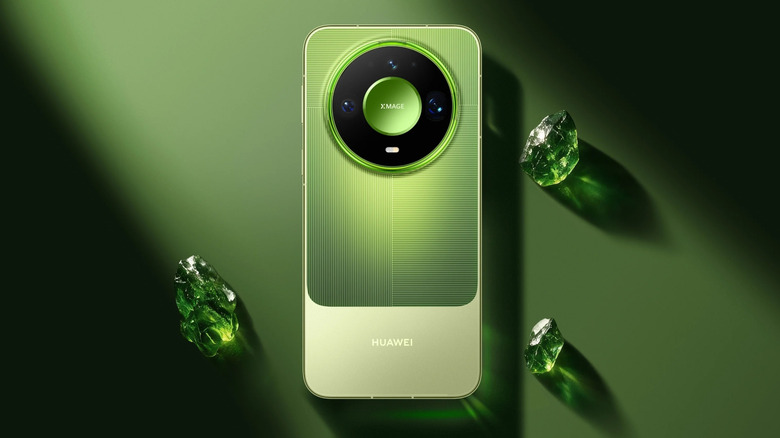
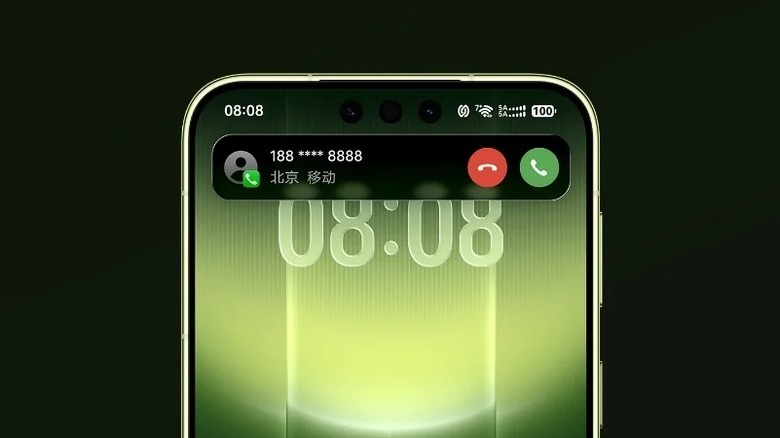
While it has become relatively easier to find dual-SIM phones in the U.S., thanks to the eSIM uptake, triple-SIM phones are pretty rare, and you will mostly get the functionality in random feature phones. However, Chinese smartphone maker Huawei has launched a new phone called the Mate 90 Pro Max, which supports not one or two, but four SIM cards. You can use two physical nano SIM cards, whereas the other two stay as eSIMs in the phone. That said, you can only use three SIMs at any given moment, essentially making it a triple-SIM Android phone.
Besides support for triple SIM cards, the phone has a 6.9-inch dual-layer LTPO OLED display with up to a 120Hz refresh rate and a full-HD+ resolution. It also packs the Kirin 9050 Pro SoC and a massive 6,800 mAh battery, which supports 100W wired charging and 50W wireless charging.
The phone costs RMB 9,499 (~$1,420) for the base 12 GB RAM model and goes up to RMB 9,999 (~$1,495) for the 16 GB RAM variant. There is also a Collector's Edition, which has 16 GB of RAM and 512 GB or 1 TB of storage. These cost RMB 10,999 (~$1,644) and RMB 12,999 (~$1,943), respectively. The phone is only going on sale in China right now, with no word about an international release.
You can't officially buy it in the U.S.
Unfortunately, even if you find the Huawei phone's triple-SIM capability useful, you'll be hard-pressed to buy it in the U.S., as the administration banned Huawei almost four years ago amid national security concerns. As a result, Huawei doesn't officially sell its products in the country, even if it were to give the Mate 90 Pro Max a global release.
However, you can still import a Huawei phone for personal use without problems, but there is a possibility that it might not work with your carrier. T-Mobile is the only wireless carrier that typically supports the bands available in a Huawei phone. Others, like AT&T and Verizon, either don't work at all or work partially. You can also potentially have trouble with data access, and of course you won't get any after-sales support from Huawei.
More importantly, the Mate 90 Pro Max runs on Harmony OS, based on Android, but lacks access to Google services and the Google Play Store. This won't be ideal if you are deeply involved in the Google ecosystem or want to get apps from the Google Play Store. Instead, you'll have to rely on Huawei's AppGallery app store. Notably, the triple-SIM capability of the phone isn't the only highlight of the phone.
Mate 90 Pro Max can leverage a powerful camera accessory
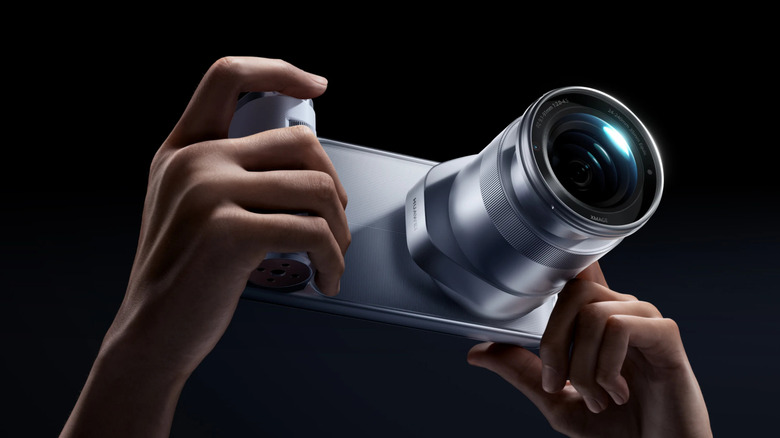
Another highlight of the Huawei Mate 90 Pro Max is its support for a camera accessory called Z10. Although you get a pretty capable built-in camera system on the phone, which includes a primary 50MP camera with variable aperture, like the iPhone 18 Pro, a 40 MP ultrawide shooter, and a 200 MP telephoto camera with 4x optical zoom, you can use the Z10 camera module to enhance its photography capabilities. The Z10 accessory is essentially an entire camera module that attaches to the back of the phone. It only relies on the phone for power and processing, and the rest of the camera hardware is entirely built into the module. So when you're leveraging the module, your phone's rear cameras don't come into play.
The Z10 module has a 1-inch sensor with 50 MP resolution and support for 24 mm to 240 mm focal lengths, which essentially gives you up to 24x optical zoom. The aperture range supported is f/2.0 to f/4.5. Notably, the module doesn't need any extra hardware for mounting and snaps on using a built-in HyperClick mount, which, unfortunately, is only available in the Huawei 90 Pro Max Collector's Edition. The mount includes pins for data and power.
Other camera module features include laser autofocus and the ability to shoot in RAW, giving you more flexibility in post-processing. That said, the module is pretty hefty and weighs 350 grams. Moreover, it costs RMB 5,999 (~$897) in China, which is pretty much the cost of a base flagship smartphone. Both of these factors make it sensible only for folks who are really serious about phone photography and for professionals.