

Irish Teen Invents Plastic That Doesn't Just Break Down, It Also Eats Microplastics
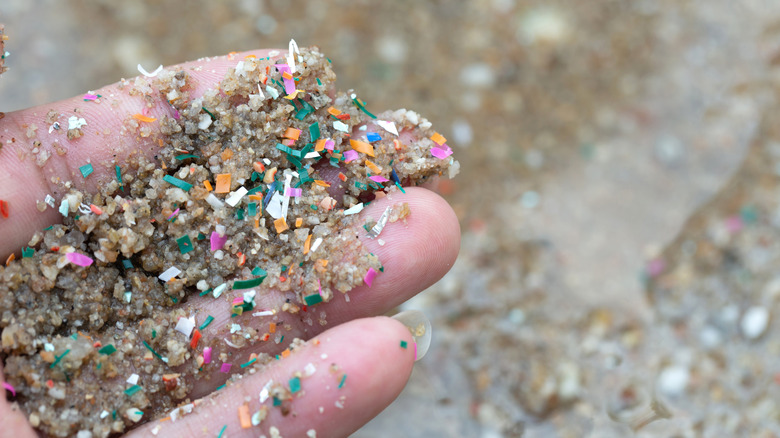
There is growing concern about microplastics and how the debris can be damaging to the environment, humans, and animals. The tiny particles can be as small as 5 millimeters, which to put that into perspective, is around the size of a pencil's eraser. They can even be as miniscule as one nanometer. To combat the microplastic problem, there's now a new plant-based plastic created by a high schooler that helps get rid of them.
18-year-old student Arya Satheesh, invented Eco Purge, a biodegradable plastic made out of plants. The plant-based biodegradable is more than just a new type of plastic, but one designed to rid the world of microplastics -– which have even been found in human brains. Once discarded, Eco Purge can take up to two weeks to degrade, and while it does, the plastic releases enzymes that break down surrounding PET plastics that may be trapped in the environment. However, it's been noted that when PET plastics degrade, they can be toxic to the environment.
The most challenging part to making Eco Purge was finding the correct enzyme to break down microplastics. A researcher at Irish biotech firm BiOrbic donated two types which had to be stored at a local university for safety. In a test, the Eco Purge was placed in soil, salt water, and fresh water alongside microplastics. They were observed for six weeks after which both plastics degraded.
How Eco Purge was developed

The teenager from Letterkenny, Ireland spent years studying microplastics to better understand them and their impact on the environment, which led her to create Eco Purge. However, Satheesh's research into plastics goes beyond just making Eco Purge. The young scientist has been interested in solving the microplastic problem for years and the idea for her latest invention came a few years earlier.
At the SciFest competition in Ireland, she developed a smart water monitor that could detect contaminants in drinking water. Those contaminants included microplastics, which inspired her to find a solution to breaking them down which led directly to Eco Purge.
During her research into microplastics, Satheesh discovered that around 9% of 507 million tons of plastic is recycled each year. That statistic is what led her to study, develop, and create Eco Purge. Satheesh's work with plastics isn't even the first work of this type. In 2025, scientists in Japan developed a breakthrough in biodegradable plastic that leads to a plastic that breaks down itself.
What Eco Purge could mean for the future
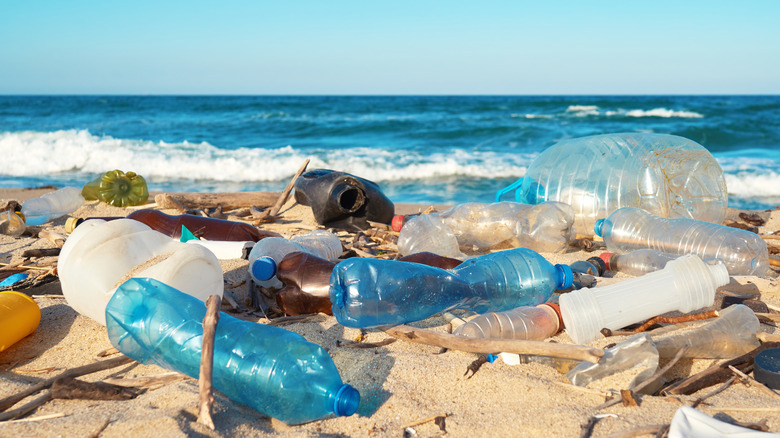
Satheesh's Eco Purge was the European winner of The Earth Prize 2026, and has since been developed into a working prototype. Teams of scientists and researchers are looking at ways to make Eco Purge more accessible to reduce the amount of microplastics in the environment. There have even been discussions about applying it to packaging and compost waste bags.
As part of winning the Earth Prize, Satheesh was awarded $12,500 to continue developing Eco Purge with the hopes that it would be used for further research into regenerative design and eco-friendly projects. That money could also go a long way to find more of the enzymes as 3 milligrams of it cost around $2,500.
Satheesh's prototype plastic is the latest in a line of revolutionary biodegradable plastics that have been created. The 18-year-old is looking ahead at the future and is using the winnings from the competition to fund further development into her Eco Purge concept. She hopes that businesses that deal with shipping and packaging will use it in the coming years to reduce the amount of microplastics in the world.