

Starlink's Chinese Rival Wants To Launch 10,000 Satellites By 2030

SpaceSail, a Chinese government-backed satellite internet company, is appearing to take aim at the dominant Starlink, owned by Elon Musk's SpaceX. For the last few years, satellite internet has effectively come down to doing business with Starlink or a few smaller companies. SpaceSail is one of the first major pushes in the industry to attempt to dethrone Starlink's dominance.
By 2030, SpaceSail is aiming to launch 10,000 satellites into orbit, which is roughly how many Starlink currently has in our skies. At the moment, the Chinese company only has a few hundred, but is now raring to go when it comes to scaling up the business. In fact, in August 2026, it was reported that the company behind the satellites had raised 7 billion yuan, or about $1 billion. Investors included Shanghai Alliance Investment and CAS Star, pushing the valuation of the company to 50 billion yuan ($7.4 billion).
SpaceSail is just the English name used, with the actual constellation's name being Qianfan, literally translated to "thousand sails." Managed by Shanghai Spacesail Technologies Co Ltd., the government backing comes from Shanghai's municipal government. It truly began in 2024, but the first devices coming off the production line happened in 2023. Qianfan was last added to on September 15, 2026, when a test satellite for larger throughput was launched into orbit.
SpaceSail isn't quite there yet
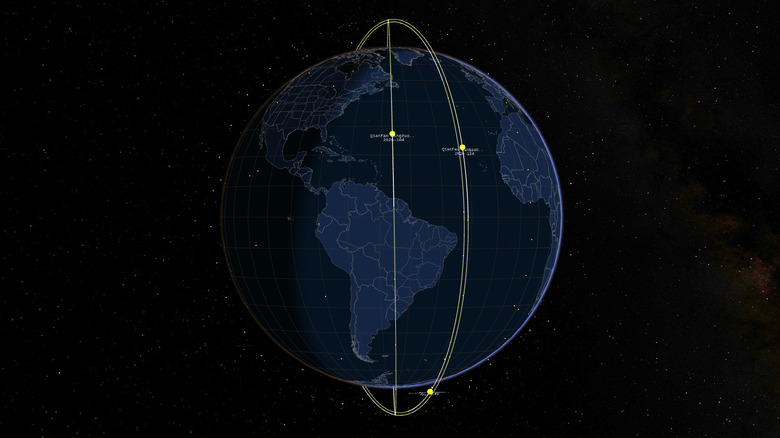
SpaceSail is currently using first-generation satellites, which have been reported to be able to beam 20 megabits of download speed and five megabits of upload speed to a cell phone. Comparatively, Starlink currently promises "up to 400+ Mbps anywhere," but ultimately, this will depend on your location and the hardware you get from the company. The Chinese-made satellites aren't up to the Musk-led company's level just yet, but SpaceSail is expected to begin launching second-generation and third-generation satellites in the coming months.
However, SpaceSail isn't strictly for consumers — its business model seems to focus a lot on enterprise or business-level customers, as well as providing for international clientele. Instead, other brands like OneLinQ introduced satellite dishes for internet in 2024, but service cost around $4,000 at the time, and is now up to nearly $4,500. There's also homegrown competition, as the China Satellite Network Group, which is backed by the Chinese government, aims to have 13,000 satellites in orbit by the time it's done. Known as GuoWang, the constellation has seen regular launches throughout 2026, with the last documented one on October 10.