

Here's What The Name And Numbers Actually Mean On An AMD CPU
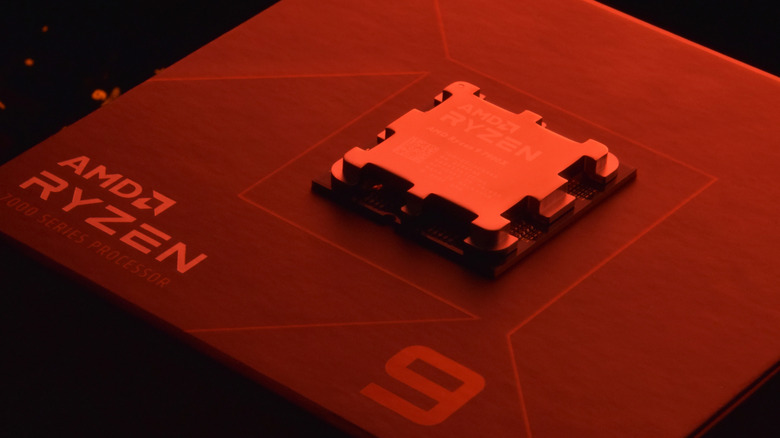
AMD's Ryzen CPUs have been dominating the x86 space for quite some time now, especially within the high-end gaming PC and gaming handheld markets. Team Red's CPUs are all adorned with numbers and letters, but what do they actually mean? Well, much like with Intel and other processor makers, the chip numbers indicate more than just the model. However, the old rules no longer apply to the newer chips coming out, as once again, AMD has changed the naming scheme.
On desktops and anything from Ryzen (since 2017), AMD's numbers can indicate the level of chip, the generation, the target audience, the architecture, and the additional features. After that, it's sometimes adorned with a letter to differentiate the form factor or overall power. So the Ryzen 7 9800X3D is the high-tier CPU (7) from the generation introduced in 2024 (9), targeting a user who needs power (8), and it's also the base-level version of that chip with no deviations (00). How about the X3D? When you see this suffix on an AMD chip, this indicates the 3D V-Cache that's on board, which boosts performance by literally stacking cache on top of itself.
With mobile chips, the whole thing is flip-flopped
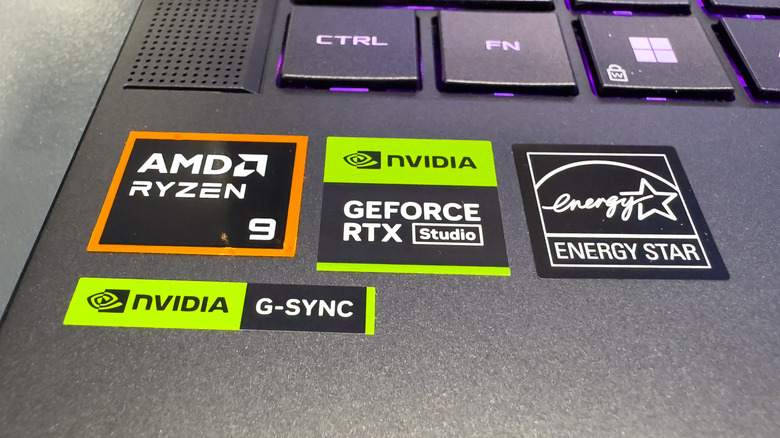
For pre-2025 AMD mobile chips, the numbering scheme was similar. A popular chip between 2023 and 2025 for handhelds was the 7840U, as it was close enough to the AMD Z1 Extreme (a gaming-specific chip) and presumably easier to acquire. It was a laptop-focused chip; only Lenovo and Asus used the Z1 Extreme at the time. Again, the Ryzen 7 7840U is a high-tier CPU from 2023, targeting high performance. The last couple of digits aren't given much attention for desktop processors, as these flit between 0s and 5s. But on mobile or laptop-level chips, the architecture is usually indicated, as these chips are usually outfitted with a variety of options.
In this case, a 4 points out that the processor is built on Zen 4 or 4c architecture. Some will feature a 5 at the end instead of 0, pointing to higher-end features. Seems pretty easy to follow, right? Now, what if we told you that this was all dumped in favor of a new naming scheme adorned with an AI badge? To be fair, the numbers are much simpler now, split into brand level, series, and then the model (SKU, or stock keeping unit), positioned as the processor's number. So something like the AMD Ryzen AI 9 HX 370 reads a lot cleaner. None of these changes came to the desktop branch, where it's still using the old numbering scheme — though this could change if AMD launches a follow-up to the 9000 series.
Epyc, Threadripper, and suffixes
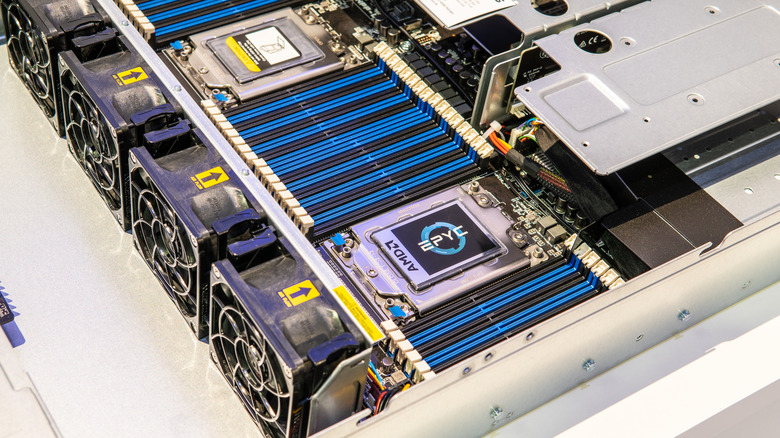
AMD's workstation CPUs for desktops (Threadripper) and its server CPUs (Epyc) also have their own naming schemes. Epyc is split like this: product series, product model (which is based on cores), performance, and generation, with a letter suffix for additional features. Using its latest Venice processors, let's see how that'd break down. The Epyc 9556 looks like this: series 9, 64 to 72 cores, lowest performance of the series, sixth generation, and no additional features. On Threadripper, it follows a similar pattern to the regular CPU naming conventions, just with its own branding and suffixes (X and WX) to indicate workstation readiness, as the WX variant will be more resilient in repetitive, long-term tasks.
Here are the main suffixes you'll find:
- X – high performance
- X3D – 3D V-Cache
- G – CPU with included integrated GPU
- GE – lower-powered version of G
- HX – top mobile performance (now placed before the number on 300 and 400 series CPUs)
- HS – for slimmer but still performant devices
- U – low power
- C – for Chromebooks
Remember, however, that AMD blew up its mobile naming scheme, and most of that line's original naming conventions don't even matter anymore. So it's entirely possible that the same thing could happen here, too.