

5 Disadvantages Of AMD X3D Processors You Should Know About
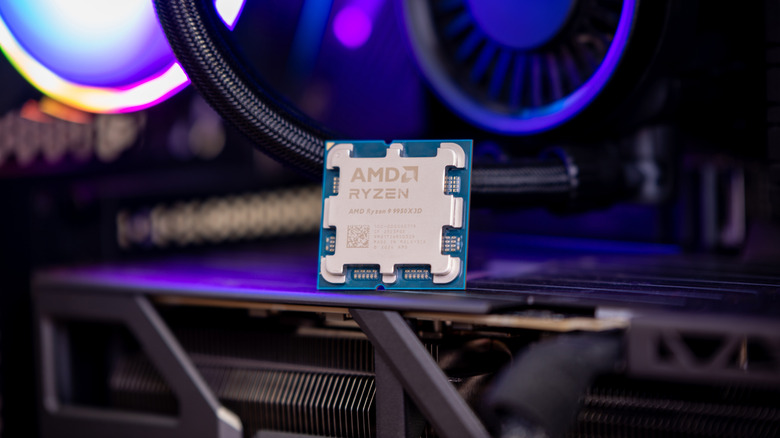
AMD's X3D processors are among the best CPUs for anyone looking to build a gaming desktop. A lot of this is due to the 3D V-Cache design which gives it more L3 cache than other Ryzen chips. This extra cache can boost frame rates, especially in games where faster access to commonly used data makes a difference. But they have some disadvantages.
This also means that, if you're interested in using your PC for other tasks, you'll need to consider more than raw gaming performance when deciding between an Intel and AMD processor. Depending on the model, X3D CPUs can be significantly more expensive than a standard processor, and not every game benefits from this extra cache. Sometimes shifting that extra money to another component can have a greater impact.
In the end, none of these disadvantages means X3D processors are bad choices, since in many situations they are the best option available. However, because of the higher price, the benefits vary a lot. Before paying more for 3D V-Cache, it is worth understanding the disadvantages of this technology.
You pay a premium for performance you may not use

One of the main disadvantages of an X3D processor is the extra price you pay for it. Since they use 3D V-Cache technology, these models usually cost more than Ryzen versions or even Intel chips with similar performance. For instance, the Ryzen 7 7700 costs around $229 and has a similar benchmark score to the Ryzen 7 7800X3D, which costs $299 (via CPU Benchmark).
However, in many cases, spending more does not turn into better performance. To play at 1440p or 4K, for example, the graphics card is one of the biggest bottlenecks of PC setups. In this case, it is better to invest in a cheaper CPU and use the difference to get a better graphics card, since this change will probably have a bigger impact on FPS.
For that reason, a Ryzen X3D can be one of the PC upgrades that are not worth your money, because it is important to consider the balance between all components. There are other ways to get more significant improvements in desktop performance before thinking about one of these processors.
Not every game benefits from 3D V-Cache

3D V-Cache is one of the main reasons for the success of this Ryzen X3D processor line, but not every game truly needs this extra cache. "Baldur's Gate 3," for example, greatly favors these chips, especially in areas more demanding of the CPU, such as the titular city in the third act. In these cases, L3 cache helps keep data closer to the cores.
For that reason, it is worth looking at benchmarks for the games you want to play and understanding whether they benefit from this extra feature. Unlike "Baldur's Gate 3," "Total War: Warhammer 3" does not offer a very large gain, since the performance across multiple Ryzen processors is very similar (via Tom's Hardware).
Even so, choosing an X3D processor does not limit which other components need to be in the computer. It is possible, for example, to pair an Nvidia graphics card with an AMD processor without relevant incompatibility between the brands. This allows you to build a machine with Ryzen X3D and GeForce RTX, but the benefit of the extra cache will still depend on how each game uses the CPU.
The gaming-focused models aren't ideal for heavily threaded work
Several Ryzen X3D models have only eight cores and 16 threads. This is not a problem for most games, but it can reduce performance in heavier tasks, especially those that need many cores at the same time. 3D rendering, video editing, and several professional workloads benefit from more cores, for example.
In these cases, processors such as an Intel Core Ultra 9 285K can handle the work faster, even without 3D V-Cache. AMD itself offers alternatives with more cores within the Ryzen X3D lineup, such as the 7950X3D and the newer 9950X3D, both with 16 cores and 32 threads to balance games and productivity.
So, for anyone who plans to use the same desktop for both games and other demanding tasks, a Ryzen X3D with additional cores would be necessary. You can always give up 3D V-Cache and look at other processors from AMD or Intel that offer more cores, though.
The extra cache isn't available to every core on Ryzen 9 X3D CPUs
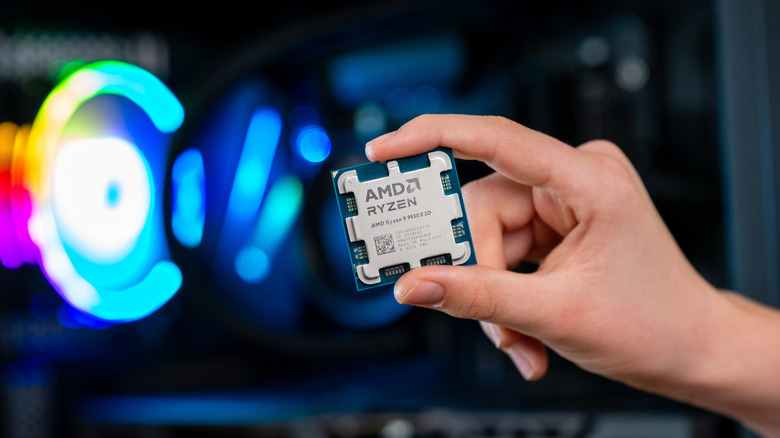
Another major disadvantage of Ryzen X3D chips is that not every core receives 3D V-Cache, especially in the 9900X3D and 9950X3D models. These processors use two CCDs, but only one has the extra cache. The others work with less local cache and can reach higher frequencies, creating an internal split where different tasks tend to work better on different chiplets.
In practice, this difference matters mainly in games sensitive to latency and cache, because running on the CCD without 3D V-Cache leaves less data available locally for the cores. This can increase the need to fetch information from memory or from the other chiplet, reducing performance, while tasks such as rendering and editing usually make better use of all available cores.
AMD tries to get around this gaming limitation by using Windows Game Mode and core parking to keep the game on the CCD with 3D V-Cache. However, anyone who does not want to deal with this can save money on their next PC by buying a processor with fewer cores, such as several Ryzen 7 X3D chips or one made by Intel.
Older X3D processors have thermal and overclocking limitations
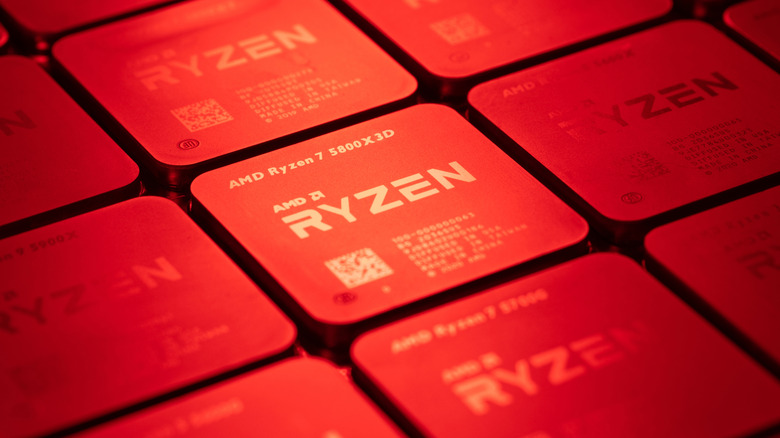
Anyone thinking about buying an older X3D and improving performance through overclocking needs to consider a limitation of these processors. In the Ryzen 7 5800X3D and Ryzen 7000X3D, the stacked cache sat on top of the compute die, making heat dissipation harder. This forces AMD users to work with more conservative voltage limits and manual adjustments.
In practice, several Ryzen X3D models are less interesting for anyone who wants to overclock. The 5800X3D, for example, does not offer traditional overclocking through the multiplier, while the Ryzen 7000X3D allows features such as Precision Boost Overdrive and Curve Optimizer. Therefore, anyone who wants one of these chips to save some money should know that the tuning possibilities are smaller than in some of the most powerful desktop processors.
This limitation changed with the second generation of 3D V-Cache used in the Ryzen 7 9800X3D, which placed the cache below the cores and improved their contact with the cooler. The chip also became officially unlocked for overclocking.