

NASA's Swift Satellite Is Facing An Unfortunate Fate After Rescue Mission Goes South
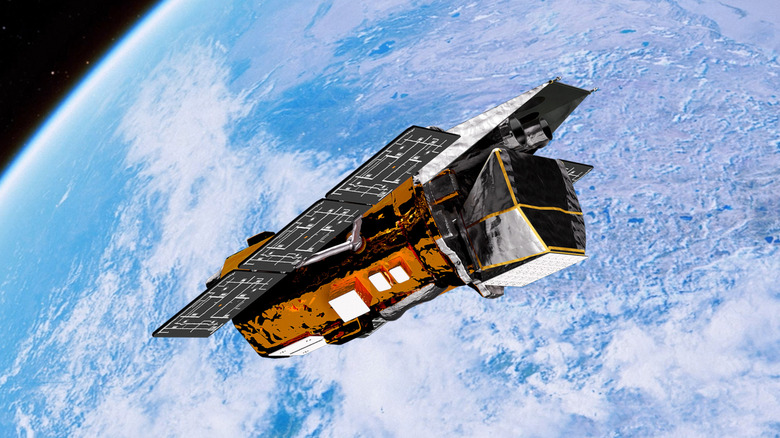
A long-running NASA mission has come to an unfortunate end. According to the administration, the Neil Gehrels Swift Observatory (abbreviated to "the Swift") made its final observation on October 20, 2026, approximately two months after a planned rescue mission was scrubbed. Following more than 20 years of research, in the coming weeks, it will reenter the atmosphere and burn up, as have other decommissioned satellites.
The Swift's demise was caused by increased solar activity, which heats the atmosphere and increases atmospheric drag, speeding up a satellite's orbital decay. In plain English, that means the satellite is falling toward the Earth faster than it would under typical solar conditions. Though the Swift's age meant NASA could have let it go without intervention, the agency chose to use it as an opportunity to quickly develop and test orbit boosting technology that could be used on other satellites.
In September 2025, NASA announced that it had selected startup Katalyst Space Technologies to design, build, and launch a spacecraft to reposition Swift. In July 2026, Katalyst launched Link, a spacecraft equipped with three robot arms to latch onto the satellite. Unfortunately, Link had communication and orientation control issues, and the $30 million mission was called off the following month.
Though the operation was unsuccessful, NASA and Katalyst say they've learned some useful lessons from the attempt. The mission was always an ambitious one on an expedited timescale, plus a collaboration between a public agency and private company. It may not have saved Swift, but the Link project will help inform future research and missions.
Swift lasted far longer than anyone expected
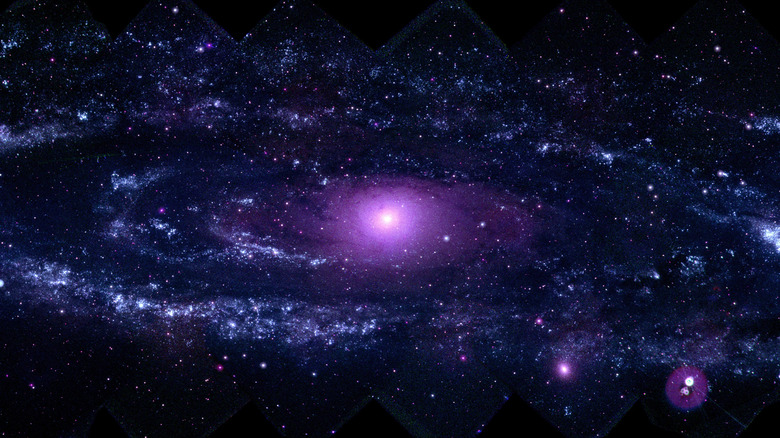
Though it may have ended in a somewhat dramatic fashion, the Neil Gehrels Swift Observatory lasted far longer than anyone expected at the outset of the mission. When it launched in 2004, the satellite was only intended to operate for around two years, during which it would study powerful gamma-ray bursts (GRBs), which astronomers theorize are released when black holes are created. The satellite was equipped with three telescopes: a burst alert telescope to detect GRBs, plus an X-ray and ultraviolet telescope and an optical telescope to observe the aftermath.
Swift ultimately lasted for nearly 22 full years. In that time, it detected over 2,000 GRBs and 1,400 supernovae, capturing images that have led to key breakthroughs. In 2008, Swift allowed two Princeton scientists to observe a star blowing up as it happened for the very first time. More recently, the observatory helped astronomers detect water on a comet known as 3I/ATLAS. These are the kinds of discoveries that help scientists debunk space myths and better understand the wider universe, and they're what the Neil Gehrels Swift Observatory will be remembered for.