

5 Absurd Space Myths That NASA Helped Debunk
Mankind is still a long way off from colonizing other planets, but that hasn't stopped our quest to learn more about what mysteries lay beyond the boundaries of planet Earth. Despite our progress since the Space Age began, including the successful landing of astronauts on the moon in 1969, there's still so much we don't know about the universe. Little by little, though, we're starting to learn more about outer space as our technology advances, and scientists at the National Aeronautics and Space Administration (NASA) have done much to highlight new discoveries and dispel age-old fallacies.
Despite that, there are forces in the government who seek to defund the trailblazing space agency in favor of private companies, such a SpaceX and Blue Origin. This privatization of space exploration could be disastrous for scientific progress in the coming generations. Want proof? Since humans first started looking to the sky, there have been no shortage of misconceptions about space, and here are five examples of absurd space myths that NASA has helped debunk. As for our solar system's biggest debate, though, it seems there's growing momentum to make Pluto a planet again.
The sun is burning
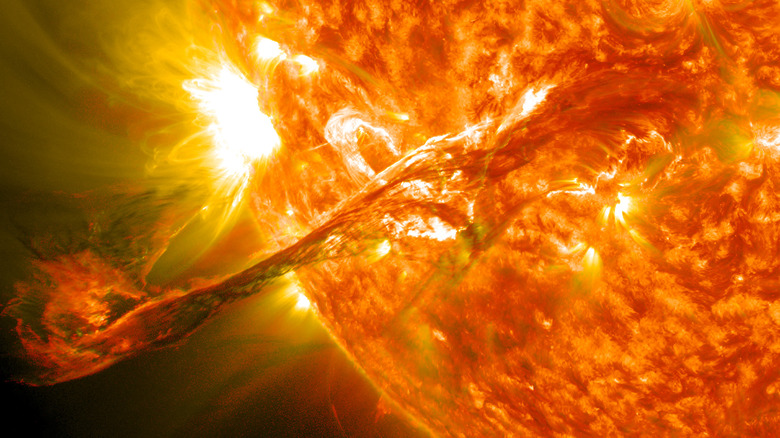
The sun is hot — that is a fact. But why is it hot? If you're a connoisseur of 1960s rock 'n' roll, you're surely familiar with the Tommy James and the Shondells song, "Ball of Fire," which suggests that the sun is, in fact, a ball of fire in the sky. Alas, Tommy James might be one of the greatest recording artists of all time, but a scientist he is not.
The solar photosphere has ribbons of fire that shoot out from the sun's gaseous surface, but the sun itself isn't a ball of fire – it's a ball of gas fueled by nuclear fusion. Its heat comes not from flames, but from radiation, which is why you should never touch a meteorite with your bare hands. The "flaming tongues of fire" are a side-effect of the sun's heat interacting with the photosphere, and NASA's Interface Region Imaging Spectrograph (IRIS) showed as much during its measurements of the temperature levels of the various parts of the sun's atmosphere.
That's not to say the sun doesn't still have unanswered questions. It's still a mystery why parts of the sun's atmosphere are hotter than the surface. One would think, the closer to the sun's core, the hotter, right? But no, and it's a mystery NASA hopes to resolve over the coming years as the IRIS project continues.
You can see the Great Wall of China from space
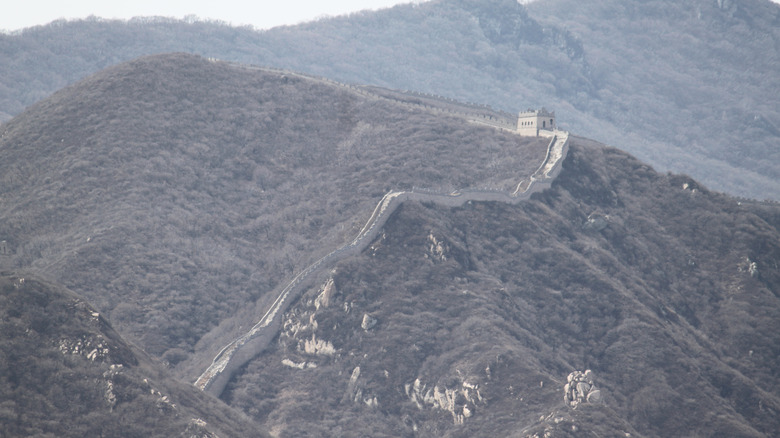
The legend goes that you can see the Great Wall of China from space. Naturally, China loves this story, since it posits the notion that this structure, which dates back about 2,700 years, could change the visage of the planet. This claim goes back hundreds of years — long before humans were able to visit outer space to make such a claim. Now that various nations of Earth have the technology, we finally have the data to verify or disprove the idea that the Great Wall can be seen from outer space.
During the Apollo 12 mission, NASA pilot Alan Bean looked, but could not find the Great Wall, or any other artificial structure. He said, "No man-made object is visible at this scale." Leroy Chiao, NASA commander on the International Space Station, took a photo, purportedly of the Wall, but it's far from definitive proof. In truth, it takes extremely high-powered cameras to capture a photo where the Great Wall is clearly visible from space. Even from the ISS, which is far closer to the Earth than the moon is, the naked eye simply isn't capable of spotting the Great Wall of China unaided.
The asteroid belt is a dangerous obstacle course
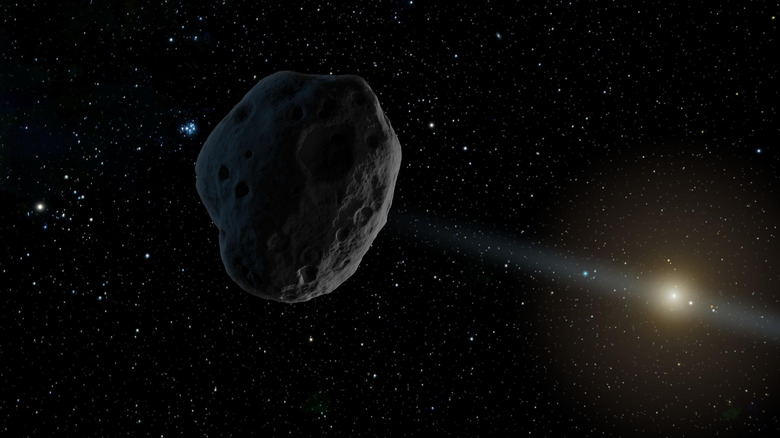
One of the more unique elements of our solar system is the asteroid belt, a field of massive space rocks floating in solar orbit. When one thinks of an asteroid field, they probably think of the iconic chase from "The Empire Strikes Back." This scene features the Millennium Falcon threading the needle between asteroids as hapless TIE Fighters fail to avoid them, crashing against the massive space rocks and exploding in spectacular fashion.
Unfortunately, the reality can't match the spectacle of "Star Wars." In real life, the asteroids are not particularly close together. For known asteroids that are at least 1 kilometer in size, there are hundreds of thousands of miles of empty space between them. The truth is, if you were to fly a spaceship between Mars and Jupiter (where the asteroid belt exists), you'd have to be tremendously unlucky in order to have a dangerous collision with an asteroid.
Take, for instance, NASA's Pioneer 10 space probe, which launched in 2003. This spacecraft had no armor, no weaponry, and no thrusters to make mid-flight course changes, yet it sailed right through the asteroid belt without so much as a near miss. Simply put, the asteroid belt isn't quite as dangerous as you might think. Crashing into an asteroid is one of the least dangerous aspects of space travel. As for "Star Wars," sci-fi is far from useless in the real world, as NASA uses TIE Fighter technology in real life.
You will die instantly if exposed to space
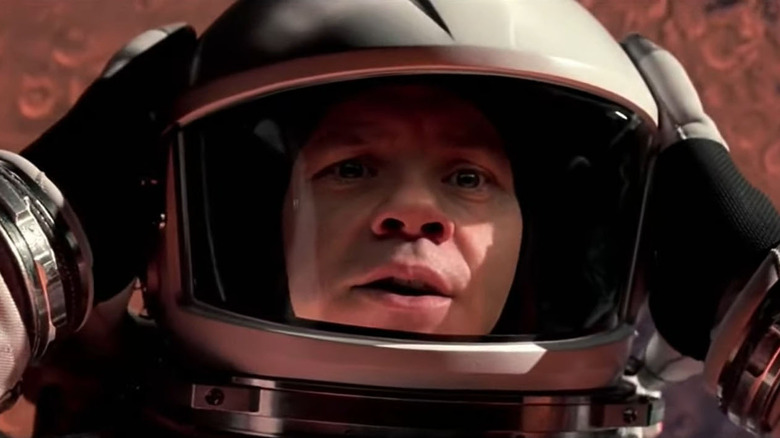
Much like the need to dodge asteroids, Hollywood would also have us believe that we would suffer an instant death if exposed to outer space without protection. The film "Mission to Mars" is one such example where (spoiler alert!) Tim Robbins' character removes his helmet in space, instantly freezing due to the harsh cold of the vacuum of space and preventing his wife from putting herself in danger in a futile attempt to rescue him. While not as sudden, Peter Quill nearly dies in "Guardians of the Galaxy" after just seconds of exposure to space.
In reality, neither scenario shows what would actually happen, and NASA proved it. In the vacuum of space, there aren't enough atoms to transfer one's body heat to that vast emptiness. Simply put, you'd retain your heat much longer than you would on, say, an iceberg in the Arctic Ocean.
That's not to say there's no danger in space. The lack of oxygen and the extremely low pressure would be detrimental to one's health for extended periods. In 1966, NASA technician named Jim LeBlanc was testing a prototype spacesuit in a vacuum chamber when he suffered accidental decompression. It took 87 seconds for the room to repressurize, and LeBlanc suffered no greater injury than an earache. While rapid changes in pressure can be dangerous and even fatal, it's not the instant death like many believe.
There's no water in space
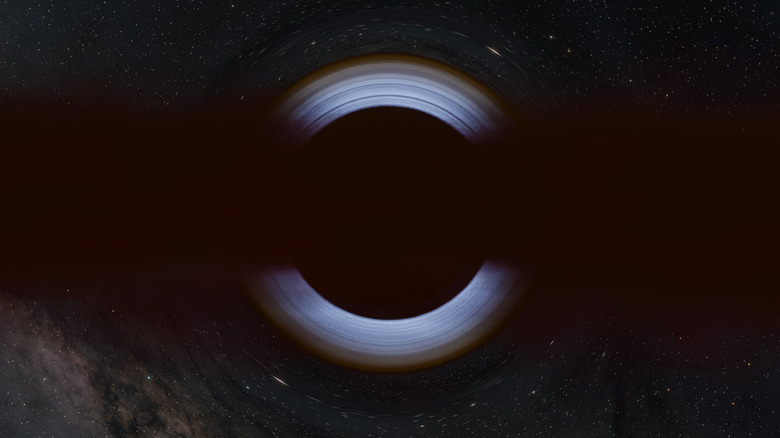
Space is essentially a vacuum, but it's not an absolute vacuum. A vacuum is entirely empty of atoms, and while they are certainly rare, atoms are not completely absent in outer space. There's always something out there to be discovered. But surely there can't be water out in space, right?
Contrary to what you might think, there's lots of water in space. And we're not just talking about icy comets, the rings of Saturn, or hypothetical underground oceans. In 2011, NASA astronomers discovered a quasar black hole surrounded by a massive amount of water vapor. How massive? Enough to fill the world's oceans 140 trillion times over. Why is the water there? It's a mystery. There's no shortage of mysteries regarding black holes. For all we know, our whole universe could be stuck inside a black hole.
Water vapor is not liquid water, but it's still water. Think of it like a deconstructed salad you might purchase at an upscale restaurant, but on a molecular level. It's also worth noting that the aforementioned quasar is 12 billion light-years from Earth, so it's not like we can send astronauts on a mission to collect water from space to bolster our reserves here on this planet.