

Samsung Is Being Fined $15M For Misleading Marketing On Some Galaxy Phones And Tablets
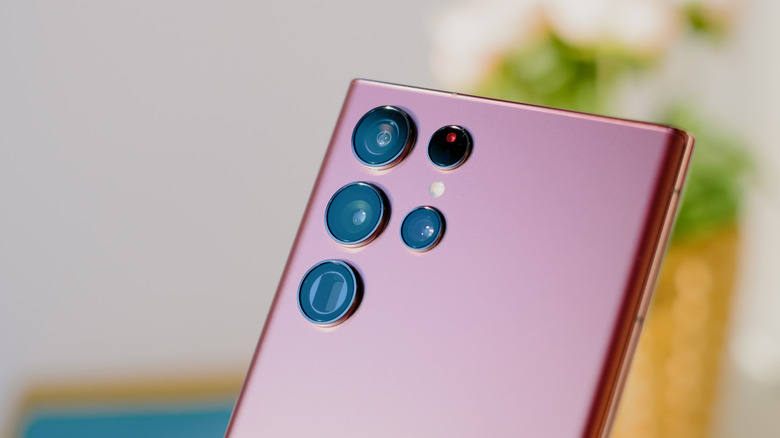
Samsung Galaxy phones and tablets have come with some big promises across multiple generations. The South Korean consumer electronics company has more recently teased "Pixel-level" privacy screens for its upcoming Android phones, and prioritized innovation with the new Galaxy Z Flip 8. However, it seems Samsung got too big for its britches regarding one marketing claim around some of its Galaxy products, and it didn't take long for the company to be called on for it.
South Korea's Fair Trade Commission, or FTC, dinged Samsung with a 20.1 billion won fine — that's roughly $15.2 million in U.S. dollars — for deceivingly marketing its Galaxy S21 and S22 smartphones' and Tab S8 tablet's supposed gaming power. The FTC alleged that the company conveniently left out that it purposefully throttles the devices whenever confronted by beefier games. "It misled consumers about gaming performance and interfered with their rational purchasing decisions," it said, per Korea JoongAng Daily. Throttling is the practice of reducing a processor's speed to prevent overheating. The expensive penalty comes four years after Galaxy owners first noticed their devices didn't quite feel as powerful as they were promised.
Per the Seoul Economic Daily, Samsung argued against the fine, saying "No court has found that consumers suffered harm because of the advertising," and that it planned to "actively present the company's position through future legal proceedings." Only time will tell what further measures Samsung might take to defend itself against the penalty.
The Galaxy S22 series may not have offered 'the ultimate gaming experience' after all
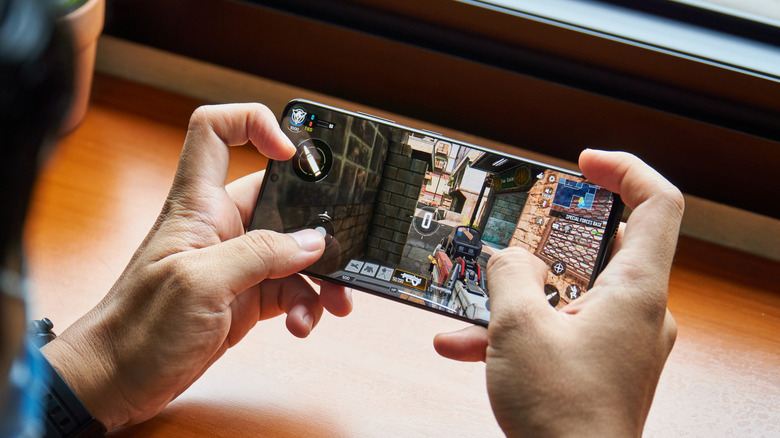
The South Korean FTC's pricey fine against Samsung comes after the company previously boasted that products like the Galaxy S22 and its sister devices offered "the ultimate gaming experience" thanks to their processors, memory capacity, and adaptive refresh rates. The Galaxy S22 models' gaming performance was supposedly bolstered by their 8 to 12 gigabytes of memory, data storage ranging from 128 to 512 gigabytes, pristine graphics, 5G capabilities, and 120 hertz refresh rate. While these specs were indeed delivered, buyers found the mobile gaming experience to be hindered by default with Samsung's Game Optimizing Service, or GOS, and its throttling practices.
According to the FTC, Samsung preinstalled the GOS on the cited devices and prevented users from uninstalling it. The GOS then applied CPU and GPU presets automatically whenever certain games were launched — not when the processors reached a certain temperature threshold, which is a more common practice when it comes to thermal throttling. In court, Samsung argued that this was done to ensure sustained performance and keep games running reliably for longer. However, considering that Samsung marketed these devices around a premium gaming experience, the FTC ruled that leaving out these GOS details was misleading under South Korean advertising laws.
Samsung also is no stranger to false advertising lawsuits. Its throttling issues sparked eight lawsuits between the United States, South Korea, and Israel. Elsewhere, the television manufacturer TCL sued the company for allegedly recycling old television models and rebranding them as Mini LED TVs, despite lacking the proper size and technology. Such a claim, along with the Galaxy performance discrepancy, shows that Samsung may need to get its facts straight before pitching its products to the public.