

Is Solar Power Actually The Cheapest Form Of Energy?
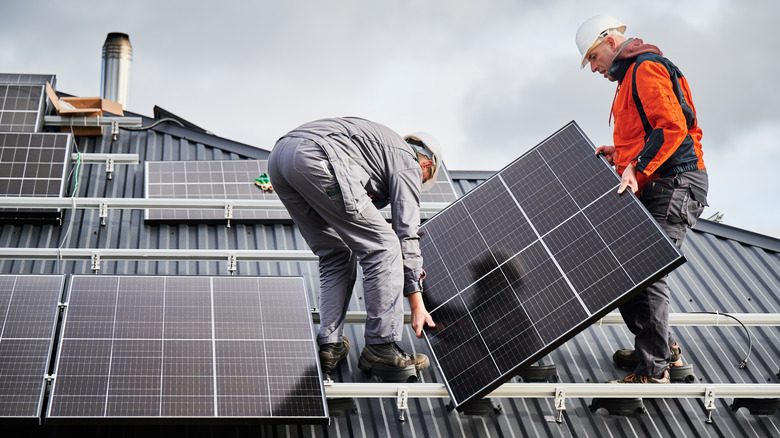
Renewable energy is becoming more widespread thanks to investment in new solar, wind, and hydropower infrastructure around the world. That increased output is getting clean energy to more homes and businesses, as well as bringing overall costs down. Given that sunlight is more widely available than wind and water, which aren't really options depending on where you are, you might assume that solar power is the cheapest form of energy, but you'd be wrong.
While solar has gotten much cheaper, there's one source that's even less expensive: onshore wind. According to Our World in Data (OWID), which measures electricity prices from new power plants, onshore wind costs $49 per megawatt-hour (MWh) compared to solar's $60/MWh as of 2024. Gas from combined cycle plants, which use turbine generators that can generate 50% more energy than single-cycle plants, costs around $74/MWh. That makes it the cheapest form of fossil fuel, ahead of coal ($115/MWh) and gas from peaking plants ($165/MWh) that increase production when demand peaks.
OWID also measured how costs have changed over the last 15 years, showing that they've fallen across the board. However, energy costs from renewables, especially solar power, have come down at significantly faster rates. In 2009, wind was $186/MWh and solar was $496/MWh, meaning they've fallen by 74% and 88%, respectively.
Why renewable energy costs have fallen so fast
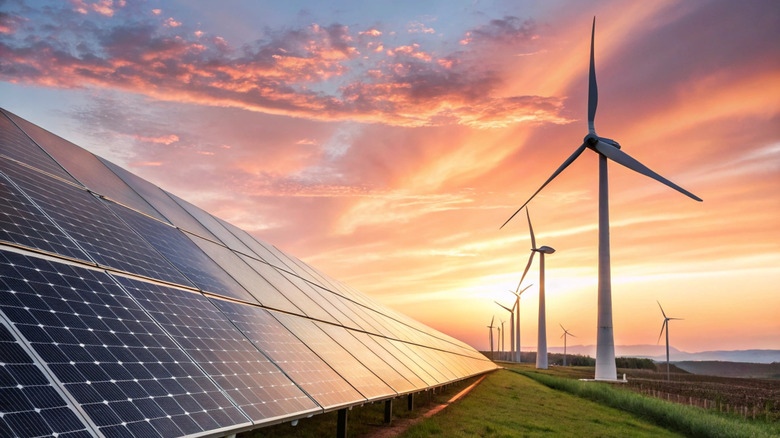
Renewable energy sources have some advantages that have allowed costs to fall so drastically. After wind and solar farms are built, the costs of operating them stay low compared to those of fossil fuel plants, which require the extraction, purchase, and transport of resources to produce electricity, some of which it needs to operate. Since renewables harness the forces of nature, they can supply and run themselves off resources that come to them.
Even if it still takes years for solar panels to pay for themselves, solar energy has become far more affordable over the last decade. While photovoltaic (PV) cells were prohibitively expensive when they were first introduced in the 1950s, the technology was found to be incredibly useful for powering satellites, justifying continued production and research. That allowed solar tech to become cheaper, more efficient, and more reliable over time.
As for recent solar energy growth, that's largely been driven by China. In addition to producing the materials and parts needed for PV systems, the country has built up so much renewable power infrastructure that it has a green energy surplus that's going to waste. All that lost energy is a problem that requires policy changes, plus improvements to power storage and transportation capabilities, but bringing renewable electricity costs down is an important element of ending the world's dependence on fossil fuels.
Fossil fuels remain in high demand
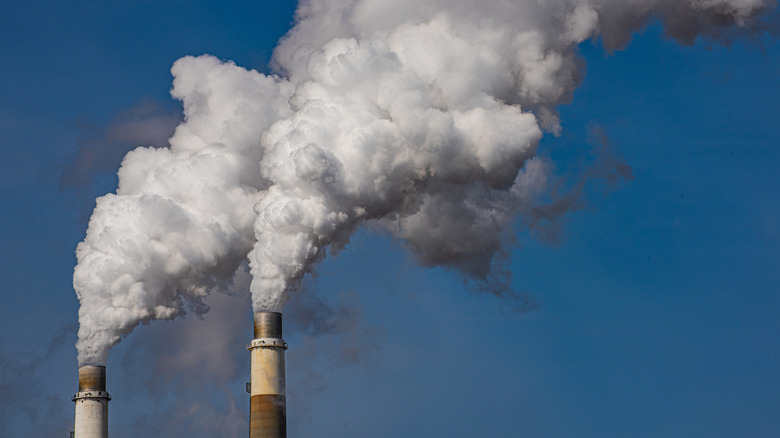
Unfortunately, lower renewable energy costs alone won't solve the problem of climate change. For one, though they haven't fallen as dramatically as solar and wind, the cost of electricity from gas and coal both steadily decreased over the same 15-year period. It's also important to remember that solar, wind, and other renewables still account for a tiny fraction of all energy used worldwide.
The bigger problem, of course, is that demand for electricity climbs each year. That means that, even as production and use of renewables increases, it doesn't actually mean there is less fossil fuel being burned. China is a great example. While the country has made heavy investments in expanding its renewable energy capabilities, it still uses more coal than the rest of the world combined. As AI data centers and their powerful supercomputers drive a spike in energy consumption, fossil fuels are convenient and widely available, driving a greater demand that makes the green energy transition even more challenging.