

5 Scariest Kaiju To Terrorize Movie Audiences, Ranked
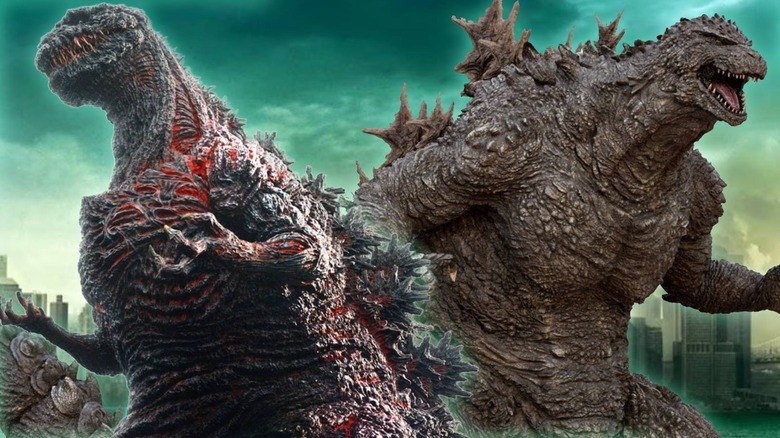
For decades, theaters have shaken under the might of movie monsters that tower over Frankenstein's monster or things from outer space. Kaiju have left audiences trembling since "The Lost World" in 1925, the first film to use stop-motion animation and fool theatergoers into thinking giant beasts walked the Earth. After that, we got the Eighth Wonder of the World with "King Kong" in 1933, followed by "The Beast from 20,000 Fathoms," which released in 1953. The first official Japanese kaiju (or "strange beast") was the 1954 "Godzilla," which really got the monster ball rolling for skyscrapers getting knocked over and cities turning to rubble.
But while kaiju movies have often played fast and loose with the tragic fallout of monster attacks, other films prioritize one thing above all: making these world-ending beasties truly terrifying. Godzilla is often known as the planet's protector, but it wasn't always that way, and in some of his best movies, the creature reverts to a more menacing version of itself. That kind of impending dread and oversized anarchy has also shown up in other monster movies that left audiences fearing for characters who thought they could take on their oversized opponent and live to tell the tale. More often than not, that hasn't been the case, and here are five examples where kaijus have done their very best to scare audiences out of their seats in the best way possible. To start off, we're going back to the early '90s and digging up a beastie that was basic in its design but brutal in its methods of picking off people who couldn't work without rhythm.
Tremors
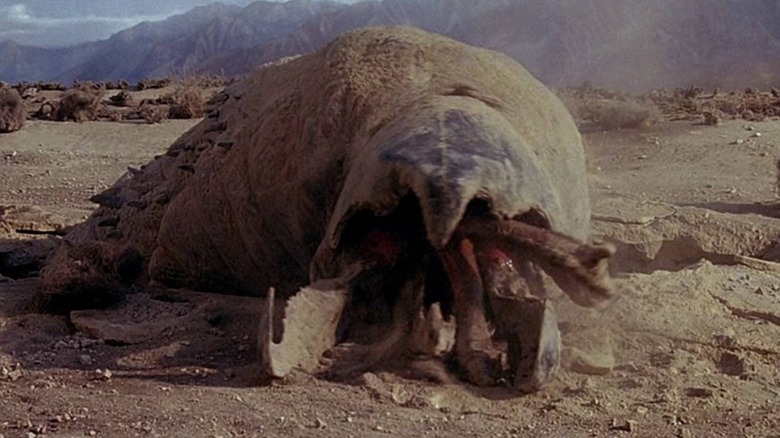
In 1990, Kevin Bacon played with death in "Flatliners" and danced around the desert in fear of being grabbed in "Tremors." An all-American kaiju that delivered fun and frights in equal measure, the movie, directed by Ron Underwood, saw handyman Val McKee and his colleague Earl Bassett (Fred Ward) come face to face with giant worms slithering through the Nevada desert. Using echolocation and vibrations to hunt prey, these "Graboids" start ripping through a small town where a band of locals do their best to take them on.
Nowadays, "Tremors" might look a little dated, with the Graboids looking more like knock-off designs from David Lynch's "Dune" than anything, but it still taps into that classic B-movie vibe. With POV shots of shoes sprinting as fast as possible away from the camera, there's a light but very legit sense of dread as these things snatch our heroes' legs out from under them and drag them back into the dirt. That's even before the creature's main body comes out of the ground to wreck buildings and get blown into an orange, pulpy mess. The film might've spawned six sequels after its initial release, but none moved the needle as much as the original.
Godzilla Minus One
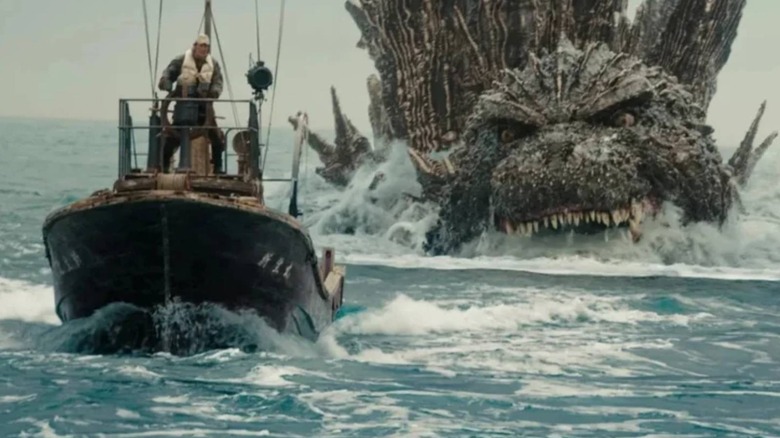
As with many kaiju movies, "Godzilla Minus One" mostly shows people pointing far off into the distance at some big, toothy lizard coming right at them, or running through a crowd trying not to get trampled. What makes "Godzilla Minus One" so special (besides its Oscar-winning special effects) is that halfway through, director Takashi Yamazaki turns the movie into a kaiju-sized "Jaws," with a team of brave men heading out to sea to take Godzilla down. This tonal shift to man-against-beast, with the two clashing at sea, makes Godzilla more tangible in the worst way.
Seeing his head break the surface and chase the boat is genuinely scary, evoking the same kind of fears as Spielberg's classic monster movie. The same can be said for the rare moment when our heroes finally believe they've put a dent in the creature, only for it to regrow its whole head. Under Yamazaki's direction, this further cements the notion that Godzilla can take a beating from just about anything but remain a nearly unstoppable force that just keeps swimming through seas and swinging its tail through buildings with reckless abandon. The fallout evokes the same signature scare factor Godzilla has always channeled, and honestly, that's just the way we like it.
Shin Godzilla
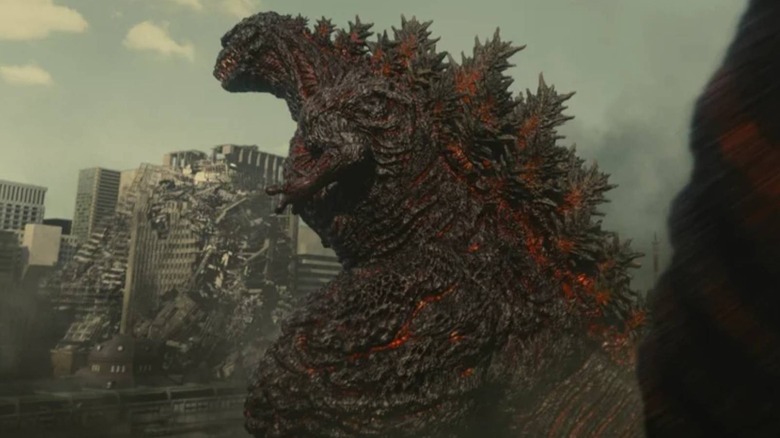
With a list of killer kaiju choices, the King of Monsters was guaranteed to appear more than once, given how many times he's shown up since his 1954 debut. Back then, the giant lizard was famously a product of post-war Japan and the bombing of Hiroshima and Nagasaki. In the 2016 version, the monster is born from the Fukushima nuclear reactor meltdown and is a genuinely horrendous ground-stomper. That is, after its many transformations.
Initially appearing as a tail breaking from the ocean, the creature takes to land and, in doing so, grows poorly formed limbs, crawling on its belly and bleeding from gills that flood the streets. From there, it eventually shifts into the more familiar form, standing upright, though it no longer carries the heft of the creature we remember. The fourth form is the more traditional Godzilla, with a hefty bottom half and a mouth that splits open to unleash the powerful blast everyone pays to see. In the creature's final form, though, the real stuff of nightmares appears.
Thanks to more scientific tampering, the beast quite literally explodes into a bunch of other entities that look more human than anything. Breaking away from Godzilla's skeletal base, they all boast similar spiked spines, as if they were melted statues. It's this final form that provides a living, breathing representation of nuclear fears and the unknown horrors that can come from it. We might've spent decades in awe of the King of Monsters, but by the end of "Shin Godzilla," he's an unknown abomination that is truly hard to look at.
The Host
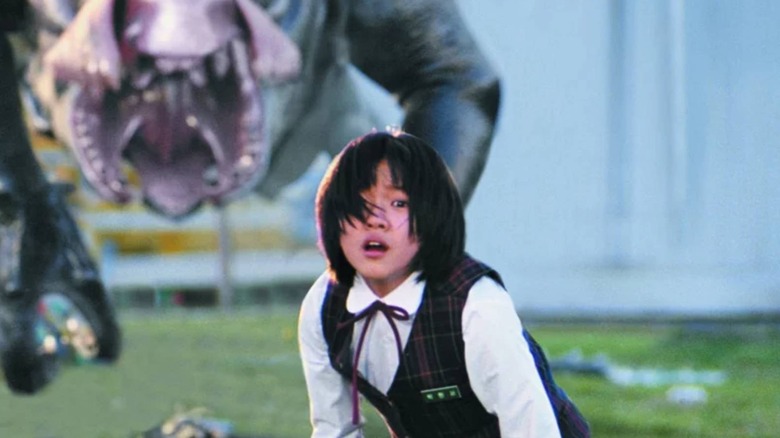
Oscar-winning director Bong Joon-ho's career is sprinkled with a clear love of monster movies. Beyond playing around with weird-looking aliens in "Mickey 17" and the adorable pig in "Okja," he unleashed a man-made abomination on the streets of Korea in his 2006 movie "The Host." In his family-focused sci-fi movie, the terror stems from improperly disposed formaldehyde, which creates a massive, tadpole-like people-eater that chows down on locals and sets a brave family on the hunt for the animal after it takes one of their own.
Like most of Bong's work, the creature scurrying through "The Host" is a wonderfully original creation, which makes it all the more unpredictable. With a mouth like a Predator and a build like something we've seen The Mandalorian ride on one of his many adventures, this thing is a sight to behold. To make matters worse, it's impervious to bullets, and only fire can bring it down. As is often the case in these films, though, the real threat doesn't come from the newly discovered lifeform that's causing damage but from the invasion of another entity, which in this case is the American forces that are making a desperate effort to cover up the origins of this beastly event.
Cloverfield

"Cloverfield's" fear factor came from thinking outside the box in a way that not just kaiju films, but monster movies as a whole, hadn't really explored. Using the "Blair Witch Project" viral approach, the world waited with bated breath to see what this young Matt Reeves fella was conjuring, and we got a found-footage movie produced by J.J. Abrams that offered a different insight into what a kaiju attack could look like. Set in 2008 and beginning in the area "formerly known as Central Park," the movie follows a group of friends whose leaving party is interrupted when a monster tears through the city. Even now, decades later, we still know very little about it.
What the film did reveal was what kind of monster was wrecking New York, and it was a terror. Standing an impressive 240-300 feet tall, this thing was a hairless, bat-like creature that didn't fly. Instead, its ultra-long limbs swatted away aircraft or squished unfortunate civilians. As a deep-sea beastie, it also had fish-like features, including large, membrane-like fins and an extra feature that made it scarier than every other titan of terror on this list. Halfway through the film, we learn that the Cloverfield monster dispenses parasites that invade its victims and cause them to explode. It's another gruesome addition to a monster-revival creature feature for Western audiences, and it's a tragedy that we never saw more of it. Perhaps, with J.J. Abrams being done with "Star Trek" and "Star Wars," we might see more of it one day.