

Can You Use Distilled Water To Clean Your PC?
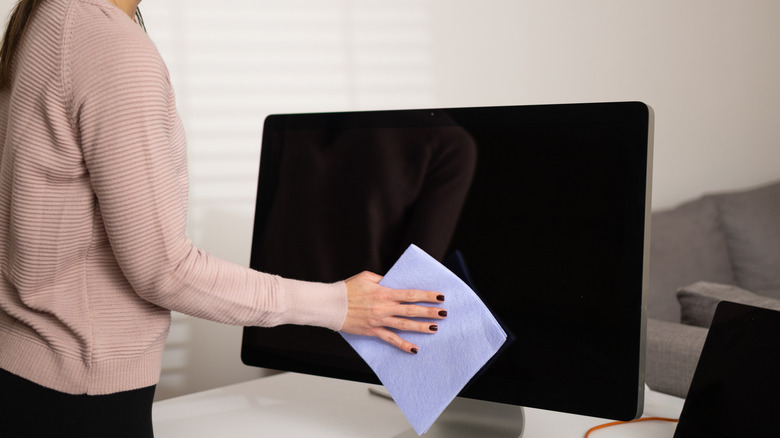
Regular PC cleaning helps prevent dust buildup, maintain proper airflow, and keep components in good working condition by keeping temperatures normal. However, choosing the right cleaning process is just as important as the cleaning itself. While distilled water is commonly recommended for cleaning monitors and other external surfaces, you can use it to clean your PC too, but it is a little more complicated.
The reason comes down to water purity and electrical conductivity. Distilled water contains far fewer dissolved minerals than ordinary tap water, making it less likely to leave mineral deposits behind. However, that doesn't mean it is free of ions, and generally, its purity can change when it comes into contact with dust, oils, and other contaminants. Water-based cleaning is well established in electronics manufacturing, as PCB manufacturers use carefully controlled aqueous cleaning systems to remove manufacturing residues from circuit boards. However, these processes involve specific water-quality requirements, cleaning agents, rinsing procedures, and drying methods. They don't compare directly to pouring distilled water over an assembled motherboard at home. So, while you can use distilled water to clean your PC, where and how you use it makes a big difference.
Is distilled water safe for cleaning a PC?
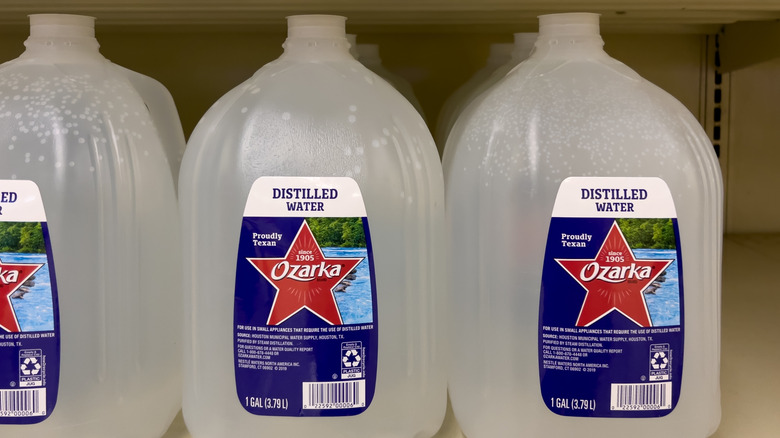
Distilled water is generally safe for cleaning certain external PC components, like monitor screens (as long as you follow the manufacturer's cleaning instructions), but not for internal components. Distilled water is produced by boiling water and collecting condensed steam. This process makes distilled water have far lower electrical conductivity than normal tap water. However, it would be inaccurate to describe distilled water as non-conductive. According to the US Geological Survey (USGS), even distilled and deionized water can contain ions.
Water can also dissolve substances from its surroundings. This is particularly relevant when cleaning a dusty computer. Dust, fingerprints, oils, and other residues on the PC can reduce the distilled water's purity. If moisture reaches an energized circuit, the resulting conductive pathways can cause electrical faults and short circuits. The main concern isn't simply whether the water started distilled. It is whether the water remains sufficiently pure, whether the equipment is completely de-energized, and whether any remaining moisture is removed before connecting power and switching it on.
That said, using distilled water to clean internal components shouldn't be a routine PC maintenance approach. It differs greatly from what happens during PCB assembly. An assembled motherboard is much more complicated to clean than a bare board or one designed for washing. It contains densely packed components, connectors, sockets, switches, and areas where moisture can become trapped. Even when a circuit board appears dry on the surface, moisture may remain in hard-to-inspect areas. Residual moisture can contribute to quite a few reliability problems, including corrosion, electrochemical migration, dendrite formation, and delamination. Therefore, for regular PC maintenance, compressed air, vacuum, or other cleaning products are generally safer choices for removing dust.
Distilled water vs. deionized water: what's the difference?
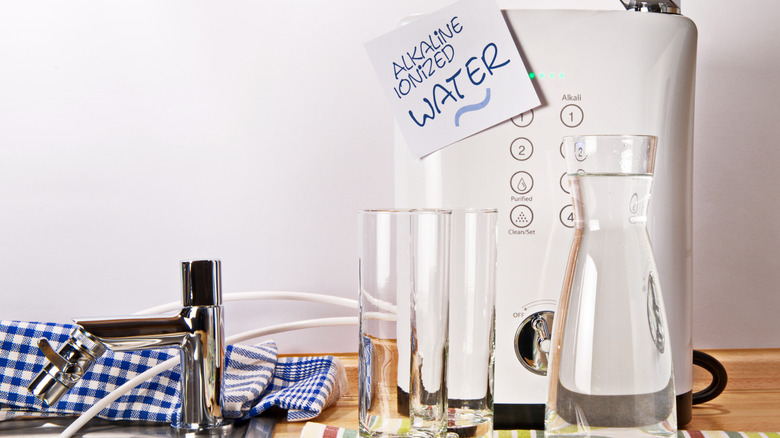
Industrial and electronics-cleaning applications use both distilled and deionized water, but they are produced through different processes. Distilled water is produced through distillation, and deionized water is produced using ion-exchange processes that remove dissolved ionic substances, such as mineral salts. Neither process guarantees the removal of every possible contaminant. For instance, distilled water can still contain some organic compounds, while deionized water quality depends on the ion-exchange process and the condition of the purification system.
For electronics manufacturing, deionized water is commonly used mainly because its ionic purity can be monitored and controlled. Some industrial processes also specify resistivity or conductivity requirements to ensure consistent cleaning results. The difference matters because buying distilled water alone does not guarantee it meets the purity specifications required for professional PCB cleaning. However, for ordinary external PC cleaning, either type is generally unnecessary if the manufacturer recommends only a lightly dampened cloth.