

4 Of The Biggest Mobile Phone Innovations Pioneered By Nokia
While Apple helped usher in the modern-day smartphone era, many of the smartphone features we now take for granted can be traced back to breakthroughs and innovations that Nokia popularized nearly three decades ago. So, while Nokia may not be a major player in the smartphone market these days, there was a time when the Finland-based company was synonymous with cutting-edge mobile devices.
Some of Nokia's innovations may seem trivial in hindsight, but they were undoubtedly major advancements at the time. Nokia played an absolutely pivotal role in transforming mobile phones from devices primarily used for making phone calls into much more capable devices, and many of the company's innovations quickly became standard across the industry. What's more, Nokia's contributions ultimately helped pave the way for companies like RIM, Apple, and Samsung to take smartphones to the next level.
To be fair, some of the innovations below may not have originally been invented by Nokia. But Nokia undoubtedly helped popularize them. So while an iPhone or Android device bears little similarity to a Nokia device from the late 1990s or early 2000s, it's fair to say that Nokia's contributions were incredibly impactful and shouldn't be overlooked.
Mobile gaming on the Nokia 6110
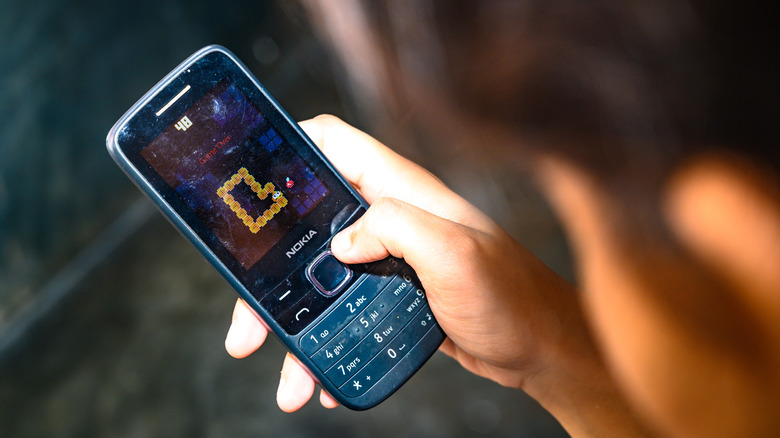
The year 1997 saw the release of the Nokia 6110, a mobile phone that was preloaded with the mobile game Snake. While perhaps not the most exciting game by today's standards, Snake was arguably the first mobile game to become a global phenomenon.
Snake is essentially a classic arcade game where a player guides a snake around the screen in search of food represented by dots on the screen. Every time the snake eats a piece of food by passing over it, the snake's body grows longer. As the game progresses, and the snake eats more and more food, the length of the snake keeps on growing. The challenge for players is to navigate an increasingly growing snake on a screen without having the snake run into its own body. The gameplay was simple but very addictive. The graphics were rudimentary, but the game's popularity showed that engaging gameplay is often more important than flashy graphics.
The truth is, Nokia didn't actually invent Snake. But the company's implementation introduced the game to a massive audience and, in the process, helped show that mobile gaming could be a legitimate source of entertainment. With console-level gaming now possible on mobile devices, it's easy to forget that there was a time when a simple game like Snake was the most fun you could have on your phone.
Internet browsing on the Nokia 7110
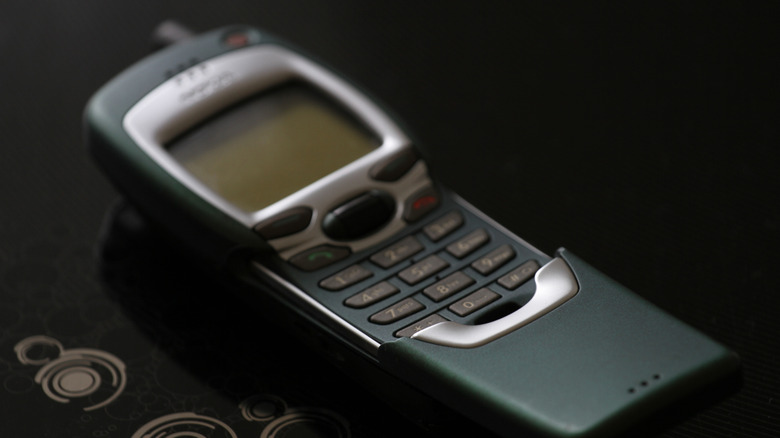
When Apple introduced the iPhone in 2007, Steve Jobs famously boasted that the iPhone allowed users to enjoy the full internet from a device small enough to fit in their pocket. But in order to get there, we had the Nokia 7110, the first mainstream mobile phone with a Wireless Application Protocol (WAP) browser. The Nokia 7110 came out in 1999 and provided users with a very simple and mostly text-heavy internet browsing experience. And while it was a far cry from the mobile browsing experience today, Nokia's solution worked well on devices with slow data connections and smaller displays with limited resolution.
The Nokia 7110 gave users the ability to check the news, read up on sports scores, access weather reports, and more. It may seem boring by today's standards, but at the time, it was a big deal and very cool. Recall that back in 1999, accessing the internet typically required sitting down at a hulking desktop computer connected to a dial-up modem. The idea of accessing the internet from a cellphone was mostly a novelty at the time, and the Nokia 7110 showed that it was possible to bring the browsing experience, albeit in stunted form, to a mobile device.
The WAP browser was very much a transitional development, and it certainly had no shortage of limitations. Still, there's no denying that the Nokia 7110 helped pave the way for the smartphone browsing experience Apple would popularize about eight years later.
Camera phone on the Nokia 7650
Another smartphone feature that's easy to take for granted today is mobile photography. While modern smartphones can capture absolutely stunning photos with little skill, there was a time when taking a picture with your phone wasn't even an option.
The Nokia 7650, which was released back in 2002, helped change that. At a time when mobile phones were primarily used for sending texts or making calls, the Nokia 7650 featured a built-in camera capable of capturing photos at 640-by-480-pixel resolution. The quality may not have been groundbreaking, but the device foreshadowed a future where people could take photos with their mobile device without having to bring along a dedicated point-and-shoot camera.
What's more, and just as important, the Nokia 7650 allowed users to share photos via MMS. The experience was certainly slow and clunky, but the ability to take photos and then send them directly to friends and family was a big development at the time. In a similar vein to Snake, Nokia wasn't the first company in history to put a camera in a mobile phone. The Nokia 7650, however, was the first camera phone with a massive user base.
Internal antenna on the Nokia 8810
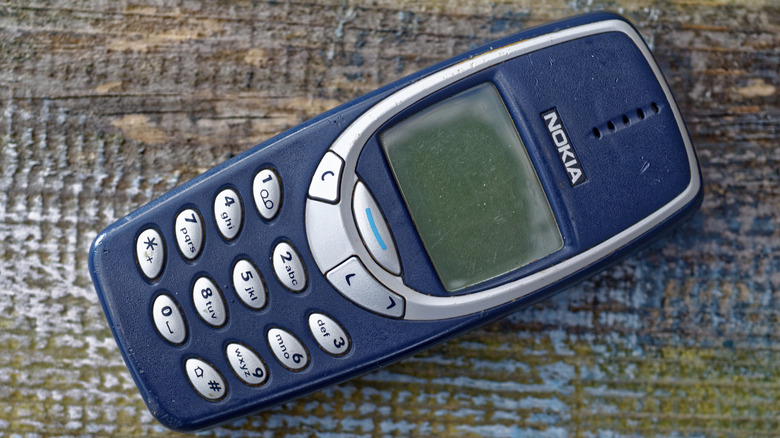
The Nokia 8810 was released in 1998 and was one of the first mobile phones to feature an internal antenna. It sounds like ancient history at this point, but many mobile phones in the 1990s had long antennas that could slide out or a short stub of an antenna at the top. The first phone I ever had, for example, was a Kyocera model that featured an antenna that you could slide out if you wanted to make a call and wanted to ensure good reception.
The antenna on the Nokia 8810, however, was inside the device itself. This represented a marked departure from almost all mobile phones at the time, which could sometimes resemble bulky walkie-talkies. By keeping the antenna inside, Nokia was able to deliver a sleeker device that was easier to manage and put in your pocket.
Building the antenna inside the phone came with a few tradeoffs, like signal degradation, but Nokia's gamble ultimately paid off and internal antennas soon became the norm. And similar to the other innovations listed above, Nokia may not have been the very first to release a mobile phone with an internal antenna, but the Nokia 8810 helped popularize the design, which eventually prompted other mobile phone manufacturers to follow suit.