

Which Oppo Phone Is Equivalent To The Samsung Galaxy S26 Ultra?
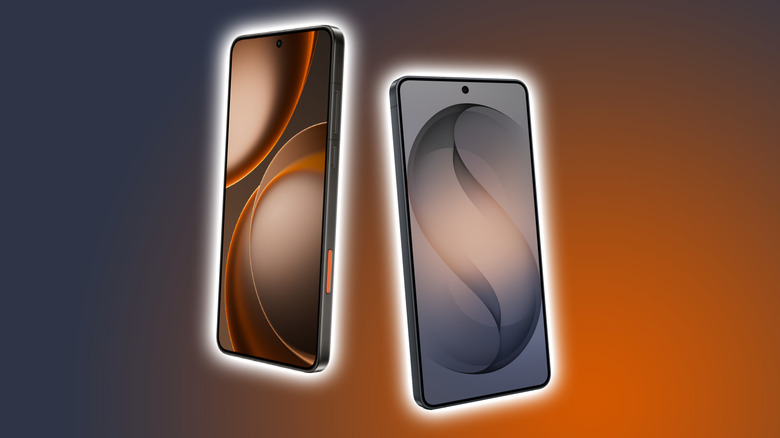
The Samsung Galaxy S26 Ultra, the company's current flagship non-foldable phone, was released this year to positive reviews. It's powered by a Snapdragon 8 Elite Gen 5 for Galaxy and either 12GB or 16GB of RAM, depending on the storage option. To get the highest spec device, you'd have to opt for 1TB and 16GB, which launched at $1,799.99.
That high cost can drive a few of us to look for comparable alternatives, which would often come in at lower prices. However, with the ongoing RAM crisis due to AI data centers hogging the supply, and more premium features being introduced, prices for the alternatives have skyrocketed.
That aside, Chinese company Oppo's equivalent to the S26 Ultra is the Oppo Find X9 Ultra. It even beats the S26 Ultra in some areas, but in terms of raw power, we can look to synthetic benchmarks to compare them, as they both run Snapdragon 8 Elite Gen 5 chips. Here, we've limited it to the more reasonably priced and available 12GB models, as the 16GB X9 Ultra is currently priced at nearly $3000 after converting from pounds – if you can get one. The differences in synthetic performance metrics between the two RAM variants are negligible.
| Benchmark | Geekbench 6 (Single core/Multi-core) | AnTuTu score | 3DMark score (Wild Life Extreme, High) |
| Samsung Galaxy S26 Ultra | ~3,700/~11,000 | 3,722,911 | ~7,500 |
| Oppo Find X9 Ultra | ~3,500/~10,500 | 3,796,294 | ~7,000 |
Benchmark figures averaged out across multiple sources, including Trusted Reviews, Geekbench, and GSMArena.
S26 Ultra outpaces X9 Ultra, but not where it counts
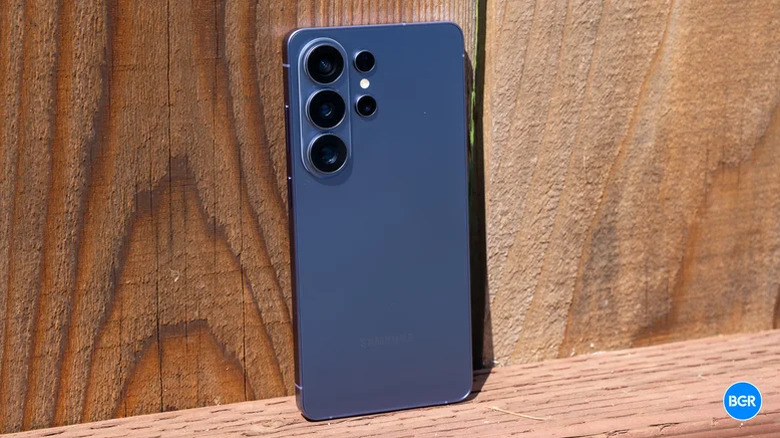
If you're a little confused about why the Galaxy still eked out more performance, despite sharing the same chip, it's because Samsung had Qualcomm tune a special "Galaxy" edition of the Elite Gen 5 specifically for the S26 Ultra. However, in moment-to-moment usage, the regular user won't ever notice and will get an incredibly powerful chip in either phone to drive gaming or content creation on the go.
The rest of the specs kind of go toe-to-toe and, in some cases, it's literally down to millimeter differences. Oppo's screen is smaller, at 6.82 inches, while Samsung's is 6.9 inches. Those who like to rub their thumbs on virtual joysticks will also find the X9 Ultra supports 144Hz, while the S26 Ultra caps out at 120Hz. Battery capacity is also far greater on the Oppo, coming in at 7,050mAh vs. 5,000mAh on the Samsung. Users have reported that this means the Oppo can take longer to charge, but it does support 100W charging (with Oppo's charger, which isn't included with the global model), versus the maximum of 60W on the Samsung.
Is the Oppo Find X10 Pro Max better than the Samsung S26 Ultra?
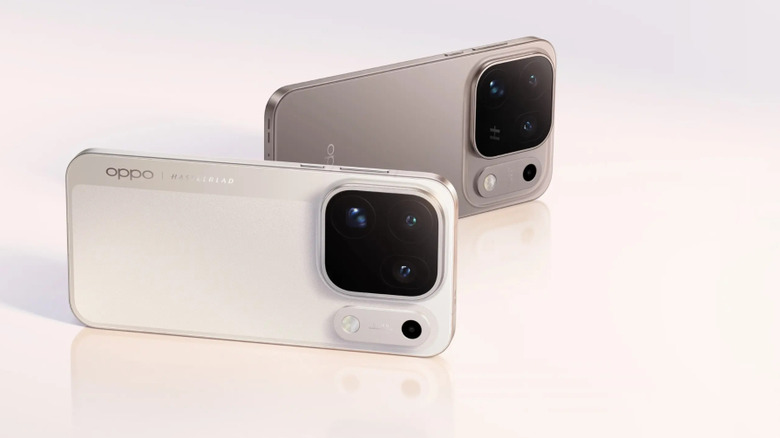
As with every phone refresh, sometimes the refresh is — like the S26 Ultra — iterative, rather than revolutionary. Oppo's current flagship, the Find X10 Pro Max, is also an equivalent to the S26 Ultra. In Geekbench 6, the Oppo Find X10 Pro Max is actually a step below the X9 Ultra. The new chip, the Dimensity 9600 Pro, even when backed by 16GB of RAM, is outpaced by both the X9 Ultra and S26 Ultra with 12GB of RAM in multi-core performance, though it pulls ahead in AnTuTu.
It's not by much when it comes to the other Oppo phone, missing out by around 200 points. However, the gap to Samsung is a much bigger 1,000 points. Again, probably not noticeable to the average user, and it still holds its own in high-usage apps.
Where these phones begin to differ a little is in terms of what they offer. According to TechRadar, Oppo's offering provides the better camera in most scenarios. Some Reddit users who have either switched to the X9 Ultra or have used both Samsung and Oppo's phones have concluded that the X9 Ultra is the better phone. That said, it has been pointed out that Oppo's software offering isn't always the best, with Samsung having a massive head start on building out its One UI, and the other features it crams in each year.