

Here's How Much It Would Cost To Buy A Power Bank In 2016 Vs. 2026
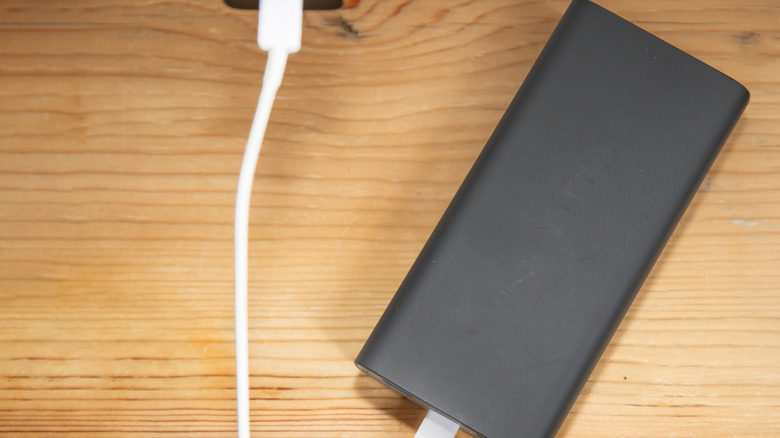
If you want to charge your smartphone, laptop, or tablet on the go, consider a power bank. These small, lightweight, compact chargers can provide a powerful charge to your device when you aren't near a USB port or wall charger. They've been around since 2016 and have become more powerful and smaller so you can get more out of your device.
Ten years ago, if you wanted to buy a power bank, you might have spent anywhere between $49.99 and $69.99, but you may have found a nice deal on Amazon for less than $20. That price will vary in 2026, with power banks ranging from around and even under $10 to around $90 and hovering closer to $100. If you adjust for inflation, you'd pay somewhere near $70.18 and $98.26 -– and even higher –- for a power bank in 2016. The opposite would see a $49.99 power bank in 2026 cost about $35.61 ten years ago.
There are, of course, several reasons for the price increase across the years. With advancements in technology, costs also rise. Another reason is that power banks do more than charge your device. Many have additional features that make them more efficient and easier to carry.
Power bank features across a decade
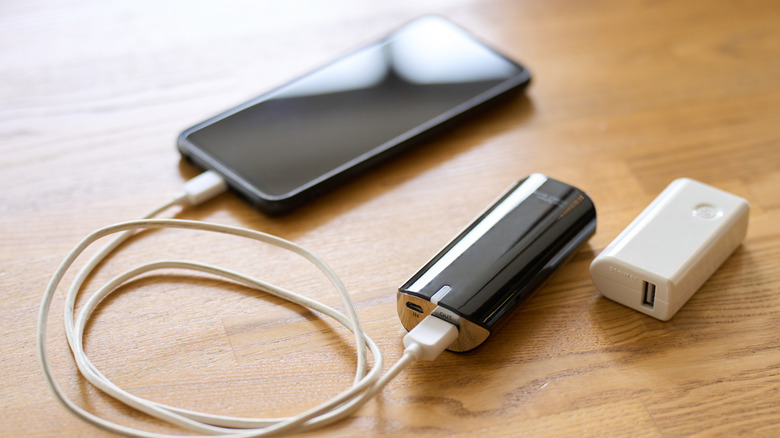
In 2016, power banks generally had fewer USB ports than those available to buy in 2026. That meant you could only charge a couple of devices at once instead of plugging in three or more. One tech review found that the Anker PowerCore 20000 was powerful enough to charge a Samsung Galaxy S7 smartphone up to five times before the charger itself needed to be topped up once more.
They'd also have fewer overall mAh than the ones you can find today. Anker —a popular choice for power banks—developed multiple power banks ten years ago, including the Anker PowerCore 10000mAh and its more powerful 20,000mAh model. However, power wasn't the only feature that changed over the course of ten years.
Power banks also got smaller as many models shrank to fit in backpacks, pockets, and purses. The Iniu Mini Portable Charger is one such power bank that is much smaller than the Anker PowerCore 20000. The PowerCore 20000 has a rectangular shape that looks like a TV remote, whereas the Iniu model is small and lightweight enough to hold with a few fingers. This makes it a useful tool to add to your travel kit.
Why the cost has changed
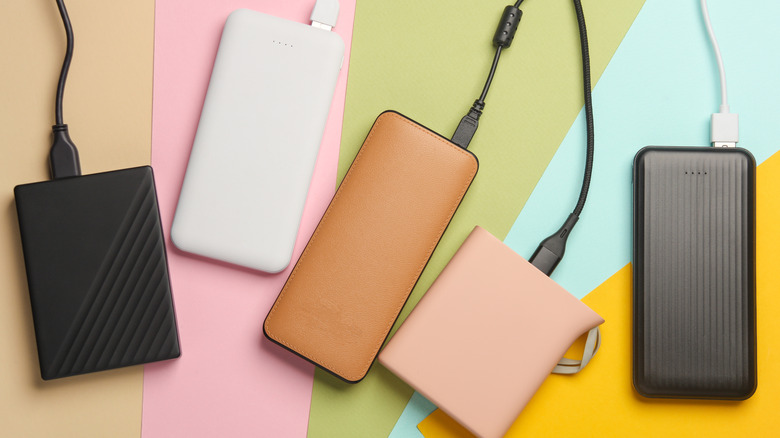
You may pay a different price for a power bank in 2026 because of a few factors. Advances in technology, faster charging speeds and a more compact size all factor into the cost. You may find lower-priced power banks today than you would in 2016, but you may not get as fast a charge or as many ports as you would back then.
You may also find power banks with multiple USB slots in 2026, unlike in 2016. Yes, older models may have had two USB connectors, but newer ones can feature three or more with varied connection types. The Iniu model, for example, has one USB Type-C slot and two USB Type-A slots. The Anker PowerCore 20000 only has two USB slots.
The power bank's size may also affect its price. This can apply to both physical size and the mAh included in the charger. Most include 10,000 to 20,000, but you can find modern power banks with 25,000mAh and higher. This also matters for charging speed. The Ef Ecoflow Laptop Power Bank has 25,000mAh and was around $48.99 on Amazon at the time of writing. If you want to get the most out of your charger, there are ways to preserve power banks.