

AMD Might Be Losing Its Unique Niche In The Chip Industry To Nvidia
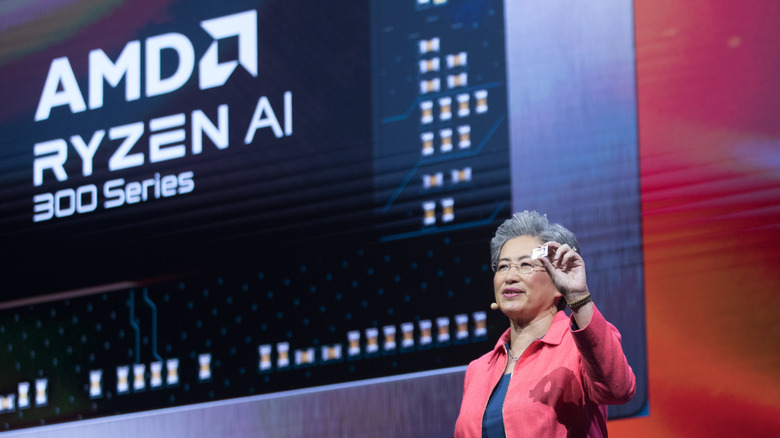
AMD is finding itself in a weird position as the AI boom rolls on. While it has found tremendous successes within the AI industry, supplying its graphics and processor chips, and in the company's CES keynote in January, mentioned it a total of 210 times. Team Red is currently digging into its next meal, supplying what it can as hardware supply chains are devastated by the hoarding of AI data centers and frontier labs.
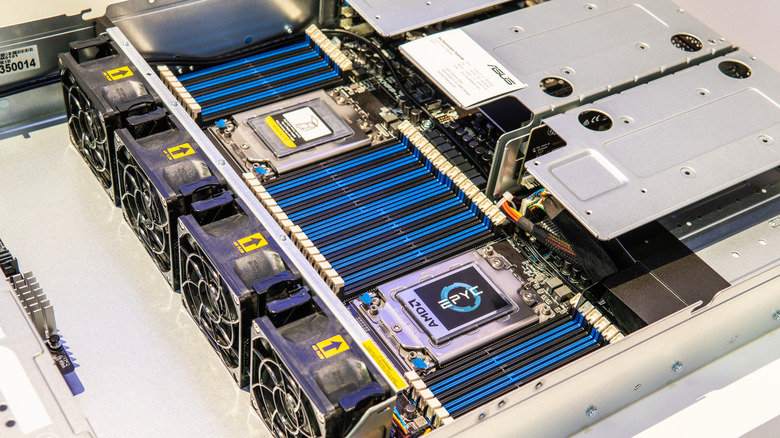
However, AMD could very likely lose out on its position as a central processor figurehead within the space, as it has already lost its unique position as a graphics card and processor manufacturer, since Intel entered that space in 2022 with its Arc GPUs. AMD's EPYC processors are some of the best regarded in the server space, and it has also been producing data center-centric GPUs under the Instinct branding since 2016.
Since this madness began, there's been one looming threat amongst all of this, and that's Nvidia. Team Green, under Jensen Huang, has become a multi-trillion-dollar company that is vital to ongoing infrastructure buildouts. Now, Nvidia has begun to move into the processor department with its Vera CPU, seemingly looking to become the one-and-only provider of data center hardware.
Nvidia wades into the CPU space
A vast majority of AI data centers are already using Nvidia equipment, but currently rely on AMD or Intel processors. Earlier in 2026, Nvidia announced the Vera CPU, meant for "agentic AI"; it's built in such a way as to prevent bottlenecks when passing through the mass of information needed for processing by the large language model tech under the hood. These will never be in your home, unless, of course, you wind up with an Nvidia data center in your garden.
Nvidia isn't building traditional CPUs here, with none of them in the x86 space. Instead, Vera, and the subsequent consumer spin-off, N1 and N1X inside of the RTX Spark laptops and mini PCs, are ARM chips, built on a different architecture that might better serve large data processing requirements. ARM chips are built with everything in one pool, structured together so information and data can be processed extremely quickly. Take a look at the Geekbench results for the Snapdragon X2 Elite or the recent M5 Ultra to see how far ahead ARM is of the competition in synthetic benchmarks.
With Nvidia now playing the CPU space, it's very likely that the AI data centers could start to transition to the ARM chips away from AMD's x86. EPYC is still incredibly performant, and might not be completely obliterated from the market in favor of Nvidia's chips, as Jensen Huang did warn that upgrading data centers to Rubin or Rubin Ultra in 2027 will take a lot of planning.
Nvidia's new AI chip is joined by consumer kit too
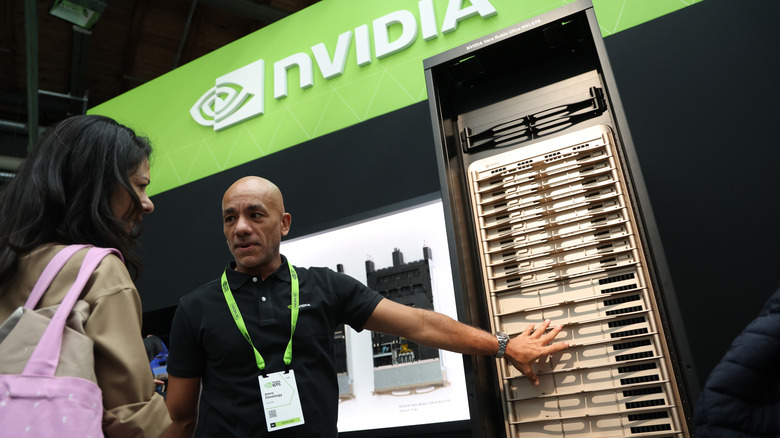
These Vera chips will have direct integrations with existing Nvidia hardware and will likely be faster at data processing than the x86 counterparts. That said, uptake on these chips doesn't appear to be as rampant as expected. AMD will likely hold firm ground until these AI data centers need to be upgraded. Unlike usual hardware upgrades, Nvidia data center hardware hasn't been a hot-swap situation, and often needs entire overhauls to fit the new hardware.
For instance, Blackwell racks aren't compatible with Vera Rubin racks, as there's a greater need for power and liquid cooling. So far, Oracle is one of the only major companies to have officially announced it'll be using Vera chips in its data centers. SpaceX has said it needs $40 billion for more Nvidia hardware, including the new CPUs. Outside of data centers, Nvidia has launched the RTX Spark devices, partnering with manufacturers like MSI or Asus to build consumer-facing devices that focus on AI work.
These, using the N1 and N1X chips, are exceptionally expensive – as with most PC hardware in 2026 – and come in at minimum prices of $2,599 or more, depending on how much RAM they have. With Nvidia now in this space, it's clear that AMD and Intel aren't playing alone, but there's one crucial detail to note: the actual CPU component on the chip isn't made by Nvidia. Instead, MediaTek handles that side of things, while Nvidia puts it all together with its GPU cores.