

Drivers With Keyless Entry Are Vulnerable To This Car Theft Trick
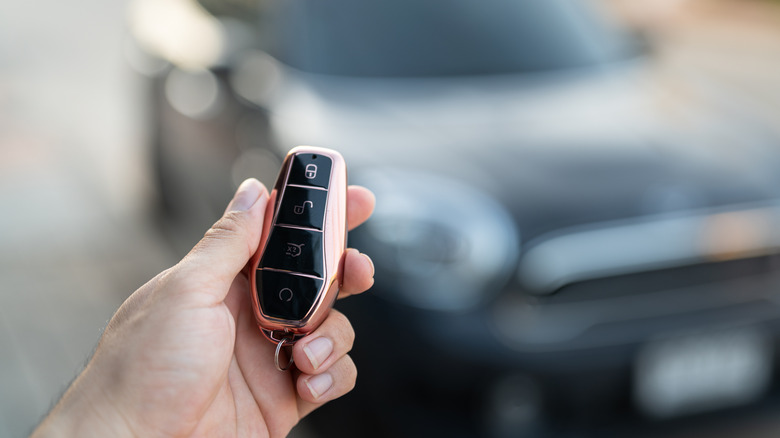
Keyless entry to our cars can feel a bit like magic: Just walk up to your vehicle, press a button, and the doors unlock for you — heck, some models even let you skip the button-pressing step. But while this wireless tech is certainly a nice upgrade from fumbling around in your pocket or bag for your keys, it also happens to be fueling a wave of high-tech car thefts using a vulnerability called relay attacks. Instead of smashing windows, many car thieves are now using a car's own key fob signal against it to get in. The entire heist is super quiet, doesn't do any damage to the car physically, doesn't require the actual key fob to be there, and takes less than 60 seconds overall — Nicolas Cage would be proud, but owners are left fuming.
Pulling off this trick takes a two-person crew and some inexpensive signal-boosting hardware. It works by one thief holding a transmitter next to the car. Meanwhile, the other creeps up to your front porch (or anywhere along the exterior of your house) carrying a relay amplifier. This gadget looks for your key fob's faint radio frequency, even when it's just sitting on your kitchen table. Once the device snags the signal, the thief's device amplifies it and bounces it back to their partner's transmitter.
Unfortunately, this fools a car's computer — as far as it can tell, you're standing by the door with the key fob in hand. It then authorizes the signal, unlocks the doors, and lets the thieves in to press the push-start button. They drive away and no alarms are sounded, proving that the convenience of keyless entry also comes with a steep security loophole. It's why some carmakers are switching to digital keys.
Assessing the danger and identifying other threats
Understanding the threat of relay attacks is important, especially since the hardware needed to pull it off is typically pretty cheap to buy online (and no, they aren't using AirTags). Luxury SUVs are the top targets as you'd probably guess, though everyday commuter cars are also falling victim to similar thefts. In fact, relay tricks aren't the only wireless threat out there. In open parking lots, criminals often use radio frequency jammers to block locking signals, leaving doors unlocked for quick grab-and-go raids. Others use stealthy code-grabbing devices that silently record and clone the unique signal a key transmits so they can get in once the owner walks away.
Thankfully, you don't need much to protect your keyless entry vehicle against these thieves. The best defense is one of the cheapest: a Faraday pouch. These inexpensive bags sport a metallic mesh that can block your car's key fob signal. Toss your key fob into one whenever you get home, and thieves can never use it in a relay attack. Additionally, select automakers have baked a manual sleep mode into newer fobs, meaning you can temporarily turn off the fob's radio transmitter so no one can access it. Sleep mode is a handy defense, and by layering it with security measures like always parking your car in your garage, you can have more peace of mind that your car is well-protected from sneaky thieves. Hey, it beats wrapping your car keys in foil, right?