

5 Sci-Fi Movies That Were Banned In Different Countries
Historically, science fiction has always ventured into unconventional territory, sparking questions and pushing boundaries that other genres can't quite reach. However, in tackling these topics, it sometimes pushes limits not everyone approves of. The result has sometimes led to some of the most influential sci-fi films to ever hit the silver screen, while in other cases it has hit brick walls in certain territories and has been permanently banned from ever being shown.
Some of your favorite films have been cut off from distant shores after imposing bodies slapped the projects on the wrist and sent them on their way. Some films have understandably been stopped from general release for obvious reasons, while others have been banned for breaking guidelines that might seem hard to believe. We've pulled together five entries that met, or rather failed to meet, specific guidelines and, as a result, either took years to finally get the go-ahead and be released to specific audiences or are still sitting on a blacklist for specific countries, never to see the light of day.
Take a look and see which ones you've been lucky enough to see. To start things off, we're looking back at a renowned, nasty little watch of a film that led to such a massive fallout that even the director himself helped pull it back before it was let loose once again, decades later.
A Clockwork Orange
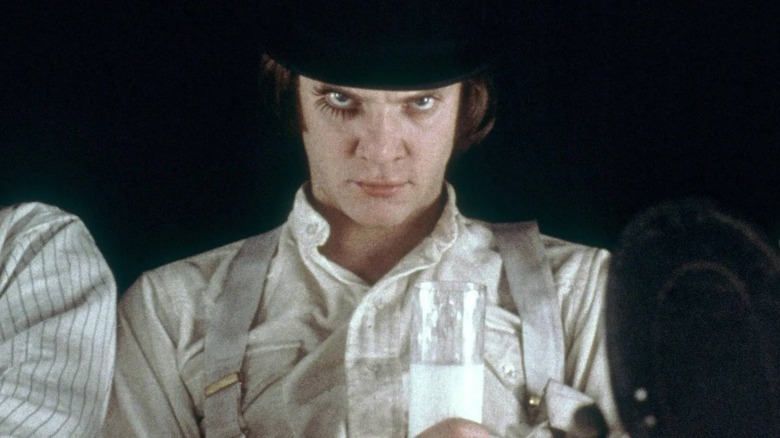
All but one entry on this list were pulled from theaters by a specific nation's government or its censorship organization. In the case of Stanley Kubrick's 1971 film, "A Clockwork Orange," the director himself pulled the plug on the picture. Many consider it one of the legendary filmmaker's masterworks, and the excessively violent look into a dystopian world originally brought to life in Anthony Burgess' novel of the same name is still a tough watch today.
Back then, critics and audiences didn't gel with Alex DeLarge and his thirst for "a bit of the ultra-violence," so much so that it became a topic of British headlines and earned many films from that era the label "video nasty." Three years later, Kubrick decided to pull the movie from distribution with the help of Warner Bros. Any place that showed the film would face the full force of the law. It wouldn't return to screens until 2000, but even then, its banishment from cinemas made it a cult classic, with fans finding ways to see it. It's this notoriety that undoubtedly elevated the film beyond the cult classic status it would inevitably obtain had it not been banned, earning a legacy of such grandeur that it reached a level only few have managed to obtain: a reference in "Space Jam: A New Legacy," by having an actual Droog courtside while LeBron James and Bugs Bunny play ball. For the kids, you know?
Back to the Future
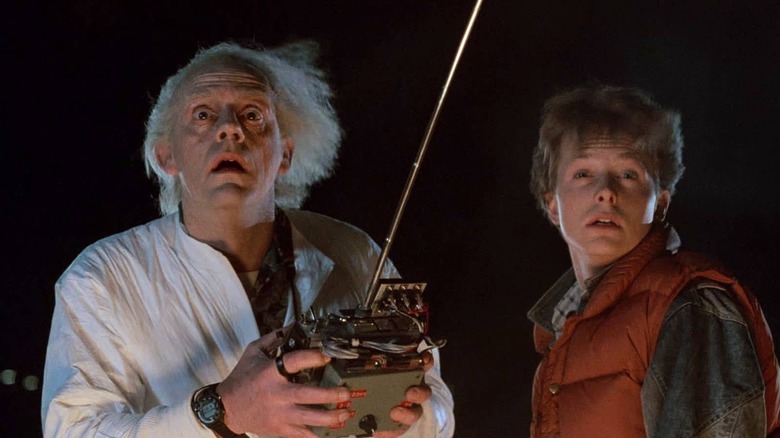
Many outright blockbusters haven't made it through to Chinese cinemas over the years. Ryan Reynolds' first outing as "Deadpool" never made the listings, and James Cameron's "Avatar" was pulled from theaters after two weeks when the Chinese government feared the movie about a revolution would inspire the audience flocking to 1,600 screens to see it. Unfortunately, in the eyes of the nation's government, Marty McFly and Doc Brown's adventures were also ill-fitting for the nation, because of one teeny tiny issue in the movie that couldn't be overlooked: time travel.
Yep, apparently the small matter of heading back in time was a "dangerous fictional element" that was both "frivolous" and "disrespectful" of history. It seemed the government took a far sterner approach than Doc Brown, who merely warned Marty McFly about the ramifications of tampering with time. As a result, in 2011, the State Administration of Radio, Film and Television (SARFT) issued guidelines that deemed experiencing, examining, or altering past events "disrespectful of history," leading to time travel being taken off the table in films and television. But while this led to Marty McFly's adventures getting the red tape, it hasn't stopped other fantastic sci-fi films from making it into China's theaters. "Avengers: Endgame," which openly admits to taking a "Back to the Future" approach in saving the universe, earned over $655 million. This was because it was wrapped up in a world of superheroes and space aliens, rather than real-world history.
The Hunger Games

When Jennifer Lawrence debuted as Katniss Everdeen in "The Hunger Games," Vietnam was one place she didn't make it. The book had already reached the country when it was first released in 2008, but the adaptation of Suzanne Collins's book failed to check the right boxes for the National Censorship Board, which deemed the film too violent and the concept too cruel.
The idea of children fighting to the death apparently stayed on the page, and as a result, Lawrence's first blockbuster introduction didn't make it to Vietnam. It wasn't a total loss, though, as the remaining three films in the franchise—"The Hunger Games: Catching Fire" and "The Hunger Games: Mockingjay Part I and II"—cleared the censorship requirements without issue. Admittedly, you could argue that "Catching Fire" might not be deemed as cruel, since most of the tributes are previous winners and older than the previous contestants.
Clearly, time has led the certification board to be more lenient with the franchise. The prequel, "The Hunger Games: The Ballad of Songbirds & Snakes," which follows another tournament with some children involved, did make it to cinemas. Additionally, the latest chapter, "The Hunger Games: Sunrise on the Reaping," is set for release on November 20. Clearly, after some time, the odds are in the franchise's favor.
The Abyss
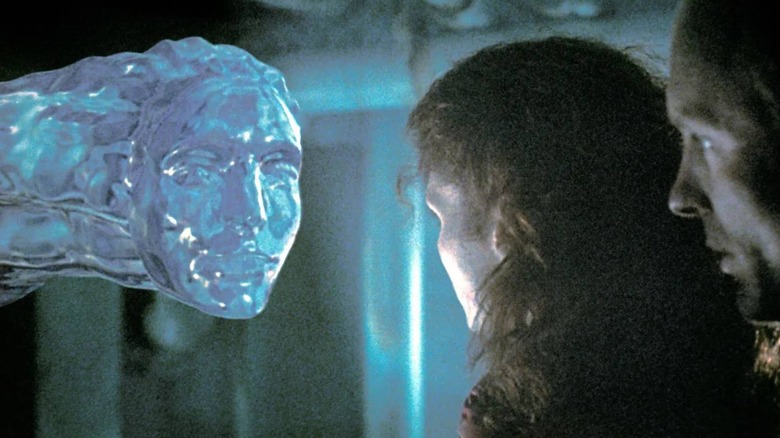
Ask someone to name a James Cameron film and "The Abyss" might be the last one on their list, never quite gaining the status of the "Terminator" films, "Titanic" or those splishy, splashy Smurf movies from the "Avatar" franchise. Even so, the 1989 sci-fi flick starring Ed Harris and Mary Elizabeth Mastrantonio is a great watch in its own right. Unfortunately for UK-based audiences, firing it up on Disney+ is no longer an option. The film was removed from the streamer in 2025, due to the same issue it faced at its original release.
Back in 1989, a cut of the film was banned after it included a scene in which a rat was placed in a vat of fluorocarbon liquid. A real animal was used, and while it survived, campaigns were launched to have the scene cut from the movie (via The Independent). The British Board of Film Classification (BBFC) made the necessary arrangements, and an edited version of "The Abyss" was released; it was later released on DVD and Blu-ray. But even with the necessary amendments in place, the new version of the film wasn't the one that ended up on Disney+, thanks to laws that left the platform exempt from previously imposed regulations. As it stands, the film remains off Disney+'s listings, making it one of Cameron's most underrated and overlooked movies all the more elusive.
The Matrix Reloaded
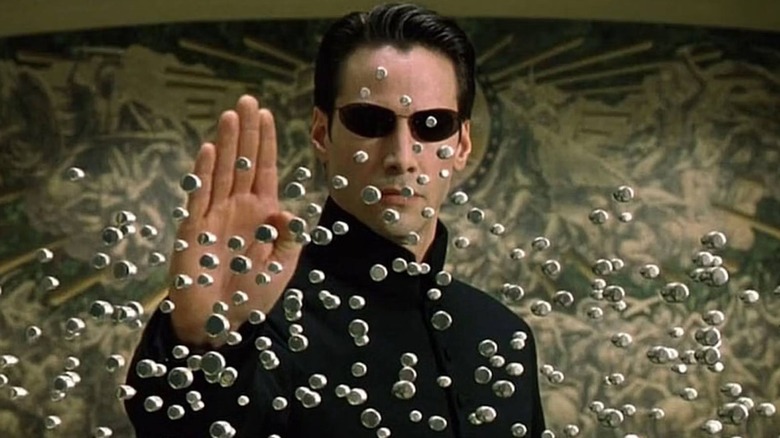
It was one of the most anticipated sequels ever made after the booming success of its 1999 predecessor, but when "The Matrix Reloaded" finally arrived, one country didn't get to see it: Egypt. According to The Guardian, the head of the country's film censorship body, Madkour Thabit, said the film's subject matter and excessive violence warranted keeping it out of theaters. The film was reviewed by 15 members of the organization, including academics, writers, and psychologists. They concluded that, besides the excessive violence, "The Matrix Reloaded" also gave too much focus to religious issues.
Following on from the original film (which did receive some criticism at the time of release), the Wachowskis' second round against the machines focused more on Neo's godlike presence and learning more about the Matrix's origins. This led to the notable word salad of an encounter with The Architect, played by Helmut Bakaitis.
In a statement from the organization, concerns were highlighted regarding "the creator and his creations, searching for the origin of creation and the issue of compulsion and free will,"; these similar issues that were present in older films had "caused crises" that they intended to avoid by not releasing the film. They were also cautious that the violence "may cause troubles and harm social peace." Surprisingly, the third installment of the then-trilogy—"The Matrix Revolutions"—did make it to theaters, but only after minor cuts. To this day, our first reunion with Neo is still banned.