

5 Ways To Make A Portable Power Station Last Longer During An Outage
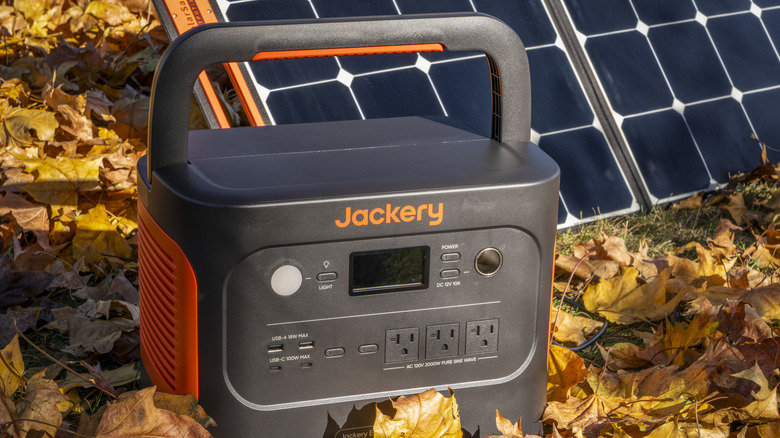
You never know when the next power outage will hit, and while disruptions can sometimes only last a few hours, more extreme ones can shut off your power for days or even weeks. This is why U.S. households often contain 1,000Wh to 2,000Wh portable power stations that usually don't weigh much, but can be great for maintaining the refrigerator's cold during a storm, keeping hundreds of dollars in groceries fresh, while ensuring they're still connected to the internet, have enough power to charge phones, and so on.
In a case where you need to use a portable power station in an emergency, some of the ways to ensure they last longer is to turn off the wall-plug button, use USB ports instead of regular wall charger bricks, and forgoing things that make heat like coffee makers, hair dryers, or, well, heaters.
By following these tips, you can ensure the outage will disrupt you a bit less, and if you also follow suggestions to preserve your power banks around the house, they can also be a great help for everyday tech. In addition, you can always check out some of Anker's best portable power stations whenever you need extra power, whether because you're going camping or because you're facing a power outage, as these accessories can give you extra peace of mind when an emergency happens.
Turn off the wall-plug button when you're done with a task
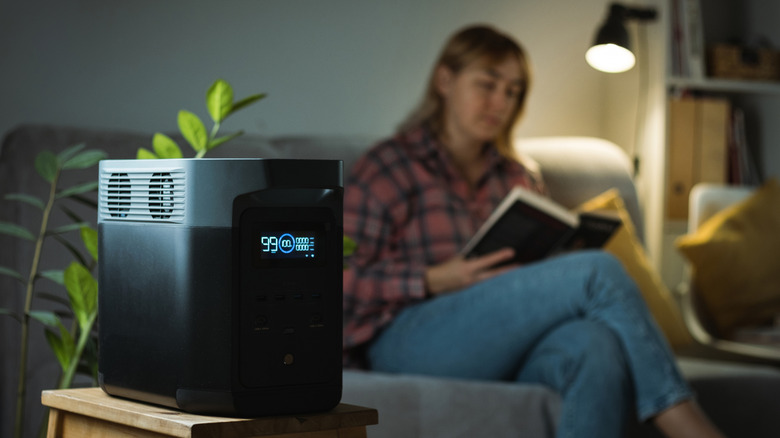
In a situation where you're not sure how long you'll be relying on your portable power station, you should be really conscious about it. For example, imagine leaving the car idling in the driveway all afternoon just in case you decide to drive somewhere later. Crazy, right? This is how you should approach pressing the button to turn on AC outlets housed within a compact power station.
After all, even if nothing is plugged into the sockets, the box continues to work to run an internal converter to keep those outlets ready, which, in the long run, will just keep draining your power station's battery even without you actually using it. That said, you should be mindful about when to turn these outlets off, especially at night when you're sleeping or if you leave the house.
If you're facing a real blackout, you should treat AC sockets like a bathroom light switch. The moment you finish a task, you should turn the power off. For example, if you need to plug your Wi-Fi router into the wall socket to download a movie or send work emails before the neighborhood cell towers get congested, you should immediately turn off the power station after. You won't waste unnecessary energy and will ensure you have enough power for the tasks you actually need to accomplish later.
Use the USB ports instead of wall charger bricks
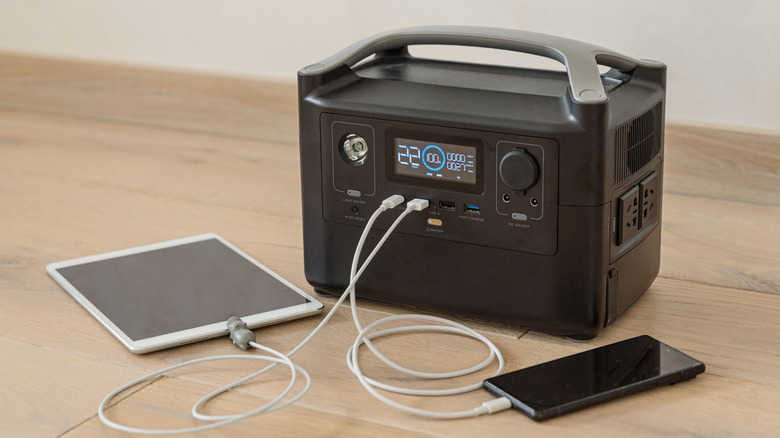
Most portable power stations have regular wall plugs alongside smaller USB ports and a round car-style socket. When power goes out and your phone desperately needs a charge, it might make sense at first to just grab the white charging brick from the bedside wall and plug it into the power station's regular outlet.
However, this muscle memory could be one of the biggest battery wasters, as the power station needs to expend extra effort to turn its battery power into wall-outlet power, and then your charging brick immediately undoes all that work to turn it into a wattage that your phone can handle. Roughly, you could be losing up to a fifth of your battery's energy just to heat in the middle.
With that in mind, you should actually leave the bulky wall bricks behind and plug whatever you need to charge — from tablets, laptops, and phones — to the portable power station's USB-A or USB-C ports. Especially with the most recent power stations featuring fast-charging USB-C ports, you can ensure that your gadget can be quickly charged without wasting all the energy that it would've taken from a regular power brick. That said, keep in mind that with everything featuring a USB cable/port, you should use station's USB ports: wireless earbuds, reading lamps, bedside fans, and so on. By doing that, you ensure the energy flows directly from the battery into your device, giving you extra phone charges and saving battery for other emergency moments.
Forget anything that creates heat
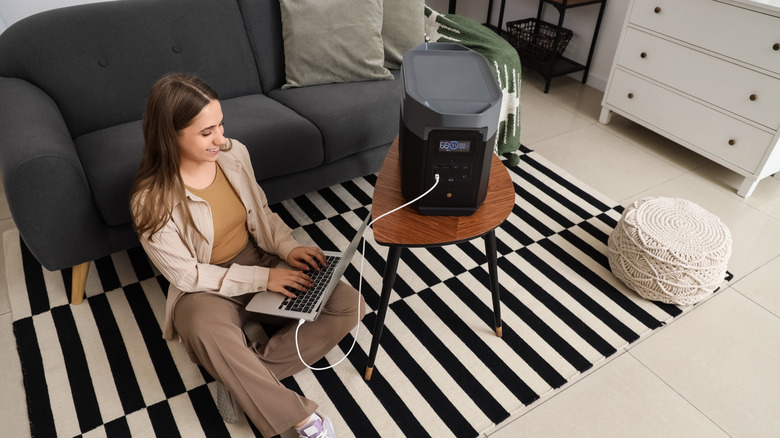
If it's an emergency, you might have to forget about hot showers, the microwave, or even a hair dryer. And if you have a compact, grab-and-go kind of power station, you need to be realistic about what it can physically handle.
Even small devices that create heat require a massive surge of energy. You need to accept that hot water, hot meals, and so on are a job for a gas stove or a camping burner — a cold sandwich might be the way to go depending on the emergency. That said, focus on using the portable power station to keep you connected to the outside world over facilitating temporary pleasure that will completely drain its battery.
A good tip is to think about what could actually keep you comfortable and calm during a few hours of blackout. Devices like a small USB-powered LED desk lamp use almost zero power, but can light up your whole living room for hours. In addition, supplying your smartphone and tablet with power and loading them with downloaded TV shows can be a great idea, in addition to powering your home Wi-Fi router. All are lightweight devices that a compact station can easily carry through the night. Still, you shouldn't forget to unplug devices the moment they hit 100%, as leaving fully charged gadgets plugged in while you sleep will continue to steadily drain the total power of your station.
Set the auto-shutoff timer before an outage happens
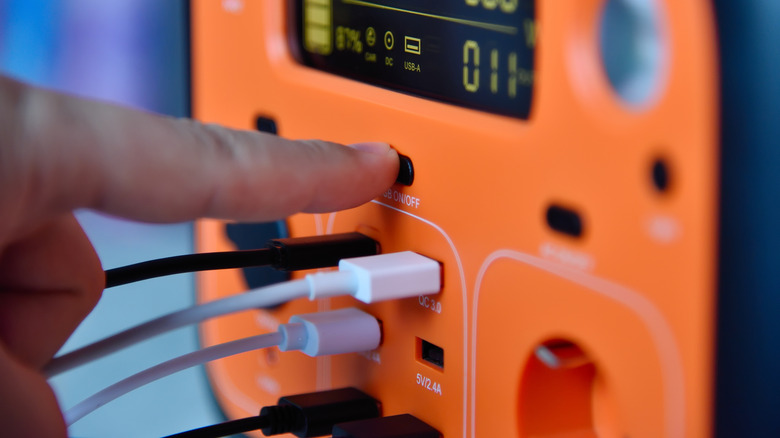
When a power outage happens, you don't want to be the one in the middle of the evening fumbling around in the dark with your phone's flashlight on to find a tiny paper manual to figure out how to change the portable station settings. This is why you should be aware that modern compact power stations feature a built-in sleep feature, usually called Eco Mode or Auto Off.
This functionality works like an automatic safety net against forgetfulness. If mid-way through charging a phone or running a small fan, you end up accidentally falling asleep on the couch, this feature notices when the device stops pulling meaningful power and automatically shuts the whole unit down after a while.
The best tip is to set it up before the outage happens, like on a normal sunny afternoon. By going through the buttons on the front panel or opening the companion app on your phone, you can set the auto-shutoff timer to the shortest practical window. Besides that, while you're still in settings, you should set the bright front display screen of the portable power station to turn itself off after 30 seconds and turn off the station's Bluetooth or Wi-Fi radio once you finish adjusting your preferences. Once you do that, you get small guardrails for whenever you actually need to use the portable power station and forget that you left something charging on it. After all, every bit of usable power counts.
Keep the power station under favorable temperature conditions
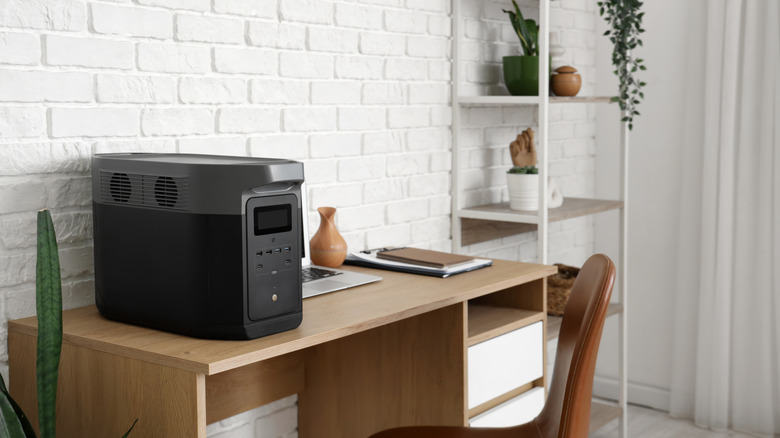
Usually, people store their portable power stations and other emergency gear out of sight, such as in unheated basements, a chilly hallway closet, or the trunk of a car. However, when a storm hits, you might pay a bigger price, as portable power stations are very picky about temperature.
For example, if a winter storm knocks out your heat and your power station has been sitting in a freezing cold garage, the battery chemistry takes longer to work properly, making you lose an important chunk of usable power before you even plug something in. During summer, the opposite happens, as if you leave the device in direct sunlight, it forces its tiny internal cooling fan to spin nonstop and waste electricity to keep itself cool.
If you keep the power station stored somewhere chilly, you need to bring it into your living room as soon as you hear about the bad weather forecast, so it has time to warm up to normal room temperature. Once the outage happens, set it on a sturdy table or wooden floor rather than a thick rug or sofa cushions, as these can block the air vents on the side and make the portable power station overheat. Finally, if you have a foldable solar panel to top it up the next day, place the panel outside in the sun while running the cable through a cracked window so the power station remains cool while you get yourself extra hours of battery life.