

Amazon Echo Time Review: Less Audio, More Visual
We may receive a commission on purchases made from links.
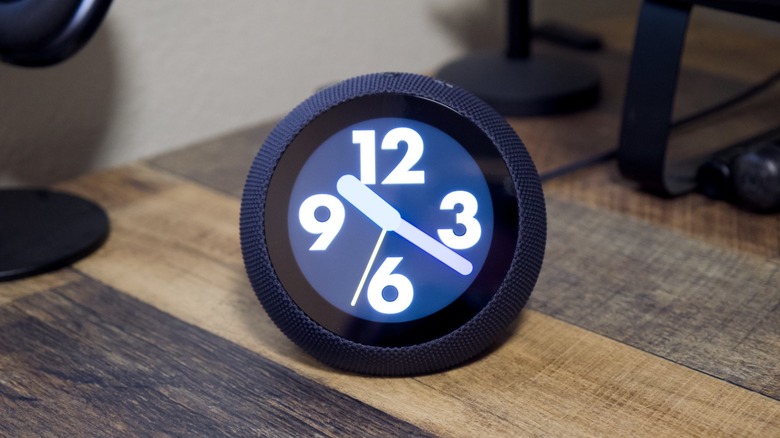
Amazon has been building smart displays for years now, but the new Amazon Echo Time is purpose-built for the nightstand. The new device is part Echo, part simple clock, with software features that make it smarter than your standard bedside clock while offering additional smart home features that you would expect from an Echo device.
In reality, it's actually kind of a successor to the Amazon Echo Spot, though at a higher price than the Echo Spot was, and with extra features. Still, it does serve a similar use case. It's not for those who want the full smart display experience, but rather those who want an Echo with some of the extra features that a display brings.
For some, it might be too much of a compromise. It doesn't have as many features as a typical smart display, yet it still comes at a reasonably high price of $199.99. Is it worth considering for those who want a smarter bedside clock, or is your money better spent elsewhere?
Design
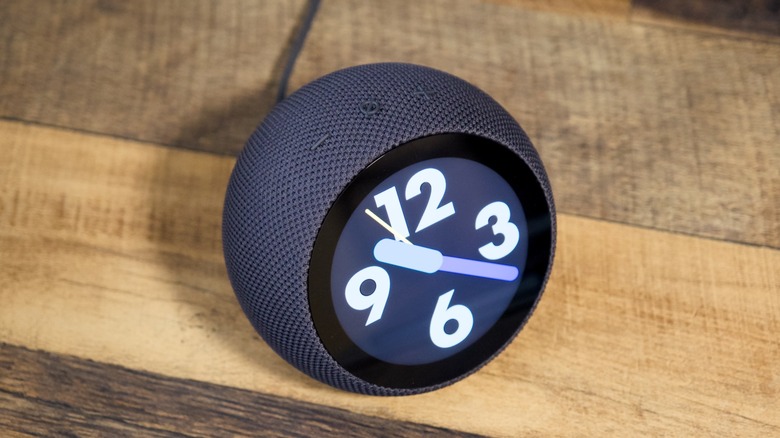
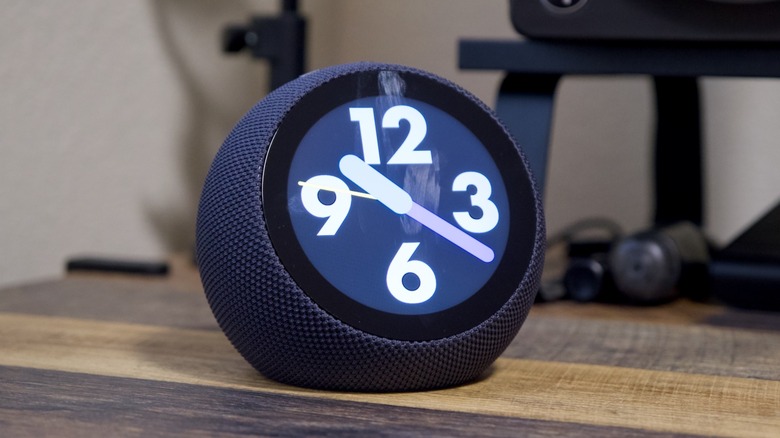
The Amazon Echo Time looks a lot like an Echo Dot, but with a larger footprint and a flat face for its screen. It's covered in the same textile material, which helps it look and feel more premium and expensive than it actually is. Amazon offers the standard model in Graphite, Glacier White, and Coral Pink, and I'm reviewing the Graphite model, which I like the look of. The Kids edition comes in Cosmic Lime and Galactic Grape, and it costs $209.99.
The Echo Time measures 5 inches wide, 4.67 inches deep, and 4.5 inches tall. The Echo Dot measures 3.9 x 3.9 x 3.7 inches, so the Echo Time is noticeably larger — though I wouldn't consider it oversized. Of course, given its larger size, it might be slightly too big for some cramped nightstands, but those with a more minimalist vibe should find it plenty small enough to fit next to the bed. A matching adjustable stand is available for $39.99.
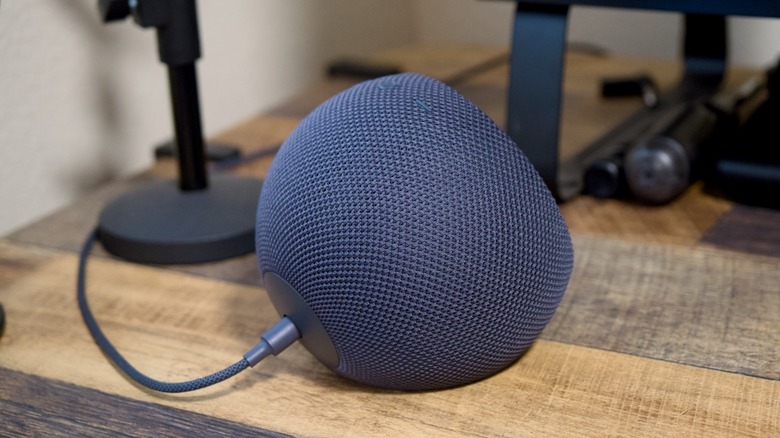
On the top of the device can be found basic controls, including volume controls and a microphone mute button. On the back is a power input, and the power adapter comes in the box. Apart from the display, that's really all that you'll find around the surface of the device. The Echo Time weighs 16.9 ounces and has no camera, so you can't use it for video calls.
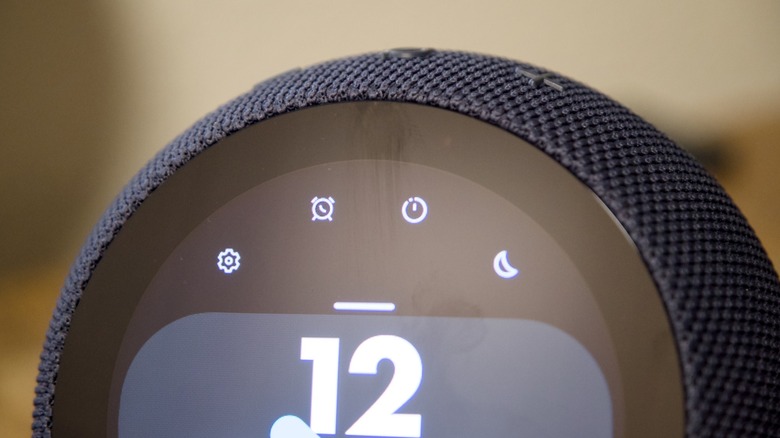
The display itself is reasonably good-looking, even if it's not the highest quality display you'll ever see on a smart display. An OLED screen might have been nice for a device that's likely to be used in dark environments at night, but it's still crisp enough and bright enough during daytime use. It's 3.2 inches and fully rounded, and it can automatically shift color temperature depending on the time of day. As a whole, the Amazon Echo Time offers a solid design and a relatively premium feel, which is nice to see at this price point.
Features
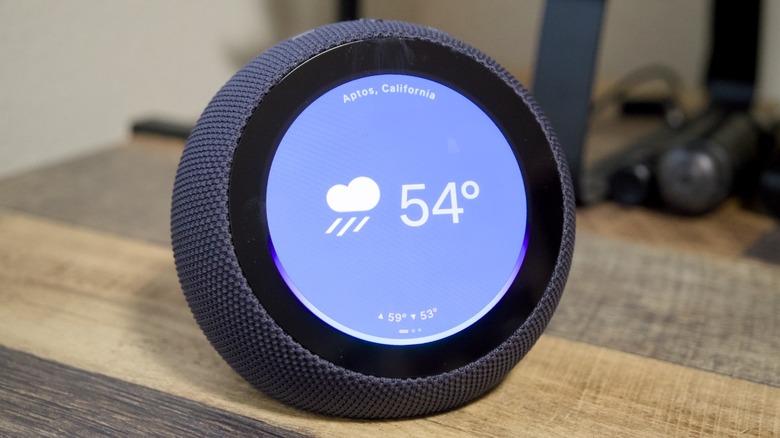
The main appeal of this device, of course, is that it's an Echo with a display. To that end, it offers a range of features that can be controlled from that display. The main thing you'll use it for, however, is as a clock. For the most part, that clock screen stays visible even when Alexa is talking to you, though Alexa can still show you things on the screen, like the weather. When you're talking to Alexa, a ring around the clock face will show up, alerting you to the fact that Alexa is active.
There are other ways the screen proves its value, like a sunrise wake-up mode that gradually brightens the clock face with warmer colors — and it can sync with compatible smart lights. Special alarm tones start quietly and build with each snooze, while ambient and sleep sounds are built in. You can snooze with a top tap or a voice command up to four times.
Omnisense is Amazon's name for its sensor suite, first introduced in 2025, behind the opt-in sleep sensing. It combines an ultrasound transducer, a room-temperature sensor, and presence detection. It works by sending sound waves above the range of human hearing and measuring their reflections, allowing the clock to track breathing waveforms and proximity without a wearable. This brings contactless sleep sensing back after the discontinued Halo Rise, though that device used radar, which relies on radio waves rather than sound.
With sleep sensing and Alexa+ enabled, the smart alarm can wake you during lighter sleep within 10 to 60 minutes of your set time, which can help prevent you from being woken up when you're in a deeper sleep stage. You can turn sleep sensing off in the Alexa app or by pressing the mute button, though muting also turns off the smart alarm. The sensing only tracks the person nearest the device, which means that if you sleep with a partner, you won't have to worry too much about it sensing the wrong person.
Apart from that, the display features are relatively basic, and you don't get the on-screen smart home controls of other smart displays — though voice control works as usual. This device really isn't built to be a full smart display anyway.
The Echo Time also works as a convenient built-in smart home hub, though the Echo Dot now offers the same one. It can connect to Zigbee and Matter over Thread devices, and it can act as a Thread border router to connect all of your Thread devices to your smart home. That may not matter if you already have a smart home hub. And, to be clear, plenty of Amazon's devices offer similar smart home connectivity features. But if you don't already have a hub and you're interested in building a smart home, the Echo Time is worth considering.
Audio quality
Of course, the Echo Time isn't just a clock — it's also a speaker. Also, being so much larger than an Echo Dot, you would probably expect it to sound better. According to Amazon, the speaker supports lossless HD audio — though whether or not you can tell on a consumer-grade speaker like this is another conversation. Regardless, Amazon seems to want the Echo Time to be an upgrade choice over the Echo Dot for those that want better audio response.
So, how does it sound? Not bad — but not great. It sounds more full than the Echo Dot, to be sure, and there's more bass response. But it can sound slightly muddy, and while there's some detail, it's not overly crisp in the high end. There are speakers at this price point that sound a lot better, including the likes of the HomePod mini.
Basically, the Echo Time is fine for alarms, white noise at night, and background music. It may support lossless HD audio, but this isn't a speaker for audio files. If your priority is good audio rather than something that has a clock built into it, then it's worth looking at some competitors.
App and subscription
You'll control the Echo Time through the Alexa app, which is a perfectly fine app that's mostly easy to navigate. It's also not something you'll likely need to open all that often.
Then there's Alexa+, which is Amazon's generative AI-powered version of Alexa. Unlike the previous version of Alexa, Alexa+ doesn't come free. If you don't have a Prime subscription and don't want one, you'll need to pay $19.99 per month for it once the limited free access that comes with the device ends. If you do have a Prime subscription, which interestingly costs $14.99 per month, you'll get Alexa+ included.
In other words, if you want Alexa+, it's worth subscribing to Prime rather than the basic Alexa+ subscription. Unfortunately, you will need Alexa+ for some of the best features of the Echo Time. The smart alarm, for example, requires an Alexa+ subscription.
Conclusions
At $199.99, the Amazon Echo Time is anything but cheap. The extra $100 over the Echo Dot buys you a touch screen as well as sleep sensing features and an alarm. But this isn't a better smart home hub, given the fact that the Echo Dot now supports Zigbee and Thread.
In other words, whether or not the Echo Time is the right device for you comes down to what you want to use it for and how much you're willing to pay for that. If you're simply looking for an Alexa-based smart home speaker and don't really care about the display, then it's worth going for the Echo Dot instead of the Echo Time. But if you like the idea of a bedside clock that senses your sleep to time its alarm on top of being used as an Alexa speaker, then that Echo Time is worth considering — as long as you already have an Amazon Prime subscription, or you're happy paying $19.99 a month for Alexa+ on its own.